


Victorian Pine Pew
A victorian pine pew brings the honest weight of ecclesiastical and domestic history directly into a modern hallway or kitchen.
Victorian Pine Pew
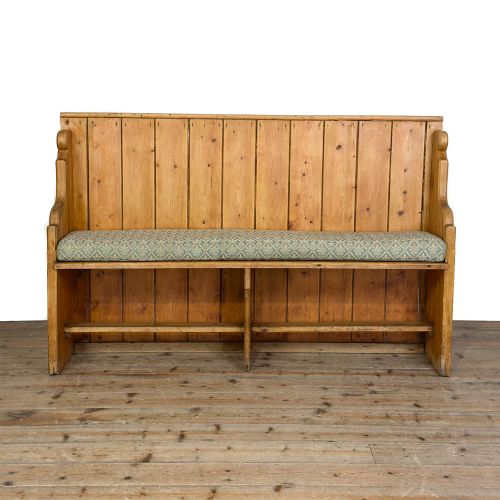
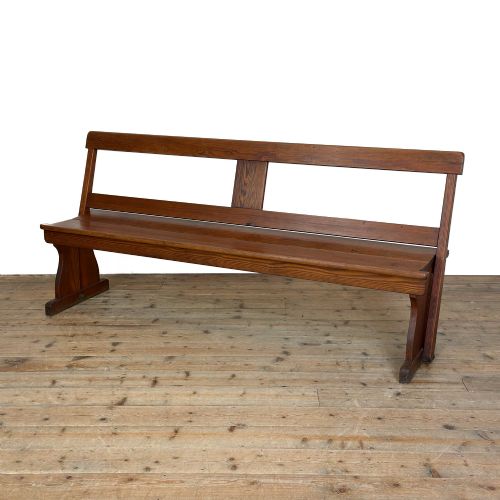
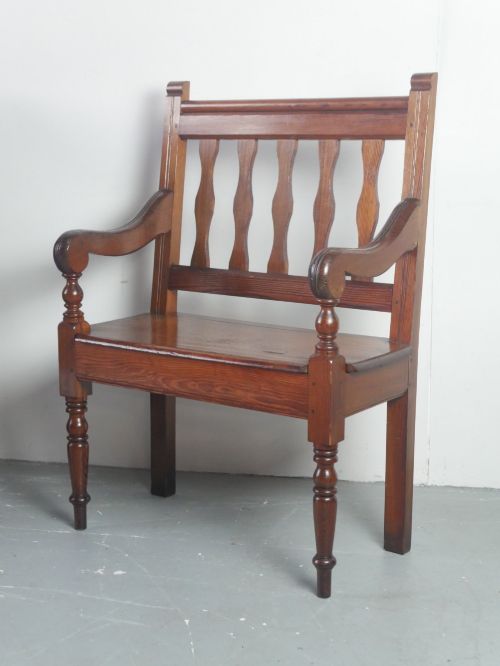
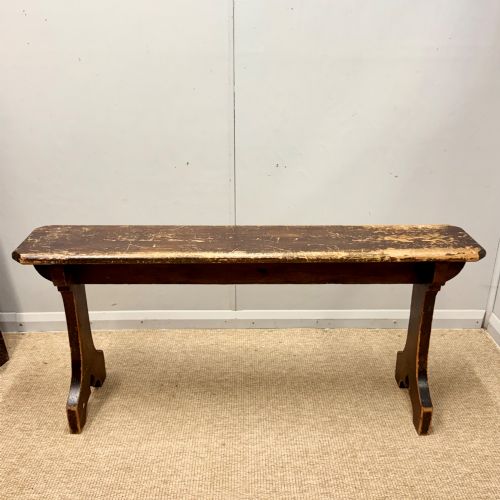
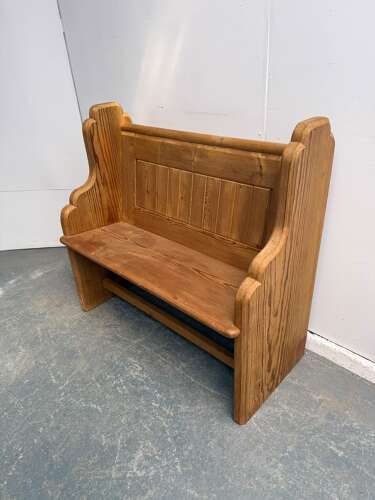
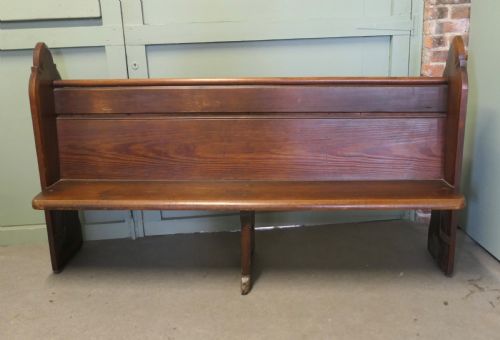
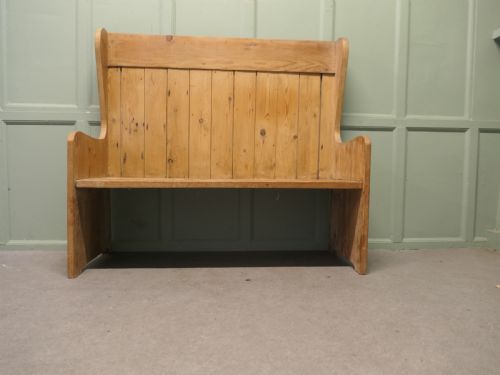
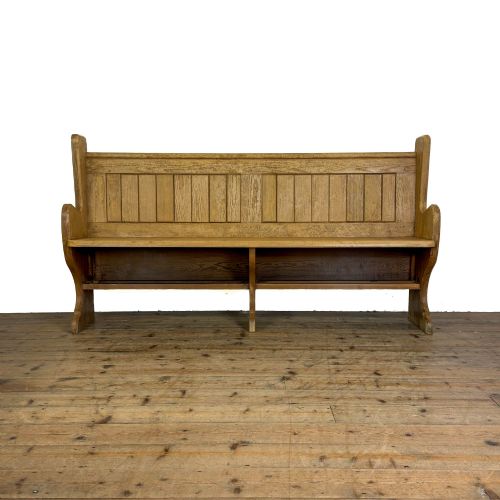
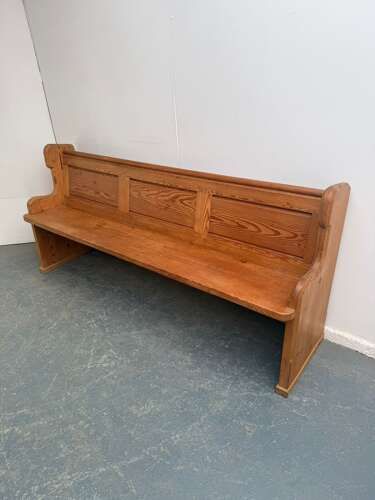
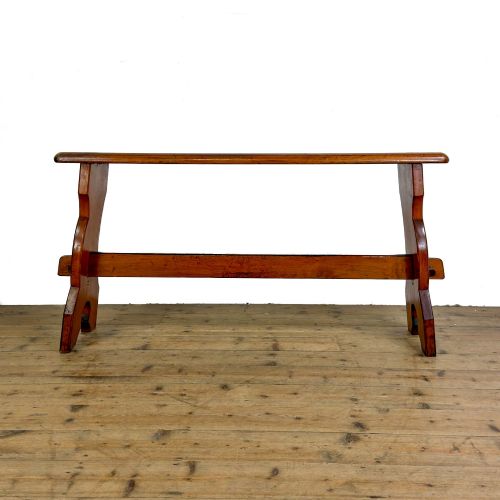
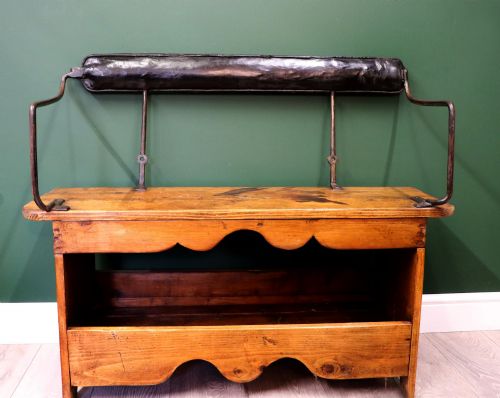
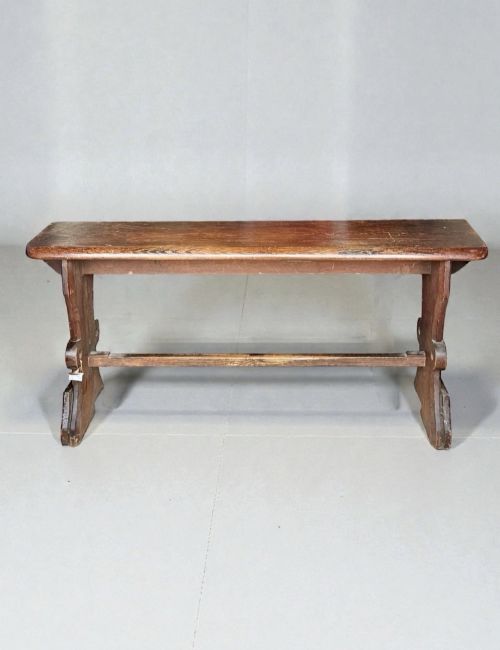
When you search for a victorian pine pew, you encounter long, sturdy seating solutions originally built for churches, chapels, schools and rural taverns. The most common examples on this page are straight church pews, high-backed settles and hallway benches constructed from solid timber during the nineteenth century.
These functional seats vary from simple, utilitarian school benches to grand gothic church pews complete with decorative ends and prayer book boxes. Many retain their original waxed finish or historical painted surfaces, offering robust seating designed to endure decades of communal use.
How they were made
Joiners and carpenters built these benches primarily using standard yellow pine or denser pitch pine, selecting timber for its straight grain and durability. Structural integrity relied on mortise and tenon joints, heavy framework and occasionally iron fixings to support continuous daily seating.
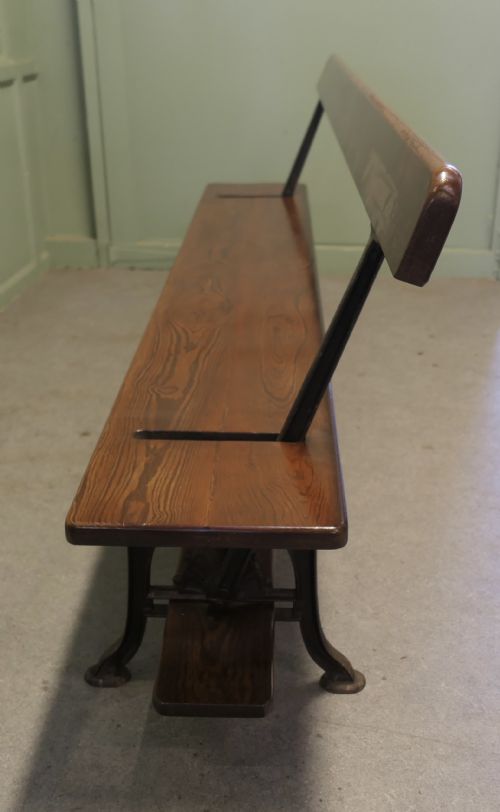
Surfaces were traditionally protected with beeswax or left with layered paint finishes, such as blues, creams or greens. Specialised forms like flip-over reversible benches and tram seats incorporated cast iron mechanisms to allow the backrest to swing.
Victorian Pine Pew Retail Price Guide 2026
Typical asking prices for victorian pine pew among the pieces listed under this phrase on Sellingantiques today, from the lower quarter to the upper quarter. They describe what is for sale here now, not the wider market.
What varies in quality
Quality in these benches rests upon the architectural ambition of the joinery and the selection of the timber. Dense pitch pine with a tight, figured grain commands greater appreciation than standard knotty pine used for utilitarian purposes.
The Victorian Pine Pew Glossary
- Pitch pine
- A dense, resinous variety of pine with a prominent, highly figured grain that darkens gracefully with age. It offers superior hardness compared to standard softwoods.
- Settle
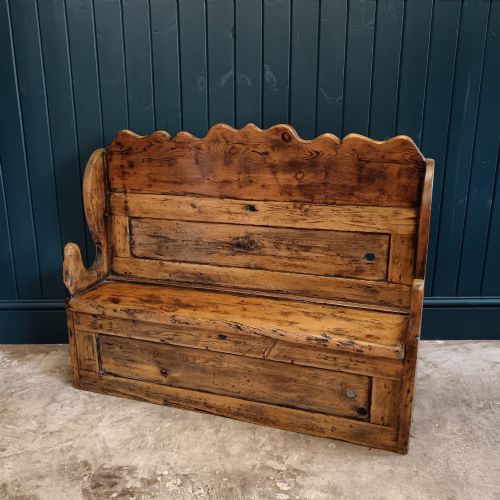
- A wooden bench featuring a high solid back to deflect draughts, often incorporating enclosed storage beneath the seat. They were historically placed near firesides in pubs and large houses.
- Flip-over bench
- A dual-directional seating design with a movable backrest that pivots to face either direction. This clever mechanism was commonly utilised in public transport vehicles and coastal shelters.
- Box settle
- A variation of the settle featuring a lidded compartment built directly under the seat base. This provided concealed storage for blankets and domestic goods in modest rooms.
- Ecclesiastical
- Pertaining to churches and Christian ministry, describing furniture designed specifically for religious buildings. These items often feature gothic arches and carved ends.
Victorian Pine Pew: Frequently Asked Questions
Where should I put a church pew?
A long pew fits naturally along a dining table, in a wide hallway, or against a blank living room wall where its linear form provides substantial seating without feeling bulky.
Because they are typically shallow in depth, these benches slide neatly into narrow corridors where standard chairs would obstruct movement.
How do I care for waxed pine furniture?
Maintain the timber by applying a traditional beeswax paste every six months to nourish the wood and preserve the soft sheen. Buff the surface gently with a dry, lint-free cloth after application.
Avoid placing these benches near direct heat sources or radiators, as dry indoor heat can cause old pine to split or warp over time.
Can I use an outdoor pew in the garden?
Most antique pine and pitch pine pews are constructed for indoor ecclesiastical or domestic use and lack weather-resistant treatments. Moisture will quickly degrade historic wax finishes and rot soft pine timbers.
Keep these pieces inside protected spaces, or ensure they remain fully covered and dry if placed on a sheltered porch.
What is the difference between a pew and a settle?
A church pew is generally an open-backed bench designed for rows, featuring simple upright supports and modest thickness. A settle incorporates a high, solid back and sometimes winged sides originally intended to block cold draughts in unheated rooms.
Settles also frequently include enclosed box storage beneath the seat, whereas standard pews remain open underneath.