

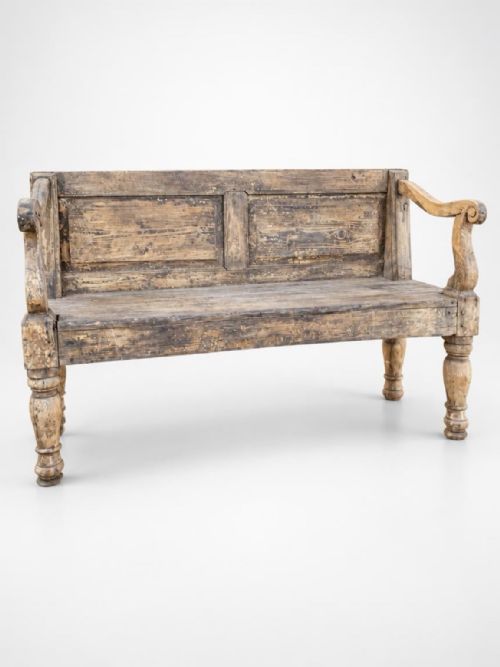
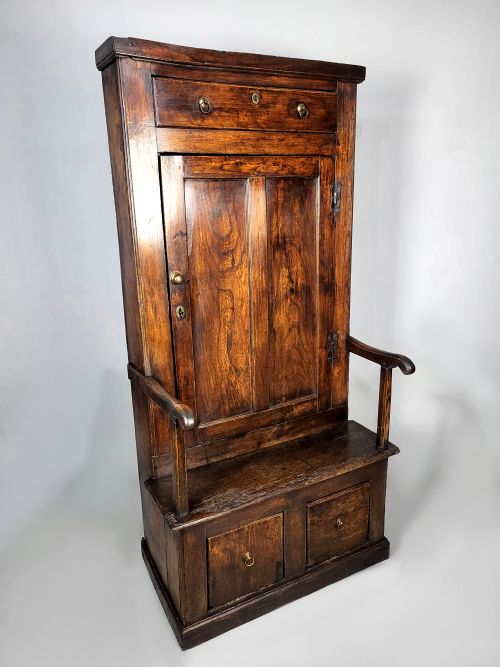
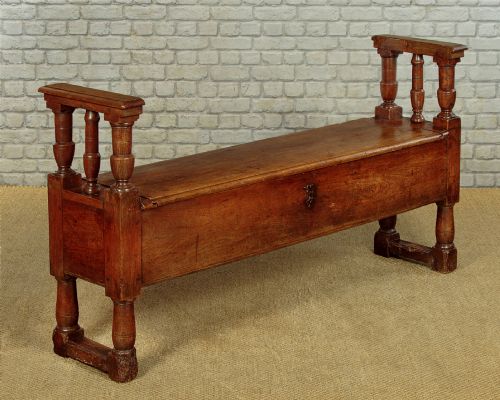
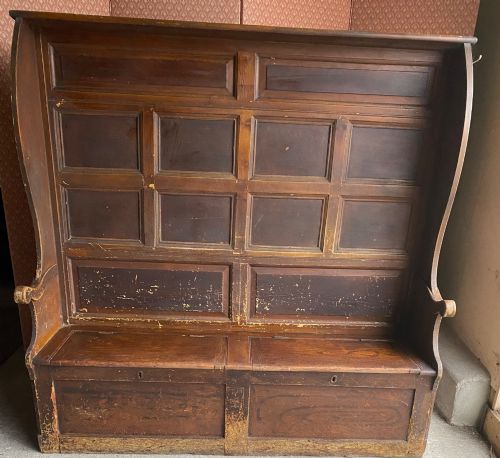

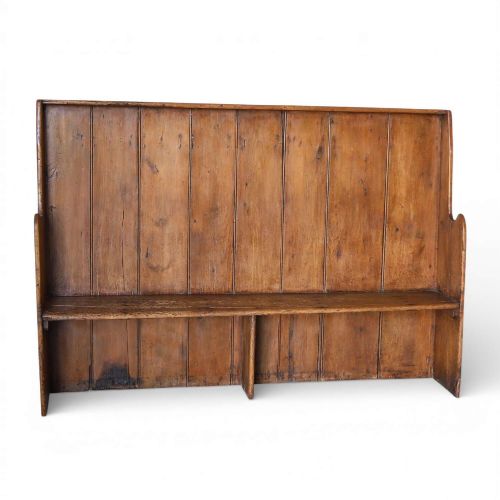
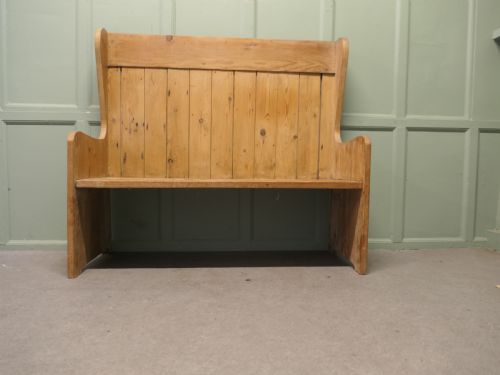
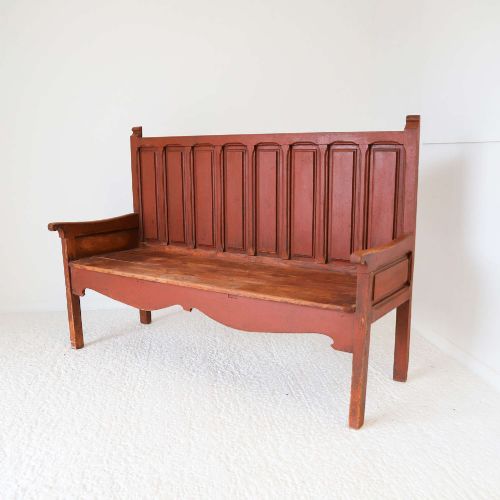
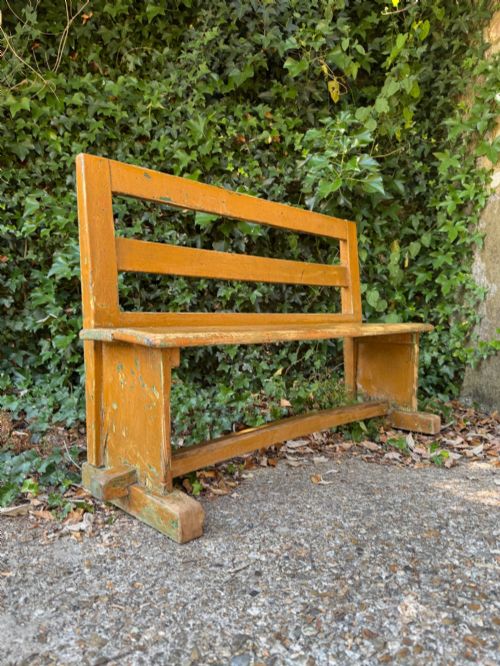
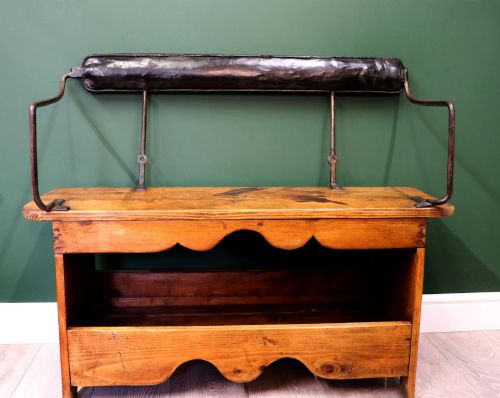

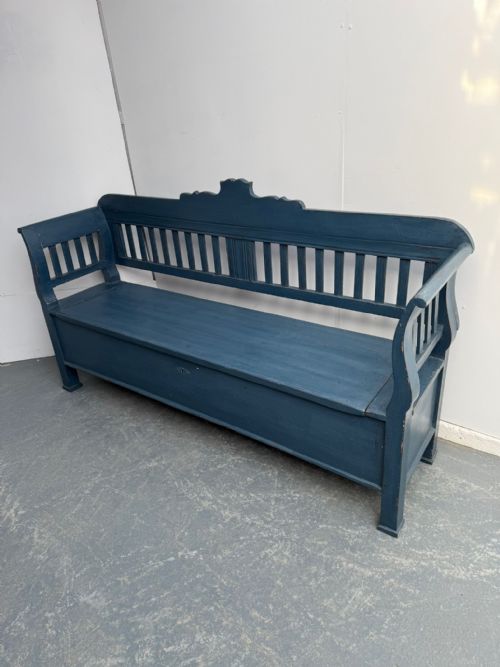
Country Pine Settle
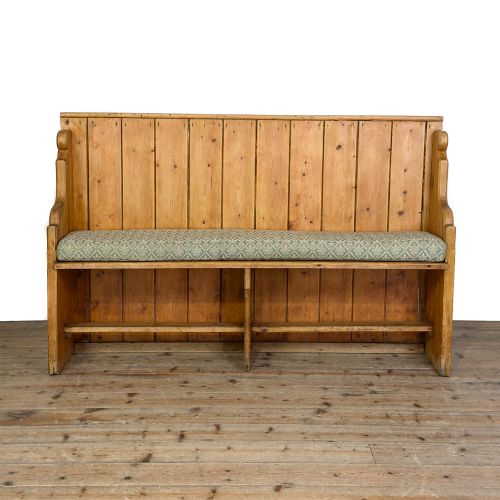
A country pine settle offers the high back and deep seat that kept farmhouse kitchens warm and draught-free.
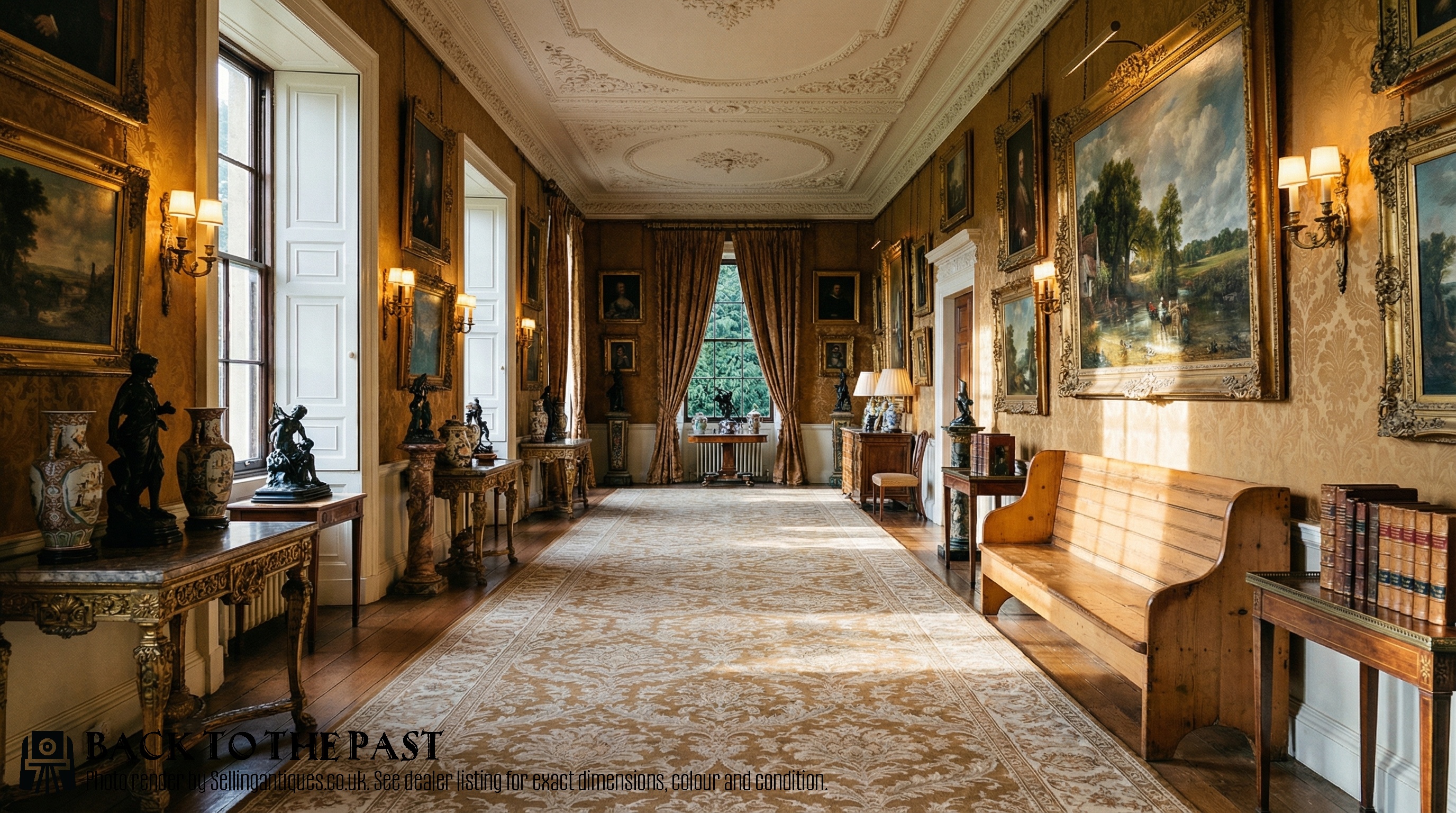
Country Pine Settle
A country pine settle provides a high-backed wooden seat designed to block cold draughts in domestic interiors and public spaces. Pieces in this category span the 18th century through to the Edwardian period, incorporating regional forms like the tall-backed Welsh and West Country designs alongside European examples from Hungary, Sweden, and Spain.
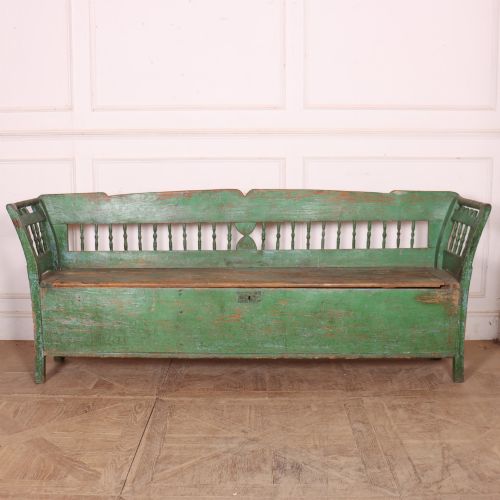
The most common formats on this page include high-back benches, box settles with lift-up seat storage, and chair tables or monks benches. Materials extend beyond standard pine to pitch pine, elm, and ash, often finished with original paint in blue, grey, or black, or maintained with a waxed honey-brown patina.
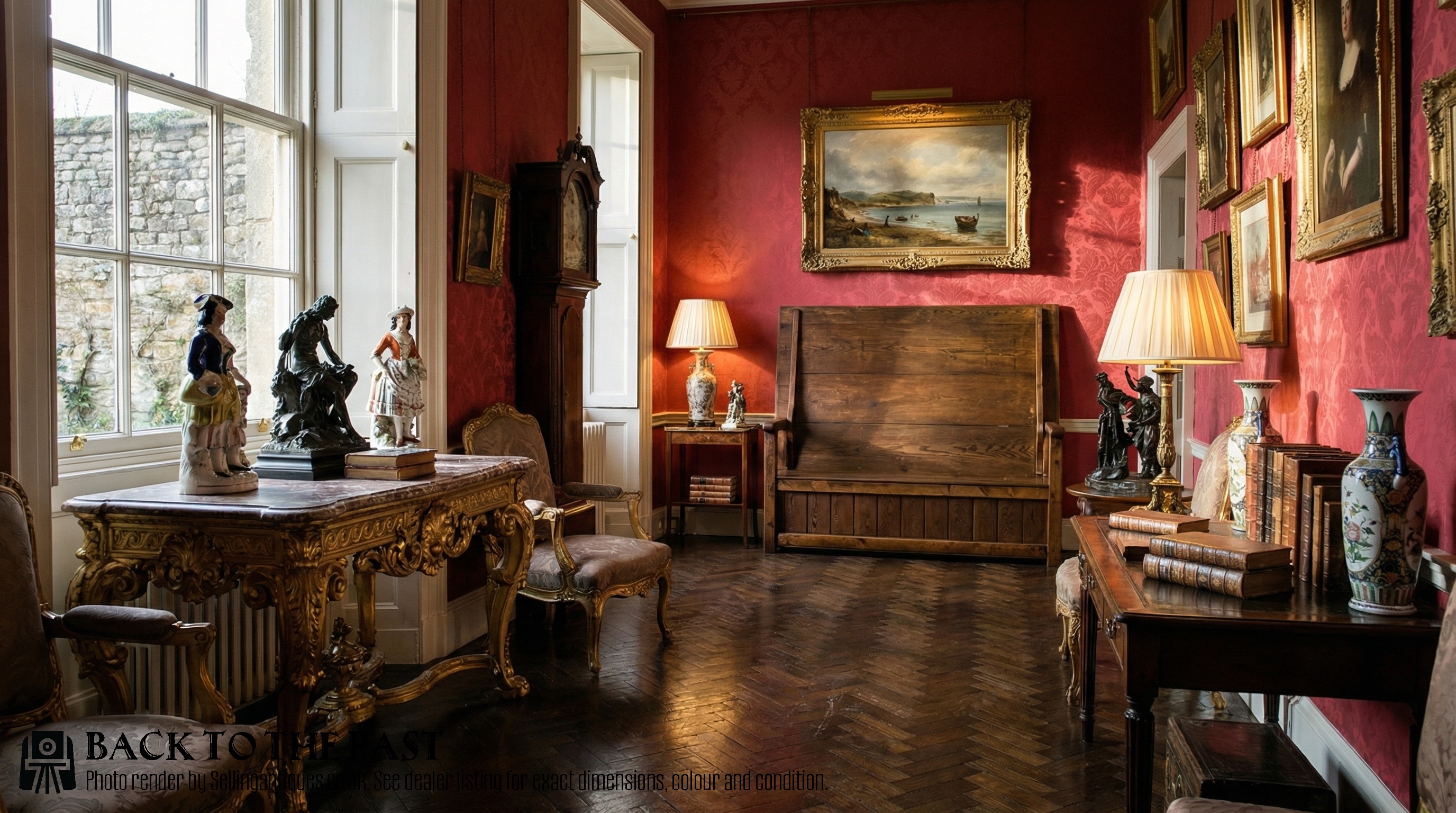
How they were made
Construction relies primarily on solid pine and pitch pine boards joined with traditional pegged or dovetailed methods, sometimes strengthened with elm or ash components. Many examples feature panelled backs, integrated box compartments beneath the seat, or solid plank construction designed for heavy daily use.
Surface treatments range from clear wax finishes that highlight the natural grain to historic painted finishes in blue, grey, or black. Iron hardware, hinges, and fabric upholstery appear on select regional variations to support movable backrests or drop-leaf chair tables.
Country Pine Settle Retail Price Guide 2026
Typical asking prices for country pine settle among the pieces listed under this phrase on Sellingantiques today, from the lower quarter to the upper quarter. They describe what is for sale here now, not the wider market.
Common forms include high-back settles, box settles, tavern benches, and convertible chair tables originating from English, Welsh, and European workshops.
What varies in quality
Quality rests upon the integrity of the original construction and the survival of early or untouched surface finishes. Pieces retaining their original painted decoration or honest waxed patina sit at the upper end of the scale compared to those with stripped or heavily restored surfaces.
Structural proportion and regional character define the finer examples, from well-balanced barrel-backed forms to vernacular country pieces with integrated box storage and untouched joinery.
The Country Pine Settle Glossary
- Settle
- A wooden wooden bench with a high back, solid arms, and often a storage box beneath the seat. It was built to shield occupants from cold draughts in domestic halls and farmhouses.
- Box settle
- A variant featuring a hinged seat lifting to reveal a storage compartment underneath. This design kept blankets and household goods dry and secure.
- Barrel-backed settle
- A form featuring a curved, enclosing upper back that wraps around the seated person. This construction offered maximum protection from cold air currents near open hearths.
- Chair table
- A convertible item with a hinged back that tilts forward to form a table top. It served dual functions in compact vernacular interiors.
- Patina
- The surface sheen and colour developed by wood through age, handling, and waxing. An original patina indicates decades of uninterrupted use and care.
Country Pine Settle: Frequently Asked Questions
What is a country pine settle?
A country pine settle is a high-backed wooden bench originally designed to block draughts in farmhouse kitchens and public houses. These pieces often feature solid plank backs, carved panels, or enclosed storage boxes beneath the seat.
They span several centuries, with regional English, Welsh, and European variations displaying distinct construction traits and painted or waxed finishes.
How were settles used in historical homes?
Historically, settles stood near hearths and in entrance halls to provide protected seating away from cold floor drafts. The high back trapped body heat, while enclosed box models doubled as chests for storing household textiles.
In public spaces like taverns and churches, they functioned as sturdy communal seating for patrons and congregation members.
How do I tell different periods apart?
Dating relies on construction methods, timber selection, and surface treatments observed across different eras. Earlier 18th-century pieces often display hand-planed boards, primitive pegged joinery, and folk art canopies.
Later Victorian and Edwardian examples tend to incorporate machine-sawn timber, simpler spindle details, and factory-produced hardware.
How do I live with a pine settle?
Living with a settle involves placing it against a stable interior wall where its high back and deep footprint can anchor a hallway or kitchen space. Protect the timber from direct heat sources and sudden humidity shifts to preserve the original wax or paint finish.
The under-seat storage box provides a practical space for blankets, boots, or bulky items.