

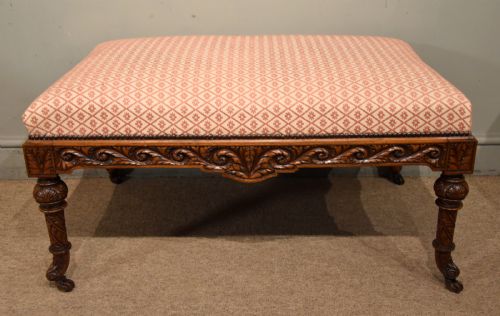
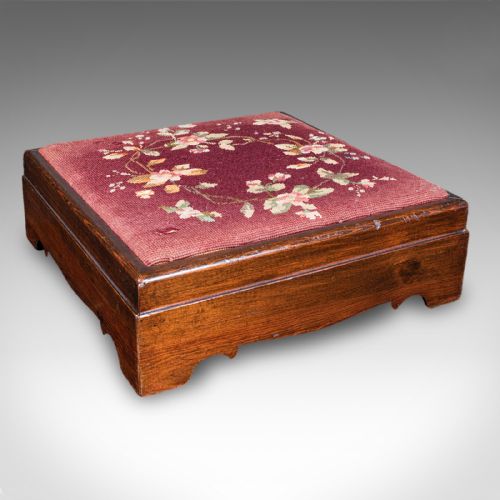


Rectangular Wooden Footstool
These rectangular wooden footstool pieces offer solid timber frames and upholstered or woven tops, bringing practical comfort and period character to any fireside.
Rectangular Wooden Footstool
A rectangular wooden footstool brings traditional seating and leg support into the home, drawing on forms produced across the seventeenth, nineteenth, and early twentieth centuries. These pieces appear in styles ranging from plain Victorian country designs to ornate Baroque revival and George II style frames.
Buyers meet sturdy oak joint stools alongside upholstered mahogany fireside examples, cane-seated varieties, and teak pieces fitted with woven rattan. The selection spans low dressing stools, long cane footstools, and compact burr yew wood designs intended for daily use.
Origins vary from simple Edwardian pitch pine constructions to heavily carved Victorian oak and rosewood examples. Each piece serves a functional purpose while displaying the distinct timber turning and joinery of its period.
How they were made
Timbers like oak, mahogany, pitch pine, teak, and burr yew form the structural frames, shaped through traditional joinery and detailed carving. Selected pieces feature gilded surfaces or turned wooden components that demonstrate period woodworking skills.
Upholstered variants rely on fabric, wool, and textile coverings padded over the wooden base, whilst other examples utilise woven rattan or cane panels fitted directly into the frame. Brass elements occasionally appear as supporting or decorative fittings.
Rectangular Wooden Footstool Retail Price Guide 2026
Typical asking prices for rectangular wooden footstool among the pieces listed under this phrase on Sellingantiques today, from the lower quarter to the upper quarter. They describe what is for sale here now, not the wider market.
The site's listings feature timber species including oak, mahogany, teak, pitch pine, and burr yew across multiple periods.
What varies in quality
Quality rests upon the selection of timber and the execution of the woodwork, distinguishing simple utilitarian items from finely carved revival pieces. Heavier carving, sophisticated timber figuring, and intact woven cane panels elevate the standard of a piece.
The integrity of the frame construction and the neatness of the upholstery work determine the durability and finish of the footstool. Pieces retaining their original timber surfaces and sound structural joints represent the higher end of the range.
The Rectangular Wooden Footstool Glossary
- Joint stool
- A traditional wooden stool constructed with mortise and tenon joints, common in the seventeenth century. These sturdy items served various household functions before dedicated footstools became widespread.
- Baroque Revival
- A nineteenth-century style imitating the ornate, dramatic forms of the seventeenth-century Baroque period. Pieces in this style often feature deep carving and lavish surface treatment.
- Cane
- Strips of rattan plant woven into an open mesh pattern to form a flexible seat. This technique provides a lightweight and breathable surface for wooden frames.
- Pitch pine
- A durable softwood utilised in furniture construction, known for its resinous content and pronounced grain patterns. It provides a sturdy framework for Edwardian fireside seating.
- Giltwood
- Timber coated with a thin layer of gold leaf or metallic gilt paint. This finish adds brightness and decorative emphasis to revival style frames.
Rectangular Wooden Footstool: Frequently Asked Questions
How were rectangular wooden footstools used?
These items served primarily as supports for the feet while sitting near a fireplace, or functioned as low seats for dressing and household tasks. Their compact proportions allowed them to be easily moved around the room as needed.
Heavier joint stools also doubled as portable seating or temporary platforms for household items. Their robust wooden construction ensured they could withstand daily domestic use.
How do I identify a 17th century joint stool?
Seventeenth-century joint stools feature heavy oak construction held together with pegged mortise and tenon joints rather than metal screws. The legs are typically turned and connected by low stretchers that kept them off damp floors.
These early pieces display straightforward joinery and solid proportions without the lighter decorative carving found in later Victorian and Edwardian revivals.
What is the difference between cane and upholstered tops?
Cane tops consist of woven rattan material stretched across an open wooden frame, offering a firm and breathable seating surface. Upholstered tops use fabric, wool, or textile coverings over padding for a softer feel.
Cane seating appears more frequently on lighter frames intended for summer use or decorative placement, whilst upholstered versions provide warmer support by the fireside.
How do I care for a wooden footstool?
Maintain the timber frame by dusting regularly with a dry cloth and occasionally applying a suitable furniture wax to nourish the wood. Keep the piece away from direct heat sources and strong sunlight to prevent the timber from splitting.
For upholstered or cane tops, gentle brushing and vacuuming with a low-suction attachment help remove trapped dust without damaging the fibres or the woven structure.