
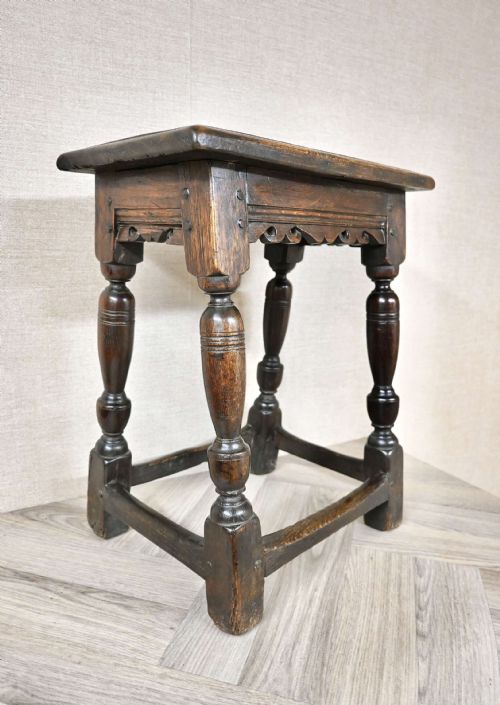
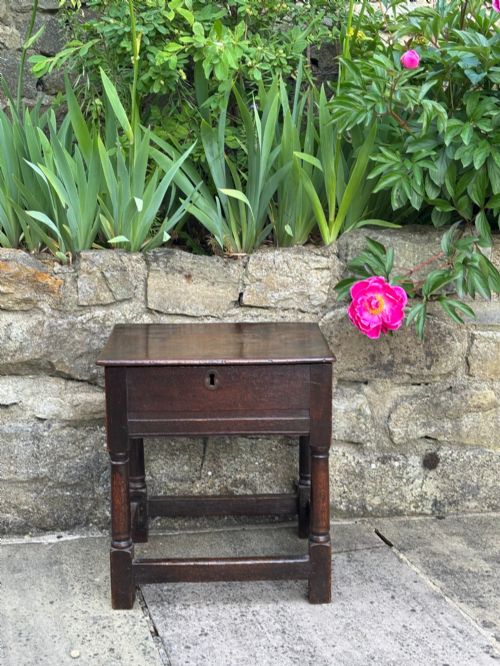


Charles I Joint Stool
A charles i joint stool is a heavy timber seat built to last centuries, prized for its honest Jacobean construction.
Charles I Joint Stool
A charles i joint stool is a sturdy wooden seat built with pegged mortise and tenon joints rather than traditional glued joinery. The examples found here span the seventeenth century alongside later revivals from nineteen ten and nineteen twenty, reflecting a long tradition of British craftsmanship.
How they were made
Makers built these pieces using solid oak, shaping heavy timbers with hand tools and securing the frame with wooden pegs. Iron elements sometimes appear in structural repairs or fixings, whilst certain variants incorporate fabric upholstery.
The technique relies on tight jointing methods that give the furniture its name, allowing the frame to withstand heavy daily use without metal fasteners. Surfaces show the tool marks of seventeenth century carpentry, preserved through generations of care.
Listings feature seventeenth century periods alongside nineteen ten and nineteen twenty dates, constructed entirely in oak with occasional iron and fabric elements.
What varies in quality
Quality rests in the proportion of the timber and the integrity of the original joints, separating period work from later nineteenth and twentieth century interpretations. Surviving seventeenth century pieces demonstrate a heft and structural rhythm distinct from twentieth century revivals.
The degree of surface survival and untouched timber patination distinguishes superior examples from those with extensive replacement parts. Original pegging and minimal timber loss elevate certain items within the broader range of available stools.
The Charles I Joint Stool Glossary
- Joint stool
- A sturdy wooden seat constructed with joined framing rather than turned legs alone. The term derives from joined timber work.
- Jacobean
- The style of design spanning the reign of James the First and the mid seventeenth century. It encompasses heavy oak furniture with rectilinear forms.
- Box stool
- A variant incorporating a lidded compartment beneath the seat for storage. These pieces combine utility with standard joint construction.
- Patina
- The surface sheen and colour developed by aged oak over centuries of handling and exposure. It indicates the genuine age of the timber.
Charles I Joint Stool: Frequently Asked Questions
What is a joint stool?
A joint stool is a rigid wooden seat built by a joiner using pegged frame construction rather than simple carpentry. These heavy oak pieces served multiple household purposes in seventeenth century daily life.
Unlike chairs, which were reserved for heads of households, joint stools provided versatile seating around the dining table. Their sturdy build allowed them to double as small side tables when needed.
How old are these stools?
The pieces available range from authentic seventeenth century examples dating back to the sixteen forties and fifties up to revival pieces made around nineteen ten and nineteen twenty. Seventeenth century items carry the marks of period hand tools.
Later revivals emulate the Jacobean style using similar oak materials. Examining the construction details helps distinguish period originals from twentieth century interpretations.
Where were they made?
English workshops produced the vast majority of these pieces during the seventeenth century. Regional vernacular traditions influenced the specific turnings and rail profiles.
British makers utilised locally sourced oak to build frames suited to domestic interiors. Surviving examples carry the character of these early domestic workshops.
How do I care for oak?
Keep seventeenth century oak furniture away from direct heat sources and sudden temperature shifts to prevent timber splitting. Natural wax helps nourish the dry wood surface.
Avoid modern liquid polishes that build up residue on historic patination. Gentle dusting preserves the dry finish developed over centuries.