


Seventeenth Century Joint Stool
A seventeenth century joint stool is a sturdy wooden seat built by joiners using pegged mortise and tenon construction, prized for its honest craftsmanship and period character.
What seventeenth century joint stools are
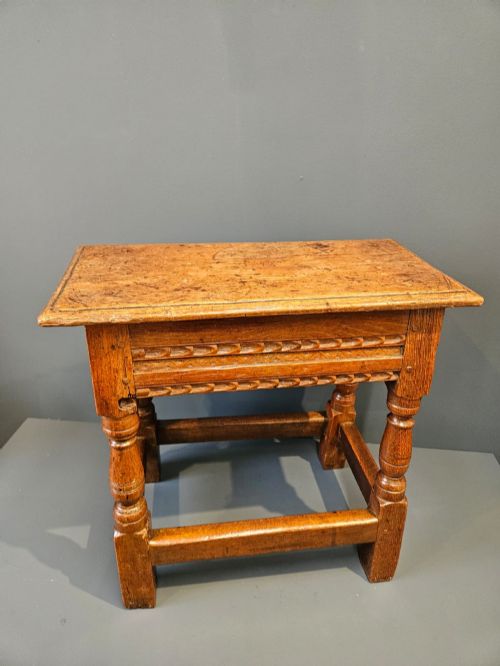
A seventeenth century joint stool represents a foundational form of early British seating, constructed entirely by specialist joiners rather than basic carpenters. These sturdy pieces typically feature rectangular tops supported by four vertical legs joined by low stretchers for stability.
The versions most commonly met on this page belong strictly to the seventeenth century and reflect Jacobean or seventeenth century British styles. Every example recorded here is fashioned from solid oak, displaying the dense grain and rich patination characteristic of the period.
How they were made
Makers built seventeenth century joint stools using solid oak timber, selected for its strength and local availability. Workshops relied on traditional mortise and tenon joints, secured with wooden pegs rather than metal fastenings.
The structural framework depended on four stout legs connected by stretchers positioned near the floor, which doubled as footrests. Joiners shaped the components using hand tools such as drawknives and chisels, leaving subtle toolmarks across the surfaces.
Every listed piece for this phrase is attributed to the seventeenth century and constructed exclusively from solid oak.
What varies in quality
Quality in a seventeenth century joint stool rests upon the proportion and crispness of the joinery rather than ornate decoration. Pieces with well-balanced legs and tight, original peg construction demonstrate superior workshop standards from the era.
The depth of the natural surface patination and the survival of the original timber components distinguish finer examples. Alterations to the height or replaced stretcher elements alter the integrity of the piece and its historical standing.
The Seventeenth Century Joint Stool Glossary
- Joint stool
- A wooden seat constructed using pegged joints by a specialist joiner rather than a carpenter. The term derives from joined stool, referring to the precise joinery methods employed.
- Mortise and tenon
- A fundamental woodworking joint where a projecting tongue fits snugly into a corresponding cavity. This technique provides the primary structural strength in seventeenth century furniture.
- Stretcher
- A horizontal wooden brace connecting the legs of a stool to provide lateral stability. On these pieces, they also served to keep feet off cold, damp floors.
- Jacobean
- The stylistic period spanning the reign of James I, noted for sturdy construction and restrained ornamentation in oak. It forms a key stylistic descriptor for pieces of this era.
Frequently Asked Questions
What is a joint stool?
A joint stool is a heavy wooden seat built with pegged mortise and tenon joints by traditional joiners. They were standard household items in the seventeenth century.
Unlike chairs, which were often reserved for the head of the house, these versatile stools served multiple seating and utility roles around the home.
How were they used?
These sturdy seats were used primarily around the dining table for everyday family meals. Their flat tops also made them convenient impromptu side tables.
Because they stack or tuck neatly away, households used them flexibly for extra guests or general domestic tasks.
How do I live with one?
Living with a seventeenth century joint stool involves placing it away from direct heat sources and sudden humidity changes. Solid oak responds poorly to modern central heating.
Treat the surface gently with traditional beeswax to maintain the historic finish without stripping the accumulated patination of centuries.
How do I date a joint stool?
Dating relies on examining the construction methods, toolmarks, and wood characteristics against known seventeenth century examples. Original pegged joints and native oak timber provide primary clues.
Stylistic details like Jacobean turnings on the legs further help narrow down the period of manufacture.