
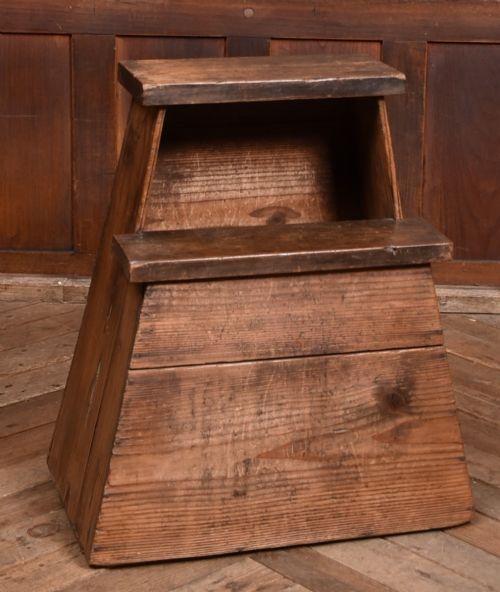


Brown Wooden Step Stool
A brown wooden step stool brings honest period utility to a room, offering sturdy elevation through time-tested carpentry.
Identifying your brown wooden step stool
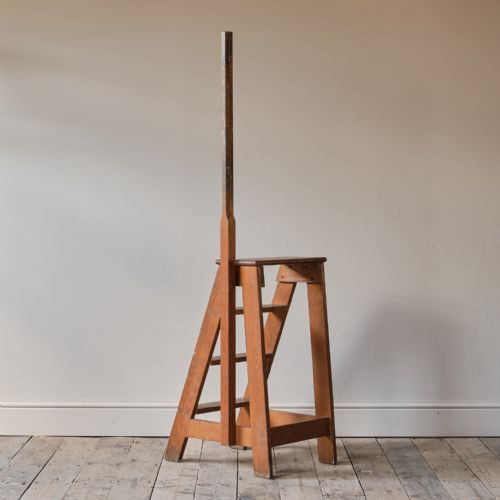
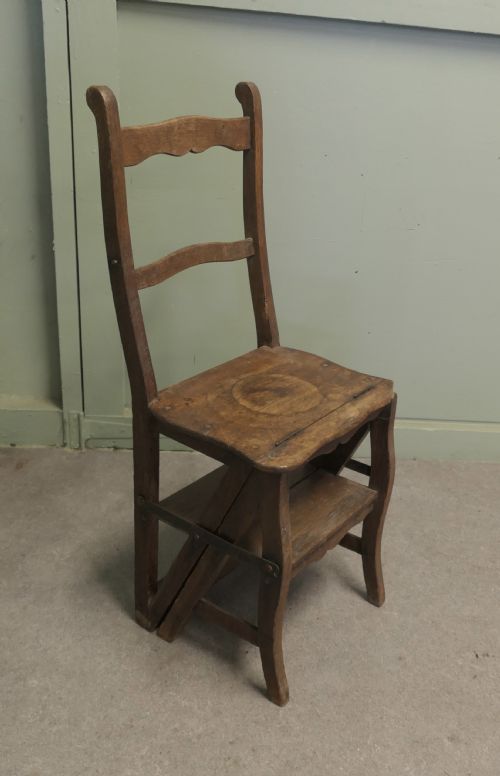
A brown wooden step stool encompasses practical domestic and library seating designed for reaching high shelves. These pieces range from modest pine kitchen steps to substantial oak library sets and metamorphic designs.
Buyers frequently find nineteenth-century items reflecting Victorian country or late Victorian tastes. Each brown wooden step stool reveals the specific functional demands of its original domestic or institutional setting.
Judging quality and character
Superior examples distinguish themselves through robust timber selection and clever mechanical ingenuity, particularly in metamorphic library steps that transform into seats. Finer pieces maintain original structural integrity without excessive timber replacement.
The hierarchy of quality rests upon the fidelity of the period joinery and the honesty of the wood's surface patination. Secondary items show utilitarian pine construction, whereas premier examples utilise dense oak with sophisticated Victorian Gothic detailing.
Retail Price Guide 2026
Typical UK retail prices for brown wooden step stool, calculated from the Sellingantiques database of over a million retail prices indexed since 2003. This retail price guide relies exclusively on Sellingantiques data; no external sources or auction records are used, so the figures do not describe the wider market.
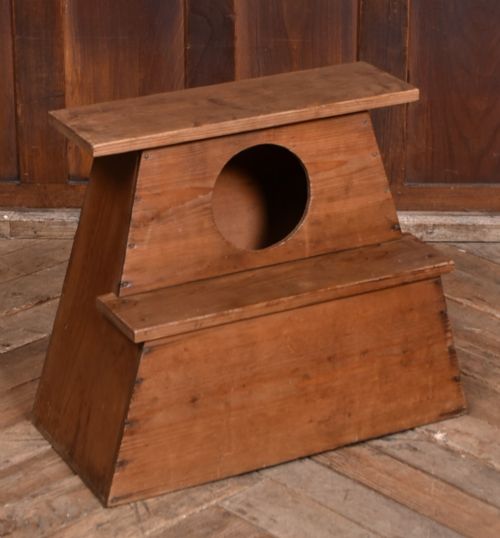
Street-vendor stools occasionally moonlighted as impromptu seating when the day's trading slowed down.
The Brown Wooden Step Stool Glossary
- Metamorphic
- Furniture designed to transform from one form into another, such as library steps folding into a chair. This clever dual-purpose engineering was particularly popular in Victorian homes.
- Gothic Revival
- An architectural and decorative style drawing inspiration from medieval design. It appears in these pieces through pointed arches, heavy chamfering, and solemn timber proportions.
- Tread
- The horizontal surface of a step upon which the foot rests. On antique steps, these boards often show distinct wear patterns from years of use.
- Patina
- The surface sheen and deep colour developed by wood over long periods of handling and exposure to light. A genuine patina cannot be replicated by modern finishing techniques.
- Folk Art
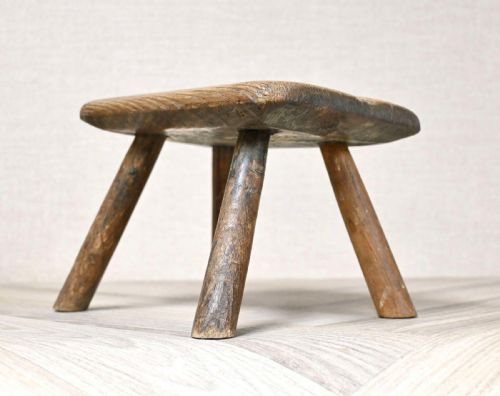
- Objects created by self-trained makers working within regional traditions rather than high-style academic design. These pieces often display charmingly direct construction methods.
Frequently Asked Questions
How do I date my wooden step stool?
Examine the wood species, tool marks left by saws or planes, and the type of metal fasteners used in the joints.
Nineteenth-century pieces often display hand-cut joinery alongside early machine-sawn timbers, paired with hand-forged or early cast iron hardware.
Are metamorphic library steps safe to use?
Many surviving examples retain their structural stability, but the pivoting and folding hinges require careful inspection before bearing weight.
Tested Victorian mechanisms generally function well when the supporting pins and iron brackets remain secure and uncorroded.
What is the best way to clean old pine?
Dust the surface regularly with a dry cloth and occasionally feed the dry timber with a traditional beeswax polish.
Avoid modern liquid cleaners or harsh detergents that strip away the historic wax and dull the natural wooden patina.
Where were these steps originally used?
These steps served in domestic kitchens, grand private libraries, and institutional study rooms for accessing elevated shelving.
Smaller examples also functioned as modest seating or platform stools for daily household tasks.