


Folding Library Steps
These folding library steps are ingenious transforming pieces designed to reach high shelves, combining daily utility with clever mechanical surprise.
What folding library steps are
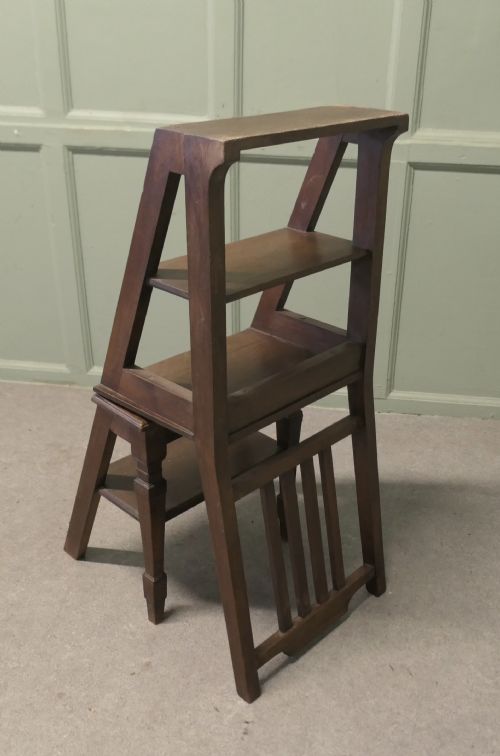
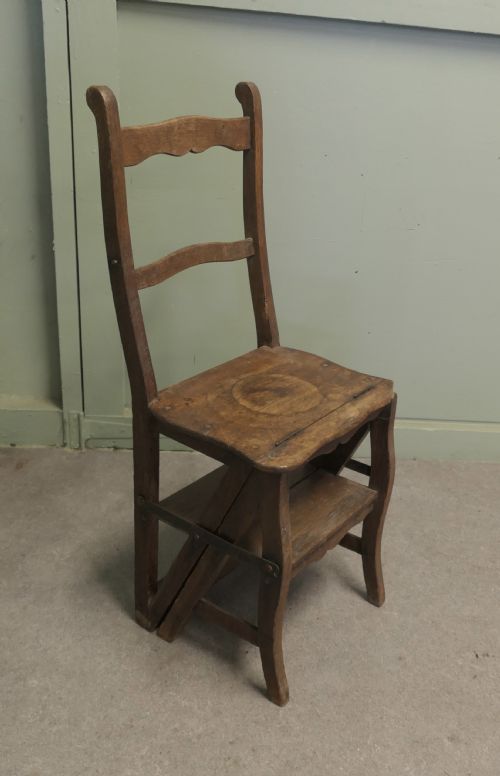
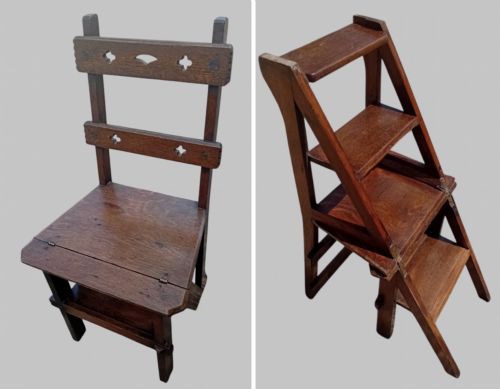
Folding library steps appear in various forms, most frequently as compact timber steps or as dual-purpose chairs that transform into a staircase.
The evidence shows periods spanning the Georgian and Regency eras through to the Victorian period and the twentieth century, constructed in forms ranging from simple steps to metamorphic armchairs.
Makers utilised woods such as mahogany, oak, fruitwood, yew and pine, sometimes incorporating leather, cane or brass fittings alongside textile coverings.
How they were made
Cabinet makers constructed these pieces primarily from timbers like mahogany, oak, fruitwood and yew, selecting durable woods suitable for weight-bearing mechanisms.
The engineering relies on hinges and pivots that allow armchair seats or step sections to fold smoothly into alternative configurations without jamming.
Retail Price Guide 2026
Typical UK retail prices for folding library steps, calculated from the Sellingantiques database of over a million retail prices indexed since 2003. This retail price guide relies exclusively on Sellingantiques data; no external sources or auction records are used, so the figures do not describe the wider market.
What varies in quality
The sophistication of the transforming mechanism dictates the tier of the piece, separating simple folding frames from complex metamorphic armchairs.
Material selection and decorative detailing, such as inset leather treads, brass mounts and fine timber choice, distinguish standard utility items from finer examples.
Morgan and Sanders
The Folding Library Steps Glossary
- Metamorphic
- Describing a piece of furniture designed to transform from one object into another, such as an armchair turning into a flight of steps. This dual function was especially popular in elite libraries.
- Regency
- A style period dating roughly from the early nineteenth century characterised by classical restraint and inventive mechanical furniture. Pieces from this era often display refined proportions.
- Fruitwood
- A dense timber harvested from fruit-bearing trees, utilised by cabinet makers for turned elements and smaller furniture. Its tight grain takes a fine finish.
- Tread
- The horizontal surface of a step upon which the foot rests. In library steps, these surfaces are sometimes lined with leather.
Frequently Asked Questions
How do metamorphic library chairs work?
Metamorphic library chairs use hidden hinges, pivots and sliding joints to reconfigure the backrest and seat. By unfolding the frame, the seating unit transforms into a stable set of steps.
This clever dual purpose allowed homeowners to have extra seating that instantly converted into functional access equipment.
What timbers were used?
Makers relied on durable hardwoods and domestic timbers including mahogany, oak, fruitwood, yew and pine. The choice often depended on the prevailing style of the period and the budget of the commissioner.
Finer examples also incorporated secondary materials like brass hardware, leather step inserts and woven cane.
How do I date folding library steps?
Dating relies on observing the timber species, construction methods, and stylistic cues associated with periods such as Georgian, Regency and Victorian. The complexity of the mechanism also offers clues to the era of manufacture.
Comparing the hardware and secondary woods helps place the piece within its historical context.