
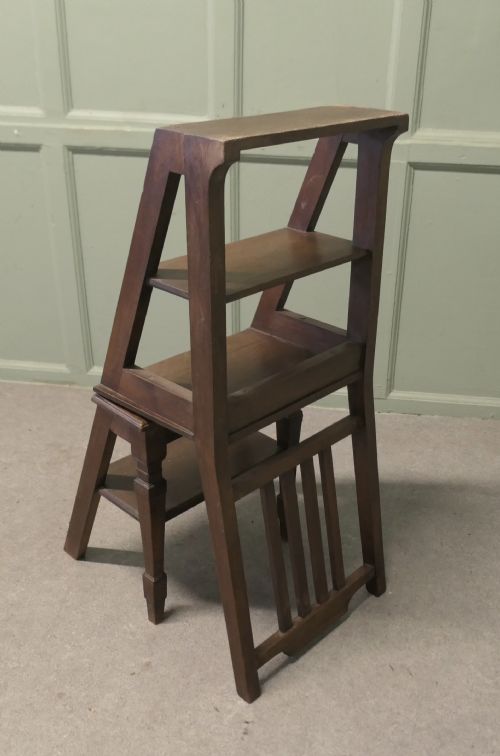
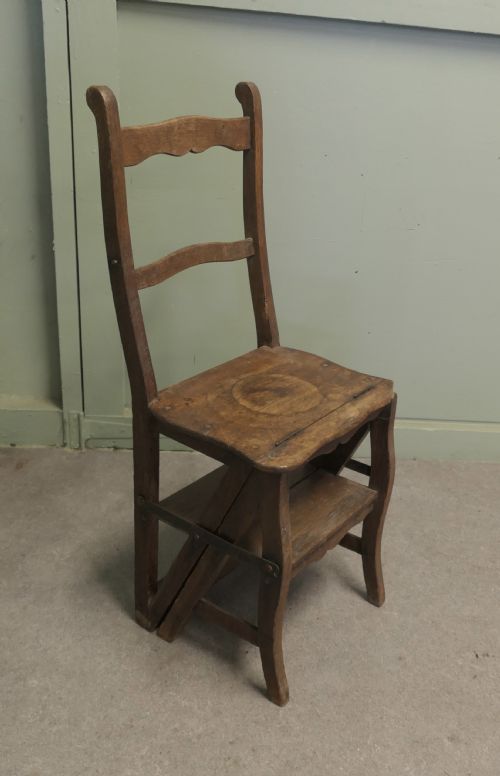
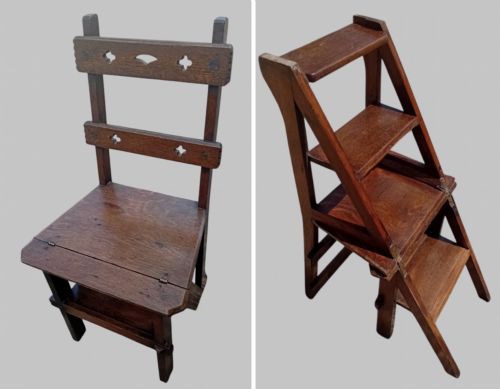


Oak Folding Library Steps
Oak folding library steps are clever dual-purpose pieces designed to reach high shelves, combining sturdy timber construction with ingenious metamorphic mechanics.
Oak Folding Library Steps
When buyers search for oak folding library steps, they encounter items that transform seamlessly from a chair, armchair, or A-frame structure into a set of functional steps. The selection ranges from early Georgian examples to Edwardian designs, encompassing both straightforward folding ladders and sophisticated metamorphic armchairs.
Many of these pieces feature secondary materials such as brass fittings, iron mechanisms, and leather treads or seats. Styles vary considerably across the periods represented, moving from plain utilitarian forms to Gothic Revival, Aesthetic Movement, and Arts and Crafts interpretations.
Materials and construction
These pieces rely primarily on solid oak, frequently paired with brass hinges, pivots, and locking brackets that facilitate the folding action without compromising structural integrity. Some examples incorporate leather panels on the steps or seat surfaces, while others utilise iron bracing or cane elements.
The joinery matches the period of manufacture, utilising traditional framing techniques to support the weight of a person when transformed into a ladder. Clever pivoting joints and sliding tracks allow the furniture to shift positions smoothly while remaining stable in both configurations.
Design styles represented include Gothic Revival, Aesthetic Movement, Arts and Crafts, and French Country traditions.
Assessing quality and execution
Quality in these items is determined by the ingenuity and smoothness of the metamorphic mechanism. Superior examples operate with precise, well-fitted brass hardware that secures the frame firmly in each position without excessive play.
The selection of the timber and the refinement of the carved or turned details also separate standard utility pieces from finer stylistic interpretations, such as those influenced by Gothic Revival or Arts and Crafts ideals.
The Oak Folding Library Steps Glossary
- Metamorphic
- Furniture designed to transform from one functional form into another, such as a chair turning into a set of steps. This ingenuity was particularly popular in domestic libraries during the Georgian and Victorian eras.
- A-frame
- A triangular structural formation that provides stable support when the steps are deployed. This design distributes weight evenly to the floor.
- Gothic Revival
- An architectural and decorative style drawing on medieval forms, featuring pointed arches and heavy timber detailing. This aesthetic appears frequently on nineteenth-century library steps.
- Arts and Crafts
- A design movement prioritising traditional craftsmanship and simple forms over mass production. Pieces from this period often highlight the natural grain of the oak.
Oak Folding Library Steps: Frequently Asked Questions
How do metamorphic library steps work?
These pieces use hidden hinges, pivots, and sliding tracks built into the frame. By lifting or rotating specific sections, the chair back or frame unfolds downwards to reveal a stable staircase.
Once fully extended, locking catches or gravity holds the treads firmly in place for safe climbing.
Are these steps safe to use?
Most antique library steps remain structurally robust if the joints and brass mechanisms are intact. However, they were built for domestic library use and require careful handling when transforming the frame.
Checking the stability of the pivots and oak treads ensures safe daily operation in a modern home.
What periods do these steps come from?
The available pieces span from the Georgian era through the nineteenth century into the Edwardian period and the early twentieth century. Each era brought distinct stylistic influences, from plain utility to Gothic Revival and Arts and Crafts designs.
Materials and hardware styles generally reflect the manufacturing date of the piece.
What woods were used besides oak?
While solid oak forms the primary structure of these library steps, some examples incorporate secondary timbers like pine in hidden areas or hardwood framing. Leather inserts and cane panels frequently appear on the seating surfaces of metamorphic chair variants.
Brass and iron hardware are standard components across almost all surviving pieces.