
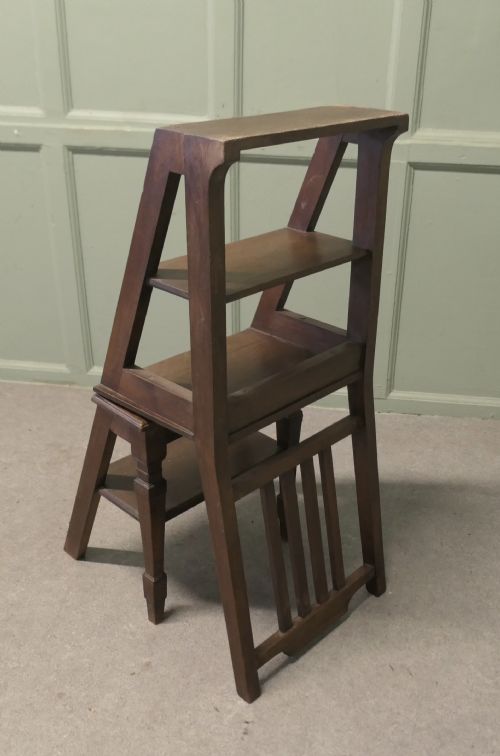
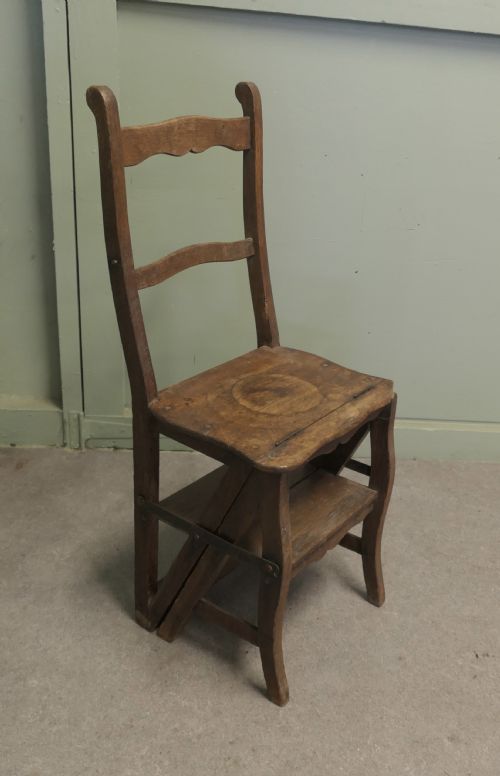
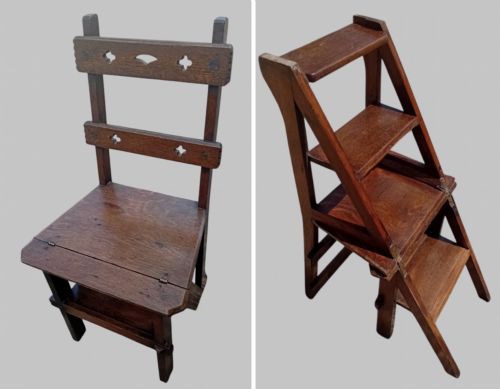


Metamorphic Library Steps
Metamorphic library steps combine seating and ascension in ingenious dual-purpose pieces designed for high-ceilinged rooms.
Metamorphic Library Steps
When you search for metamorphic library steps, you encounter dual-purpose furniture that converts from an armchair, side chair, or stool into a sturdy set of stairs. These pieces served gentlemen and scholars who needed safe access to high bookshelves without keeping bulky ladders permanently in the room.
The version you most frequently meet on this page is the convertible chair, often rendered in mahogany or oak across the Regency, Victorian, and Edwardian eras. These domestic transformers pivot, unfold, or slide to reveal three or four treads beneath a seat or backrest.
Origins stretch from the Georgian period through the nineteenth century, encompassing styles from plain country oak to elaborate Gothic Revival and Arts and Crafts designs. The underlying mechanism remains the constant thread, concealing utility beneath ordinary domestic seating.
How they were made
Cabinet makers built these clever items using durable hardwoods like mahogany and oak, supplemented by iron hinges, brass pivots, and locking pins to manage the physical strain of conversion. Leather inserts often lined the top treads to provide grip and match the desk accessories of the library.
Joinery had to be exceptionally precise because loose joints quickly led to wobbling when the furniture was transformed into a staircase. Clever pivoting arms and folding locking mechanisms allowed the transformation to happen smoothly without pinching fingers or jamming.
The archive shows that side chairs converting to library steps outnumber standard armchairs among surviving nineteenth-century examples.
What varies in quality
The distinction between ordinary and exceptional pieces lies in the elegance of the transformation mechanism and how completely the stairs disguise themselves as a chair. Master makers concealed the hinges and joints so thoroughly that the piece looked entirely normal in its seating configuration.
Timber selection and secondary framing determine longevity, as lesser items used thin secondary woods that buckled under the weight of a climbing reader. Superior examples employed dense hardwoods and robust brass fittings that withstand decades of repeated folding and unfolding.
J.Jarvis·Morgan and Sanders·Richard Hicks Bridgens·Gillows·James Shoolbred and Co
The Metamorphic Library Steps Glossary
- Metamorphic furniture
- Pieces designed to transform from one form of utility into another, such as a chair turning into a set of steps. This ingenuity defined much elite nineteenth-century domestic design.
- Tread
- The horizontal surface of a step upon which the foot rests during climbing. In library furniture, these are frequently inset with leather or grooved for traction.
- Gothic Revival
- A nineteenth-century design style drawing on medieval architectural motifs like pointed arches and tracery. It frequently appeared on oak library pieces of the Victorian era.
- Aesthetic Movement
- A late nineteenth-century design current emphasising artistic expression over heavy historicism. Pieces from this circle often utilised ebonised or walnut timbers with simpler lines.
Metamorphic Library Steps: Frequently Asked Questions
How do metamorphic library steps work?
These pieces use concealed hinges, sliding tracks, and pivoting frames that allow the backrest or seat sections to unfold outward into a stable staircase. The transformation requires simple manual adjustment without detached parts.
Once climbed, the stairs fold back into a compact chair or stool configuration that sits unobtrusively beside a desk or bookshelf.
Were these steps used in large libraries?
Private studies and grand country house libraries utilised these convertible chairs to save floor space while reaching upper bookshelves. Gentlemen could sit and read before needing to climb.
They provided an elegant alternative to permanent wooden library ladders, which cluttered the room and required dedicated storage space.
How do I tell a Regency version apart?
Regency examples typically feature rich mahogany timbers, sabre legs, and classical reeding that match the refined neoclassical taste of the early nineteenth century. Their mechanisms tend to rely on smooth pivoting side arms.
Later Victorian versions often shift towards heavier oak construction and incorporate Gothic Revival or Arts and Crafts decorative motifs.
Can I sit in a metamorphic chair daily?
Most pieces were built as fully functional seating intended for regular use in a study or library setting alongside their step utility. The frame construction mirrors standard armchairs of the period.
However, owners should handle the conversion mechanism with care to avoid putting unnecessary lateral strain on the internal brass pivots and hinges.