


Regency Step Stool
These regency step stool pieces are clever convertible forms made for domestic libraries, combining seating with tiered access.
Regency Step Stool
A regency step stool provides elevated access to tall bookshelves while often serving a dual purpose as a seat or commode within the room. Buyers browsing this selection encounter tiered library steps, folding armchairs that transform into steps, and box stools dating from the Georgian, Regency, and nineteenth century periods.
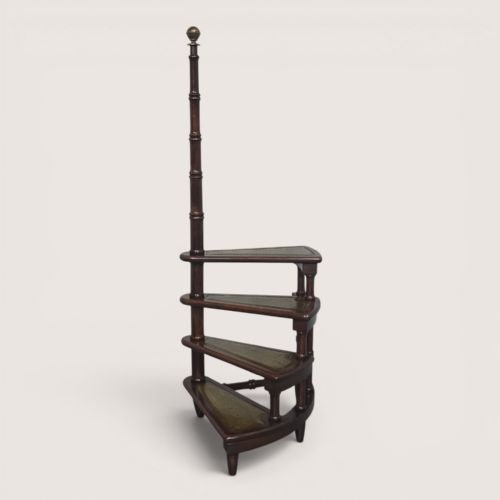
The most common formats on this page include mahogany library steps and metamorphic pieces that shift between chair and step configurations. Variations span spiral library steps with leather-topped treads, satinwood bed steps, and oak designs.
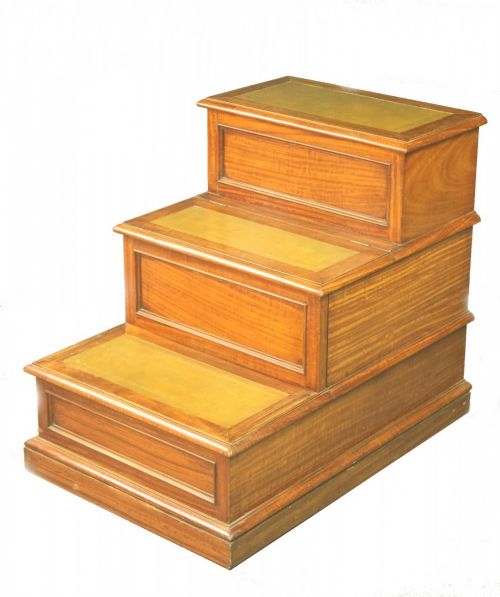
Originating in domestic and library settings of the nineteenth century, these objects reflect an era of private collections requiring practical furniture solutions. Pieces range from straightforward three-step commodes to complex folding designs associated with known makers.
Assessing quality and execution
Quality rests in the smoothness of the metamorphic mechanism and the rigidity of the joints when deployed as steps. Superior examples maintain structural integrity across repeated transformations, whereas lesser pieces show wear in the pivot points and framing.
Material selection and decorative detailing elevate certain specimens, notably those featuring figured mahogany, satinwood veneers, or stamped maker attributions. The integration of leather treads and turned supports distinguishes standard utilitarian items from finer library furnishings.
The inventory includes spiral library steps and folding armchairs spanning the Regency, Georgian, and Victorian periods.
J.Jarvis·Gillows·Richard Hicks Bridgens
The Regency Step Stool Glossary
- Metamorphic
- Furniture designed to transform from one form into another, such as an armchair converting into a flight of steps. This clever engineering allowed dual functionality in private libraries.
- Tread
- The horizontal surface of a step upon which the foot rests. These are frequently lined with leather or fabric in library furniture.
- Commode
- A piece of furniture containing a concealed chamber pot or serving storage purposes. Regency examples occasionally combine this function with a step stool.
- Box stool
- A seat featuring a hollow interior accessed by lifting the top. These provide compact storage alongside a stable platform.
- Bed steps
- Small flights of steps designed to assist individuals in climbing into high period beds. They often share construction traits with library steps.
Regency Step Stool: Frequently Asked Questions
How do metamorphic library steps work?
These pieces use hidden hinges and pivoting sections that allow the upper treads to fold out from beneath a seat or cabinet. The user simply lifts or pulls the framework until it locks securely into a staircase configuration.
Returning the item to its closed state reverses the motion, concealing the steps within a compact armchair, stool, or box form. This design saved space in crowded nineteenth-century libraries.
Were these steps used only in libraries?
While primarily built for reaching high bookshelves in private studies, similar multi-functional forms served bedrooms as bed steps. Versions incorporating commodes also functioned near sleeping quarters.
The adaptability of the framing made them useful wherever vertical reach or hidden utility was required in a domestic interior.
How do I distinguish a genuine period piece?
Examine the timber species, secondary woods, and the wear patterns around hinges and tread edges. Period items typically employ traditional joinery appropriate to the nineteenth century, such as hand-cut dovetails and pegged joints.
Makers' stamps or specific brass hardware can also point toward authentic workshop origin rather than later reproduction.
How should I care for leather treads?
Leather surfaces on treads require gentle cleaning with a soft, dry cloth to remove dust and grit. Avoid harsh chemical cleaners that can dry out the historic hide.
Applying a specialist leather dressing occasionally helps maintain flexibility and prevents cracking on antique surfaces.