



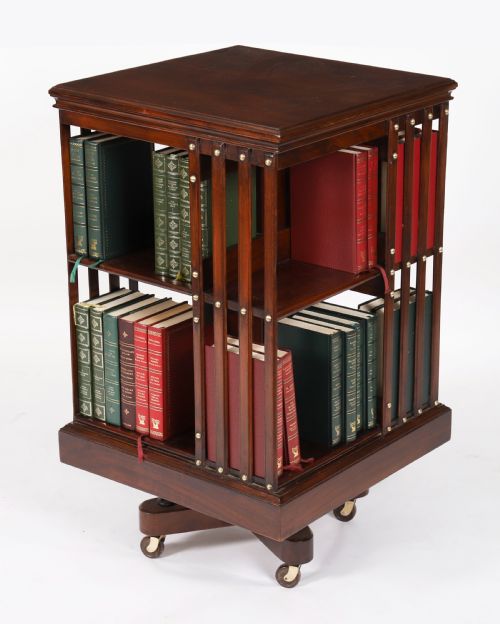


English Library Furniture
English library furniture brings together mahogany and rosewood tables, breakfront bookcases and metamorphic steps made to serve serious reading.
English Library Furniture
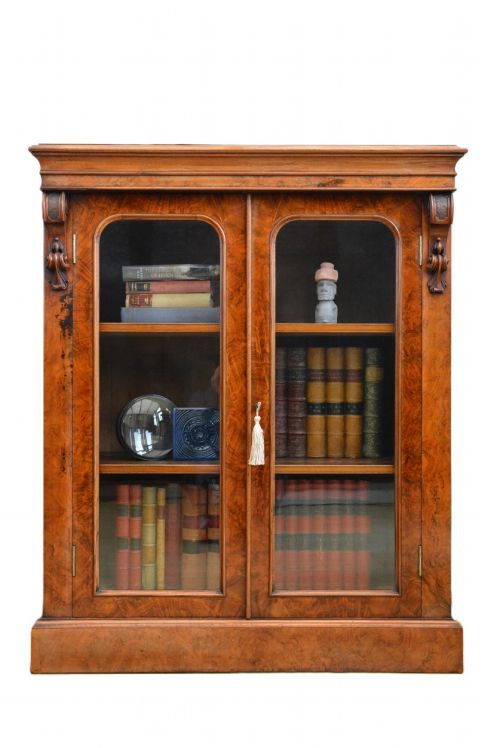
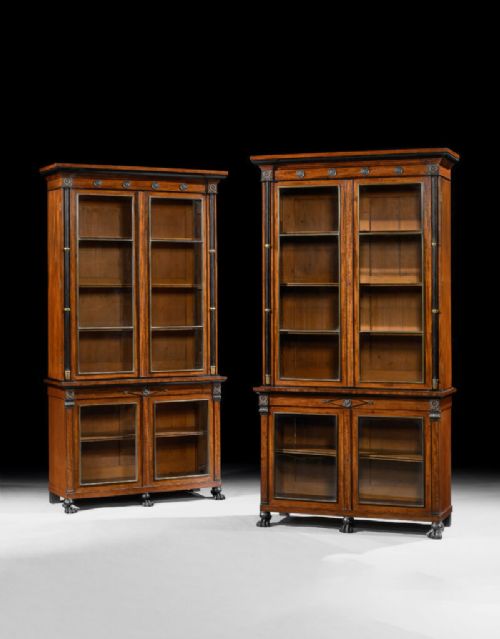
When you search for english library furniture, you look at utilitarian and formal pieces designed for scholarly and domestic reading spaces. The selection on this page centres heavily on bookcases, library steps, centre tables, writing tables and armchairs.
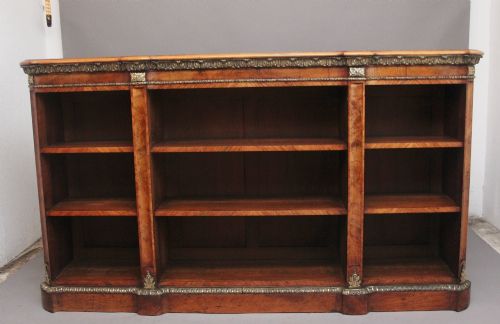
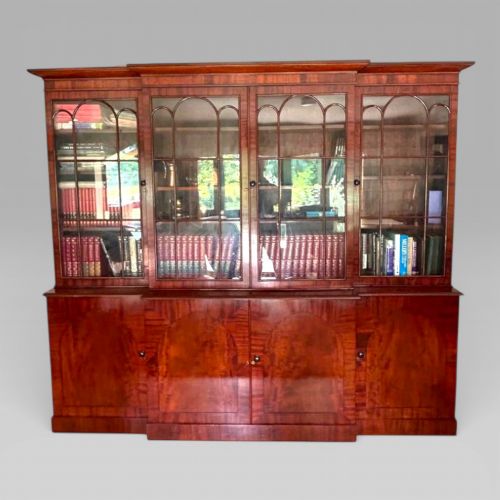
The most common forms meeting this description span the Regency and Victorian periods, alongside earlier eighteenth-century examples and later revivals. Breakfront bookcases, revolving bookcases, drum tables and sofa tables dominate the available types.
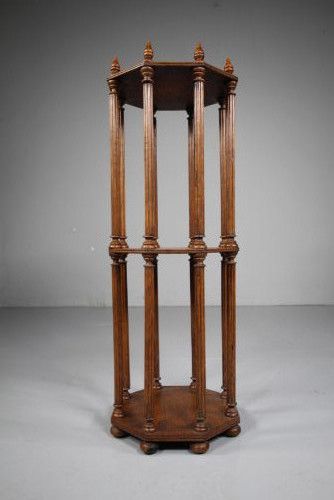
Makers and workshops constructed these objects from dense native and imported timbers to withstand daily study. Pieces range from grand scale architectural bookcases down to compact scroll stands and library steps.
Materials and construction
Cabinetmakers built these pieces predominantly using mahogany, walnut, oak and rosewood, often selecting figured veneers or burr variations for visual depth. Secondary timbers received careful framing while primary surfaces showed rich grain.
Metalwork played a functional and decorative role, incorporating brass for inlays, handles, grilles and castors on heavy tables and chairs. Glass panels appeared in glazed bookcase doors to protect volumes while keeping titles visible.
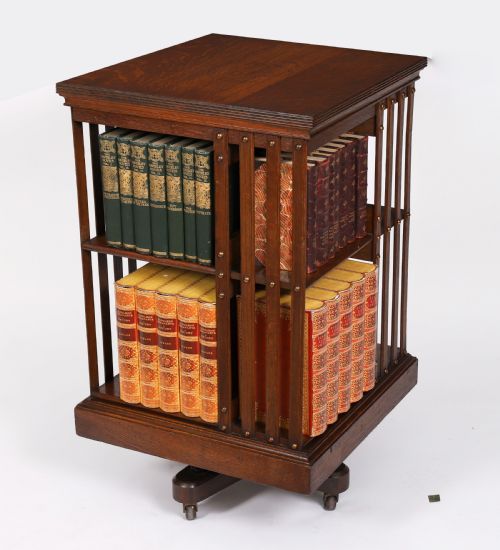
Specialised mechanisms defined clever utility, seen in metamorphic library steps that folded into armchairs and revolving bookcases mounted on pivot bases. Joinery relied on sturdy tenons and dovetails to support the substantial weight of books.
Some nineteenth-century readers needed revolving bookcases so they could spin an entire encyclopedia round without standing up.
Distinctions in quality
The standard of timber selection separates finer examples from plain utilitarian output, particularly in the choice of figured mahogany, burr walnut or pollard oak. Grain matching across large breakfront doors and table tops demonstrates higher workshop ambition.
The crispness of carved details, brass inlay execution and the integrity of secondary woods indicate the skill invested during production. Maker attribution, through stamps or documented provenance, anchors the top tier of pieces.
Original elements such as glass panes, leather writing inserts and working locking mechanisms preserve the integrity of a piece. Alterations to cornices, plinths or interior shelving shift an item away from its original state.
Johnstone and Jeanes·Marsh and Tatham·Gillows·Maple and Co·James Winter and Sons·Druce and Co·J Jarvis
The English Library Furniture Glossary
- Breakfront
- A cabinet or bookcase whose central section projects forward from the flanking outer sections. This architectural arrangement creates depth and breaks up long expanses of shelving.
- Metamorphic furniture
- An object designed to transform from one form into another, such as an armchair that unfolds into a flight of library steps. Such dual-purpose designs served compact domestic studies.
- Bergère
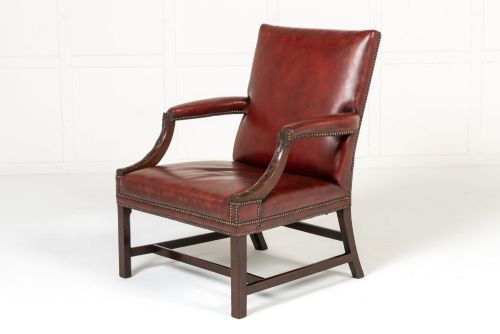
- An enclosed upholstered armchair with wooden sides and back framing, often filled with cane or upholstery. These chairs provided comfortable seating for prolonged reading.
- Drum table
- A circular library table with a deep top containing drawers, supported on a central pillar and tripod or plinth base. The cylindrical shape resembles a drum.
- Ormolu
- Gilded bronze mounted onto furniture as decorative enrichment. It provides bright metallic contrast against dark woods like walnut and mahogany.
English Library Furniture: Frequently Asked Questions
How do I use library steps safely?
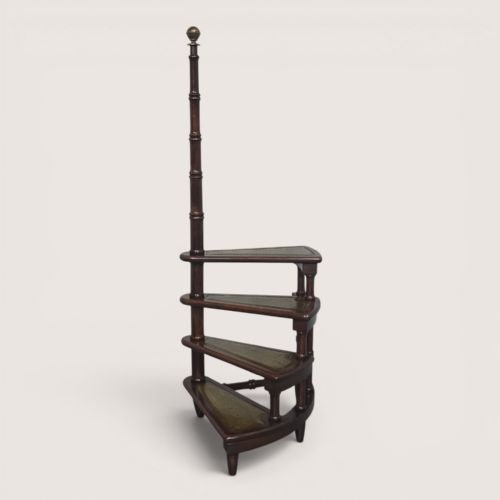
Traditional library steps rely on stable timber treads and sturdy side supports to bear weight during access to high shelves. Many period sets incorporate handrails or clever folding mechanisms to maintain balance.
Users should check that locking hinges and folding braces on metamorphic or spiral steps are fully engaged before climbing. Placing the steps on an even floor prevents wobbling when reaching for heavy folios.
Where did library tables go in a house?
Library tables stood in the centre of private studies, libraries or morning rooms to provide a stable writing and reading surface away from walls. Their finished backs and pedestals allowed them to be viewed from all angles.
Large examples often held atlases and folios, while smaller sofa tables sat beside seating areas for correspondence. The placement reflected the scholarly or administrative focus of the room.
How do I care for leather desk inserts?
Leather inserts on writing tables require gentle cleaning with a slightly damp cloth followed by neutral leather dressings to prevent drying. Avoid harsh chemical cleaners that strip the original gilt tooling.
Keeping tables away from direct sunlight and heat sources protects the leather from cracking and fading over time. Regular light dusting maintains the smooth writing surface.
What is a breakfront bookcase used for?
A breakfront bookcase provides extensive tiered shelving behind glazed or solid doors to house large collections of leather-bound volumes. The projecting centre section allowed libraries to categorise books by subject or size.
Lower cupboards frequently stored oversized folios, maps or papers away from light. Their monumental presence anchored the architectural scale of nineteenth-century rooms.