


English Library Steps
English library steps give you sensible height to reach high shelves, combining solid timber construction with clever folding or metamorphic design.
English Library Steps
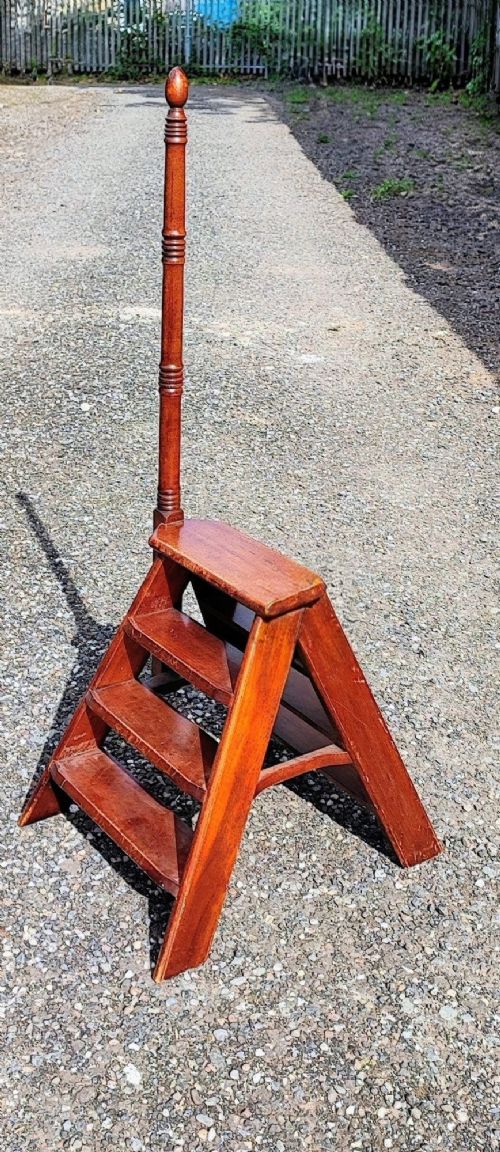
English library steps are functional pieces designed to reach high bookshelves, appearing in forms such as standard sets, spiral structures, and metamorphic chairs or side tables. You are most likely to meet mahogany examples dating from the nineteenth century or the early twentieth century.
The inventory includes various configurations, from traditional multi-tier sets to clever dual-purpose furniture that transforms from a seat into a set of steps. These objects served utilitarian purposes in private studies and grand libraries before becoming decorative items for the home.
How they were made
Cabinetmakers constructed these pieces primarily from timbers such as mahogany, oak, fruitwood, and walnut, often selecting dense hardwoods to withstand regular climbing. Brass hardware provides structural joints and hinges, while turned supports and carved details shape the frames.
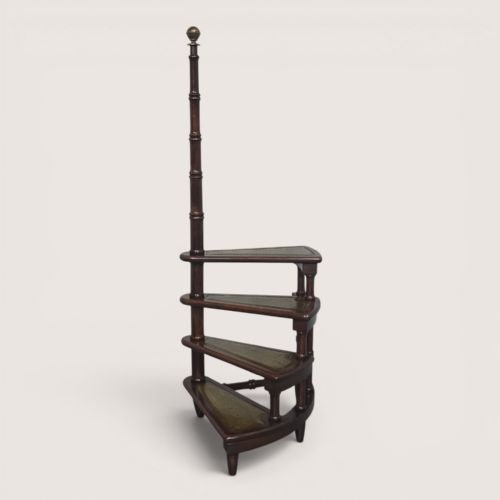
Treads frequently feature inset leather panels, sometimes finished with blind tooling, to provide grip and protect the wood beneath. Certain variants incorporate cane panels or glass elements, alongside ebonised wood finishes applied to the timber.
Spiral library steps bring a sudden twist to domestic navigation, proving that reaching a high book was once an architectural event.
What varies in quality
Quality depends on the precision of the joinery and the ingenuity of the metamorphic mechanism, where smoother transitions between chair and step indicate superior workshop skill. The choice of timber grain and the condition of the original leather treads also separate standard examples from finer ones.
Maker marks, such as stamps by specific cabinetmakers, distinguish designated pieces from unmarked vernacular furniture. The crispness of turned supports and the retention of original brass fittings further divide the range.
Phillips Brothers·J Jarvis
The English Library Steps Glossary
- Metamorphic furniture
- Furniture designed to transform from one object into another, such as an armchair or side table that unfolds into a set of steps. This clever dual-purpose design was particularly popular in the nineteenth century.
- Tread
- The horizontal upper surface of a step where a person places their foot. In library steps, these are frequently inset with leather to provide traction.
- Fusee
- A conical pulley used in clock movements to maintain equal power as the mainspring unwinds. This mechanism appears in related timepieces associated with library interiors.
- Ebonised wood
- Timber treated with a dark stain or chemical process to imitate ebony. This dark finish creates a formal contrast against lighter elements.
English Library Steps: Frequently Asked Questions
How do metamorphic library steps work?
Metamorphic library steps operate through hinged sections and pivoting frames that allow the piece to shift from a seating form into a staircase. Users simply unfold or rotate the structural components to access the elevated treads.
This ingenious double function saved space in private studies while providing sturdy support for reaching high bookshelves.
What woods were used for English library steps?
Cabinetmakers primarily built these steps using mahogany, along with oak, fruitwood, walnut, and pine. Timber selection depended on the period and the desired finish of the piece.
Selected examples also feature ebonised wood treatments or incorporated cane panels to match the interior aesthetics of the library.
Are leather treads original to the steps?
Many steps feature leather-topped treads designed to offer grip and protect the underlying timber during use. These often include decorative tooling around the edges.
Over the decades, some treads retain their original leather while others have received replacement hide during maintenance.
How do I date an antique set of steps?
Dating relies on observing the timber species, construction methods, and hardware styles characteristic of periods like the Regency era or the Victorian decades. Stamped maker marks can also provide specific chronological markers.
Comparing the turned supports and mechanical complexity helps place the piece within the nineteenth or early twentieth century.