


Antique Ebony Chairs
Antique ebony chairs bring rich, dark timber and intricate colonial carving into a room, offering both seating and striking visual weight.
Antique Ebony Chairs
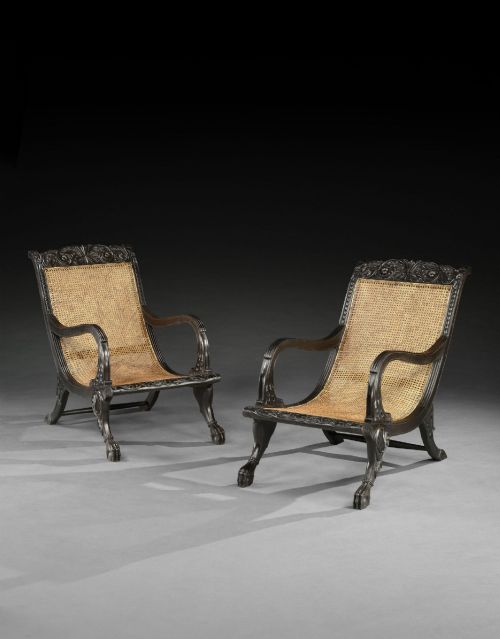
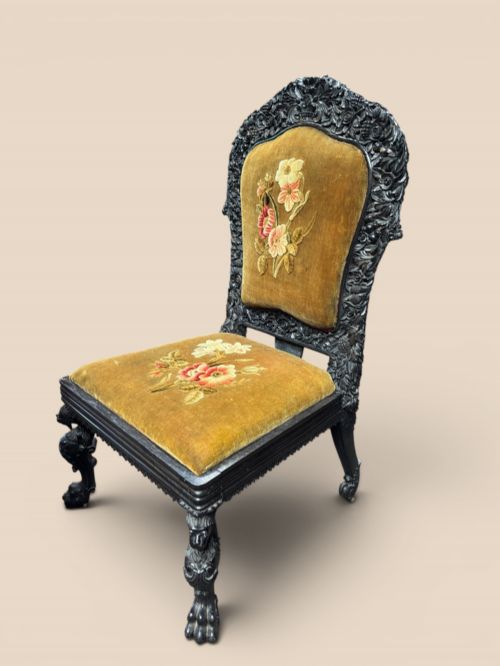
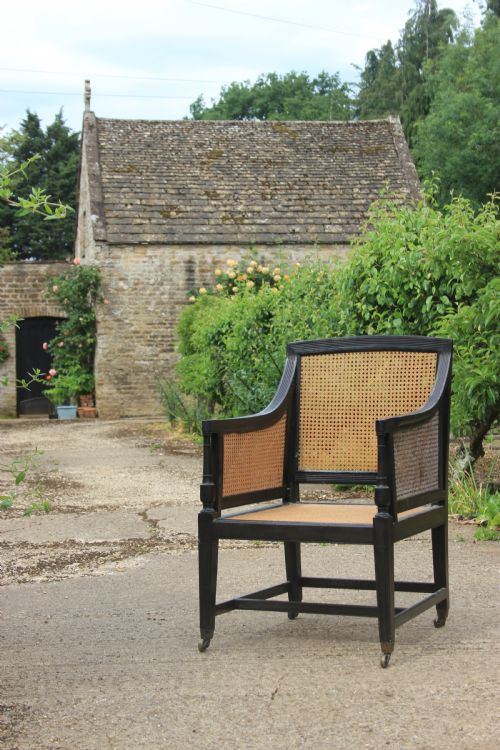
When you search for antique ebony chairs, you encounter dense, dark seating originating primarily from nineteenth-century colonial workshops and earlier periods. These pieces range from substantial library armchairs to matched sets of dining chairs.
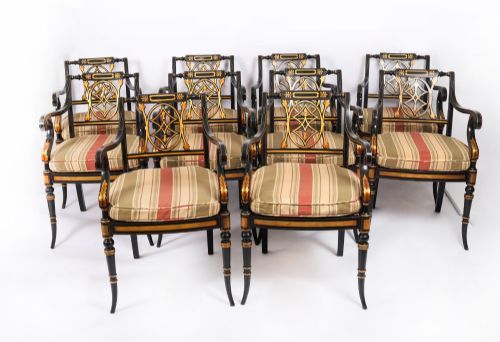
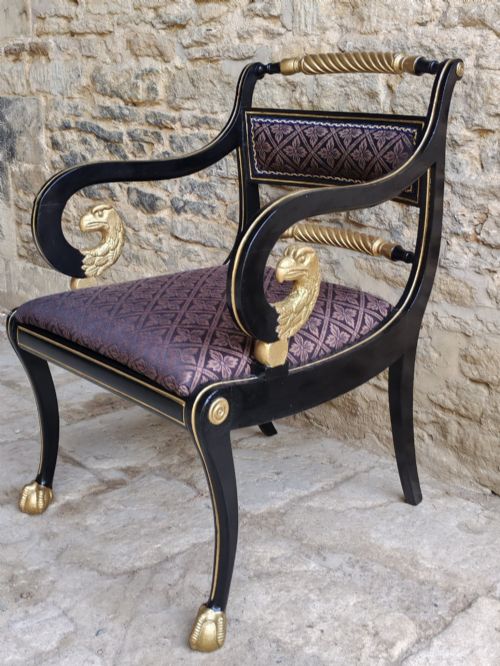
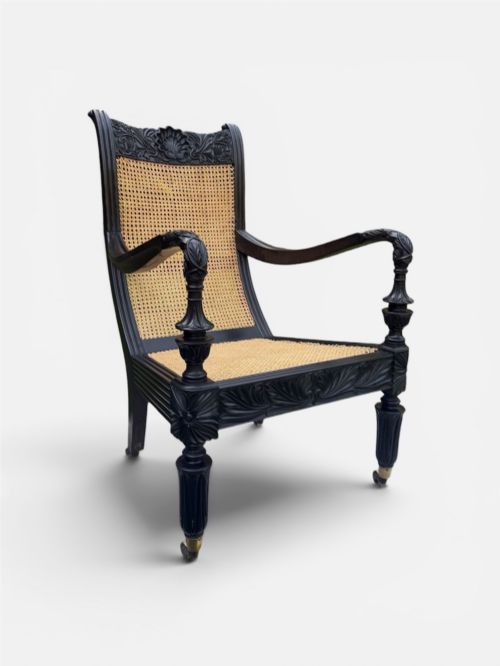
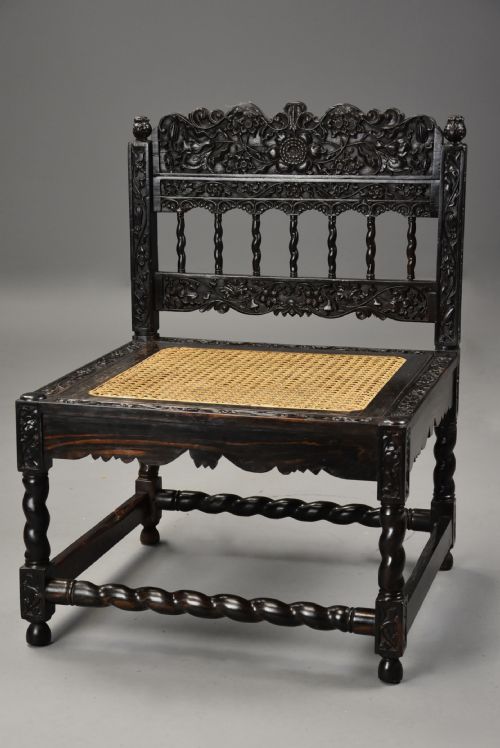
The Anglo-Indian and Ceylonese traditions dominate the selection on this page, often showing deep relief carving reflecting regional craftsmanship. European Regency and Art Deco forms also appear, utilising ebony alongside other exotic timbers.
Buyers most frequently meet nineteenth-century examples, including solid ebony armchairs and bergères. Sets of dining chairs and occasional chairs also feature across the inventory.
How they were made
The construction relies on solid ebony and ebonised wood, frequently paired with cane seats or upholstered pads in fabric and velvet. Artisans utilised brass accents and parcel gilt highlights to accentuate the dark grain.
Carving technique defines these pieces, with nineteenth-century makers executing deeply incised floral and foliate motifs by hand. Turning and joinery techniques follow both British Regency patterns and traditional colonial cabinet-making methods.
Object types recorded across the inventory include armchairs, side chairs, dining chairs and complete dining suites.
What varies in quality
The depth and crispness of the hand-carving separate standard regional output from exceptional examples. Finer pieces display sharper relief work and uninterrupted grain across primary structural components.
Material consistency also dictates value, distinguishing solid ebony frames from ebonised secondary timbers or composite constructions. The integrity of original canework and secondary woods like calamander and macassar further differentiates the pieces.
The Antique Ebony Chairs Glossary
- Ebony
- A dense, heavy black or very dark brown heartwood obtained from trees of the genus Diospyros. It is prized for its fine texture and ability to take a high polish.
- Cane
- Material woven from stripped rattan palm used for seat panels and backrests. It provides flexibility and breathability in warm climates.
- Bergère
- An enclosed upholstered armchair with wooden framing around the back and sides. The style originated in France and was adopted in various forms during the Regency period.
- Parcel Gilt
- A decorative treatment where specific carved details or mouldings are partially covered in gold leaf. This technique highlights particular elements against a dark timber background.
- Ebonised
- Wood treated with stain, paint or chemical processes to simulate the appearance of true ebony. Beech and other timbers frequently receive this finish.
Antique Ebony Chairs: Frequently Asked Questions
Are these chairs comfortable for daily use?
Solid timber frames and upright colonial designs prioritise firm support over deep lounging. Many feature woven cane seats that offer slight give when sat upon.
Adding loose squab cushions can increase comfort for prolonged sitting while preserving the original structure of the chair.
How do I care for solid ebony timber?
Maintain the wood by dusting with a soft, dry cloth and avoiding direct sunlight to prevent splitting. Natural waxes applied sparingly help nourish the dense grain without building up residue.
Keep these chairs away from sudden temperature fluctuations and extreme humidity changes to protect the joinery.
Where were most antique ebony chairs made?
A significant portion originates from nineteenth-century workshops in Ceylon and India, reflecting Anglo-Indian trade and colonial craftsmanship. European centres also produced ebonised or solid ebony seating during the Regency and Art Deco eras.
Regional carving styles help identify whether a piece emerged from the Coromandel Coast or British cabinet-makers.
How do I distinguish solid ebony from ebonised wood?
Solid ebony exhibits natural weight, density and dark coloration that extends entirely through the timber. Ebonised pieces typically reveal a lighter wood species beneath minor chips or wear points.
Examining unpolished underside areas or mortise joints often clarifies the underlying material.