

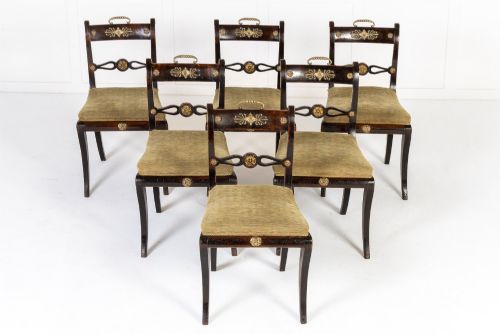
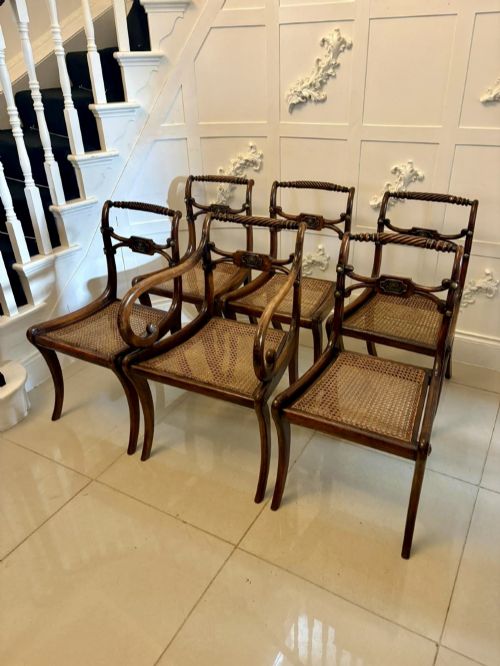
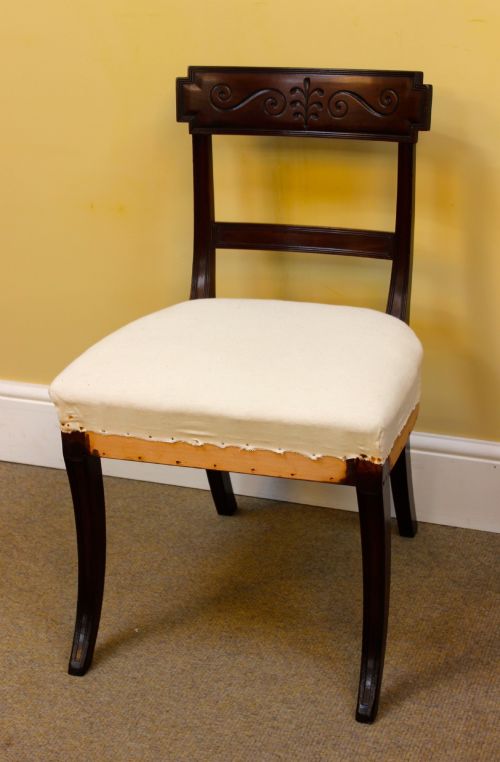
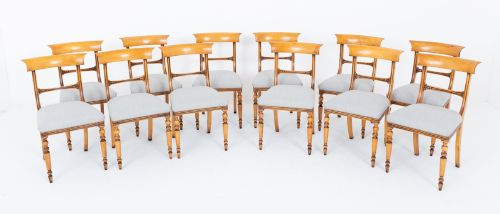
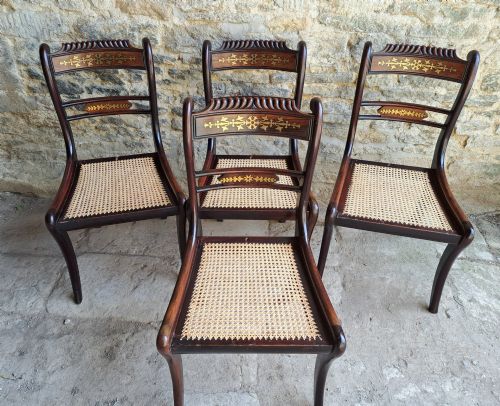
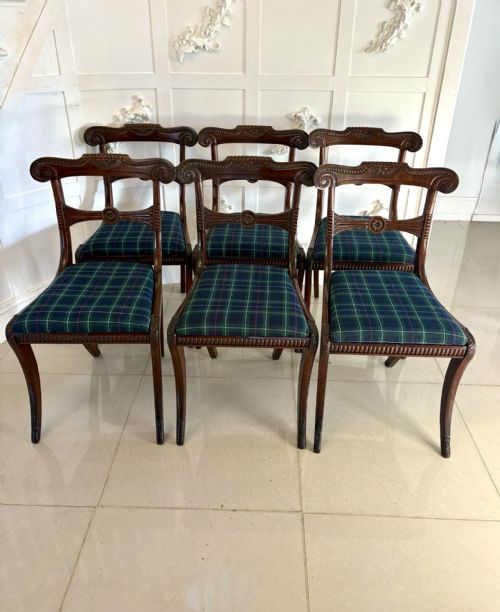
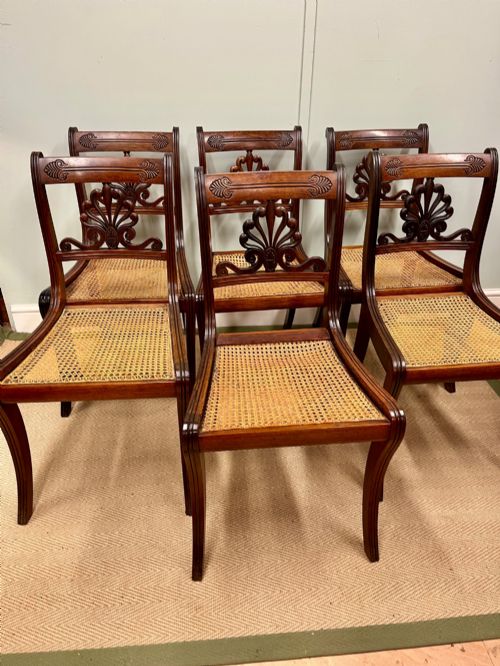
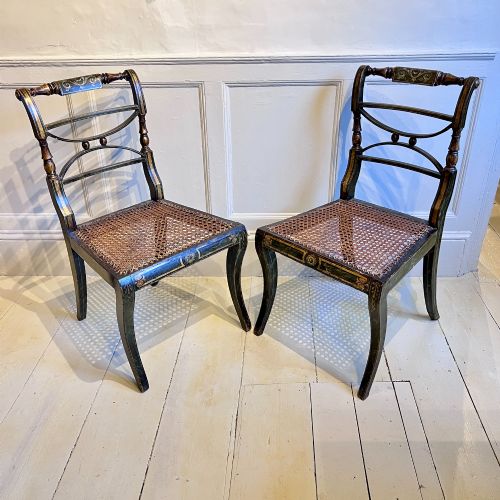
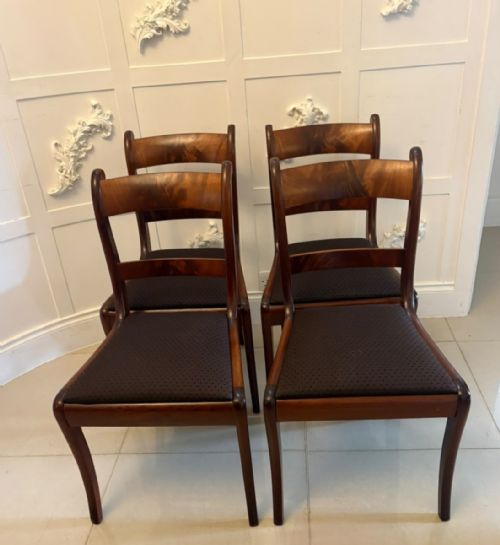
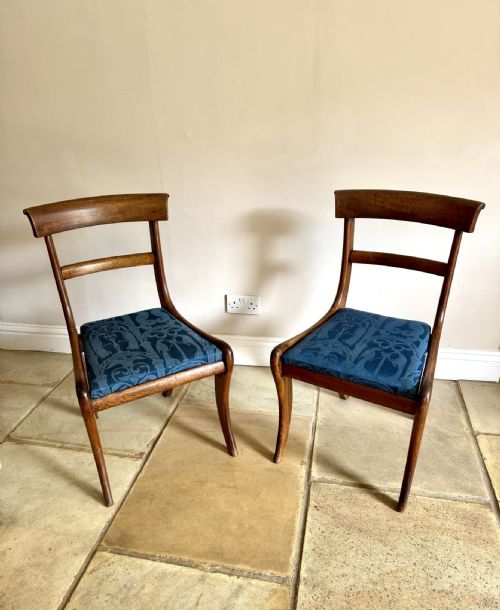
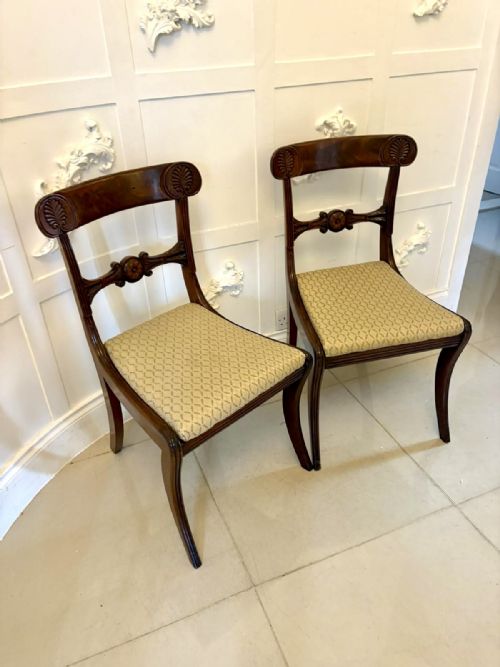
Sabre Leg Side Chairs
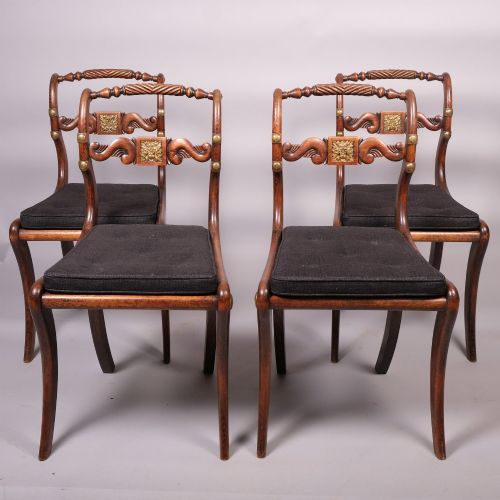
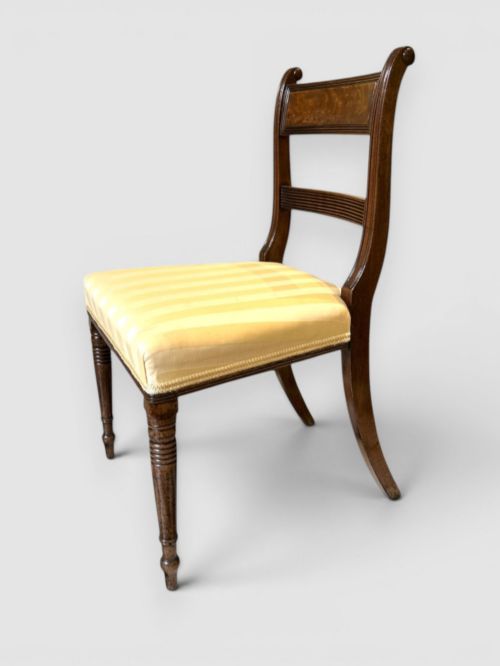
Sabre leg side chairs bring architectural elegance to a room, offering the distinctive sweeping rear supports defined by the Regency period.
Sabre Leg Side Chairs
Sabre leg side chairs are primarily formal seating forms originating in the early nineteenth century during the Regency era and its later revivals. Buyers seeking this search phrase encounter seating designed with distinctive outward-curving rear legs that mimic the shape of a cavalry sabre. These pieces appear frequently as dining chairs, alongside occasional hall chairs and pairs of side chairs.
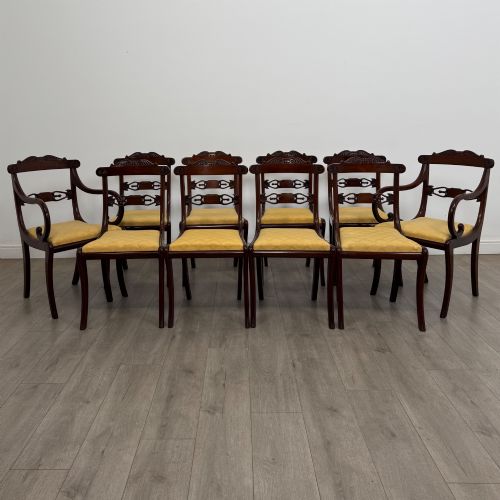
The selections span authentic Regency and Georgian periods as well as later Edwardian and twentieth-century interpretations in the Regency style. Most examples emerge in matched sets of four, six, eight, or ten, while others present as pairs or single hall chairs. Alongside standard wooden seats, numerous versions incorporate cane panels or upholstered pads covered in velvet, fabric, or silk cotton.
Makers and designers of the period drew heavily on classical Greek and Roman motifs, integrating them into domestic dining and morning room furniture. The profile remains distinct from straight-legged chairs through its fluid, curved framework that transitions smoothly from the top rail down to the feet. Surviving pieces often retain their original configuration of single chairs accompanied by matching carvers.
Materials and Construction
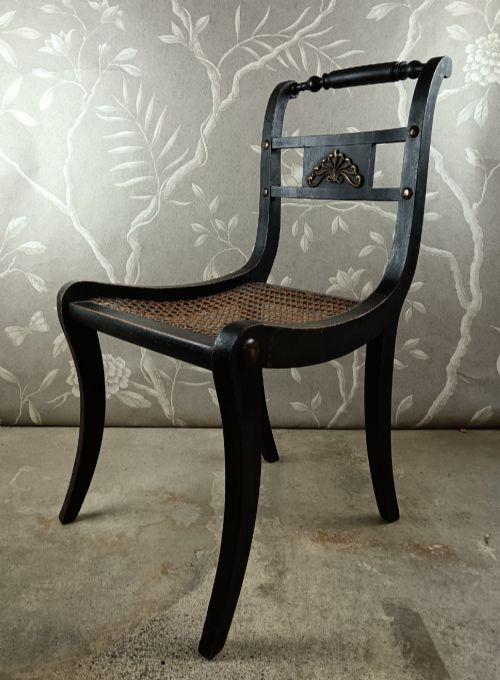
Cabinetmakers constructed sabre leg side chairs predominantly from dense hardwoods such as mahogany, rosewood, and pollard oak, occasionally employing simulated rosewood or ebonised finishes to mimic exotic timbers. Carpenters shaped the characteristic curved leg directly from the solid timber or through precise joinery to ensure structural strength under the seat rail. Brass inlay, marquetry, and delicate carved details frequently embellish the crest rails and splats of finer examples.
Seating surfaces utilise traditional methods involving woven cane panels or drop-in upholstered pads layered with fabric, velvet, or leather. Ebonised and painted surfaces receive meticulous hand-finishing, sometimes incorporating gilt highlights or decorative motifs in the classical taste. The combination of turned or rope-twist cross rails and robust frame construction provides the stability required for daily dining use.
Periods represented span the Georgian, Regency, and William IV eras, alongside Edwardian and twentieth-century revivals.
Evaluating Quality and Craftsmanship
Quality in these chairs rests upon the selection of timber and the crispness of execution in carved or brass-inlaid details. Superior examples exhibit tightly figured mahogany, pollard oak, or rich rosewood, whereas simpler versions rely on painted finishes or simulated woods. The fluidity of the curve in the sabre leg dictates much of the visual success, separating refined cabinet work from heavier, utilitarian production.
The integrity of the frame construction and the survival of original decorative elements distinguish the finest pieces from later revivals. Matched sets displaying uniform grain patterns and consistent hand-craftsmanship hold greater distinction than assembled groupings. Subtle refinements in the turning of cross rails, the precision of brass stringing, and the condition of original cane or joinery define the upper tier of the range.
The Sabre Leg Side Chairs Glossary
- Sabre leg
- A chair leg that curves outward in a concave sweep resembling a cavalry sword, characteristic of Regency furniture design. This form provides both structural support and a distinct classical silhouette.
- Carver
- An armchair with armrests, traditionally placed at the head of a dining table and paired with matching side chairs. These pieces share the wood type and decorative scheme of the wider set.
- Faux rosewood
- A painted or stenciled finish applied to a secondary timber to imitate the dark grain and rich colour of genuine rosewood. Artisans utilised this technique to achieve a high-status appearance economically.
- Cane seat
- A seating surface woven from split rattan cane in an open mesh pattern. This lightweight construction gained widespread popularity for dining and hall chairs during the Regency period.
- Rope-back
- A chair back featuring carved wooden rails twisted to resemble knotted rope, often found in conjunction with sabre legs. This maritime motif reflects the decorative trends of the early nineteenth century.
Sabre Leg Side Chairs: Frequently Asked Questions
How do I spot a genuine Regency chair?
Authentic Regency chairs display timber selection, traditional joinery methods, and proportions characteristic of the early nineteenth century. Look for hand-cut joints and native or imported hardwoods such as mahogany and rosewood.
Later revivals from the Edwardian period or nineteen-hundred often reveal subtle differences in machine-cut precision, secondary woods, and standardised turning. Comparing the patination and wear patterns helps confirm the age of the piece.
Were sabre leg chairs used at dining tables?
These chairs served primarily as formal dining seating in wealthy nineteenth-century households, arranged around mahogany or rosewood dining tables. Sets frequently included a combination of single side chairs and a pair of armchairs for the hosts.
Beyond the dining room, lighter pairs functioned as hall chairs or morning room seating. Their durable hardwood construction allowed them to withstand regular domestic use.
How should I care for antique cane seats?
Antique cane requires gentle cleaning with a soft brush and occasional light hydration using a damp cloth to prevent the natural fibres from becoming brittle. Avoid placing cane-seated chairs in direct sunlight or beside intense heat sources.
Sitting carefully helps preserve tension in the woven mesh. Professional restorers can re-cane panels using traditional methods if the original weave sustains damage.
What is the difference between side chairs and carvers?
Side chairs are built without armrests, designed to slide neatly beneath a dining table when not in use. Carvers feature integrated armrests to provide additional comfort for the seated person.
Dining sets traditionally combined a majority of side chairs with two carvers intended for the heads of the table. Both forms share matching design motifs, wood types, and leg styles.