




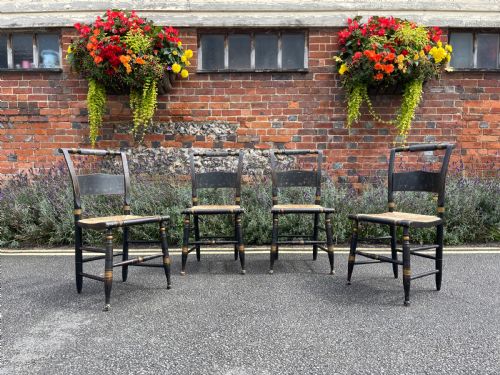


Black Painted Side Chairs
Black painted side chairs bring dark elegance and structured seating to a room, offering versatile forms from the Georgian era to the early twentieth century.
Black Painted Side Chairs
Black painted side chairs encompass seating designed primarily for dining, bedrooms, and occasional use without arms, united by dark surface treatments. These pieces span the Georgian period, the nineteenth century, and early twentieth-century revivals like the Regency Revival and Chippendale Revival.
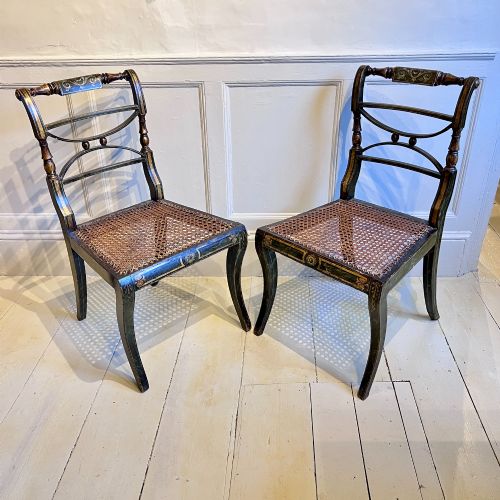
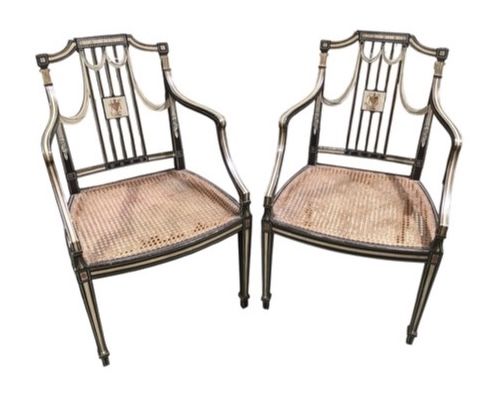
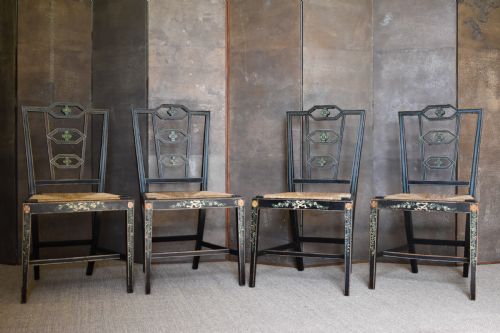
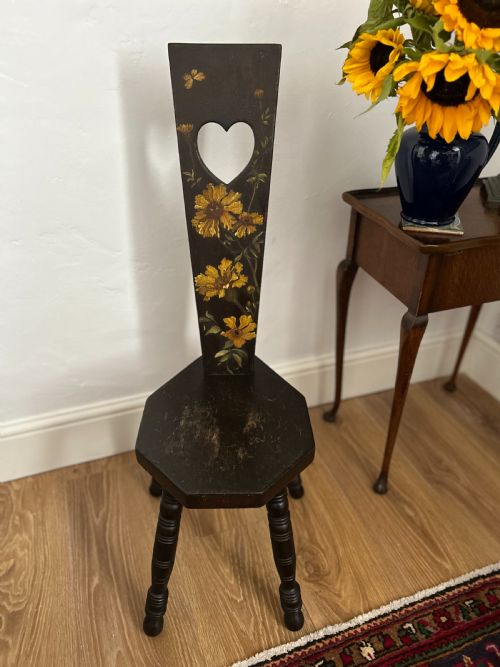
The selections on this page range from sets of six Regency ebonised dining chairs to pairs of nineteenth-century cane-seat side chairs and single Welsh spinning chairs. Buyers encounter forms decorated with parcel gilt, hand-painted motifs, and specialised materials like papier-mâché.
Originating across British and American provincial traditions, these chairs serve practical seating needs while delivering strong visual contrast through painted, lacquered, and ebonised finishes.
How they were made
Construction relies on solid wood frames shaped into side chairs, dining chairs, and bedroom chairs, frequently enhanced with applied paint, lacquer, or ebonised treatments. Artisans employed surface techniques including hand-painted decoration and parcel gilt detailing to elevate the dark grounds.
Seating surfaces utilise traditional materials integrated into the wooden frameworks, including woven cane, rush, and upholstered fabric pads. Papier-mâché constructions demonstrate moulded production methods finished with lacquer and paint.
Listings feature materials spanning simple wood and paint to papier-mâché, cane, rush, and fabric.
What varies in quality
Quality reveals itself in the crispness of the turning and carving beneath the paint, alongside the retention of original surface treatments rather than later overpainting. Sets demonstrate greater cohesion when matching in proportion and decorative execution.
The finesse of hand-painted details and parcel gilt highlights separates standard production from finer examples, such as lacquered papier-mâché bedroom chairs or Regency dining sets.
Jennens and Bettridge
The Black Painted Side Chairs Glossary
- Ebonised wood
- Timber treated with stains or finishes to imitate expensive ebony. This dark finish provides a formal, uniform surface popular in nineteenth-century seating.
- Cane-seat
- A seating platform woven from split rattan or cane strips. It offers a lightweight, resilient surface often found on Regency and nineteenth-century frames.
- Parcel gilt
- Wood or paint highlighted with thin applications of gold leaf. This technique accents carved details and mouldings against a dark background.
- Papier-mâché
- A composite material made from paper pulp or layers of paper bound with glue, then moulded and dried. It forms sturdy, lightweight chair frames suitable for detailed lacquering.
- Cockpen chair
- A chair style featuring open fretwork lattice designs inspired by Chinese Chippendale forms. These pieces often incorporate upholstered or drop-in seats.
Black Painted Side Chairs: Frequently Asked Questions
Are black painted side chairs sturdy enough for daily dining?
Many of these chairs were constructed for dining use and remain structurally sound for regular seating when joints are secure. Solid wood frames provide the necessary strength for everyday handling.
Lighter forms, such as papier-mâché or bedroom chairs, suit occasional use or decorative placement rather than heavy dining service.
How do I identify a Regency painted chair?
Regency chairs typically feature classical revival lines, Saber legs, and restrained backrest motifs drawing on ancient Greek or Roman forms. Painted finishes on these pieces often incorporate ebonisation or parcel gilt accents.
Later revivals from the early twentieth century imitate these distinct proportions and decorative vocabulary.
What is a papier-mâché chair?
Papier-mâché chairs utilise a dense composite material formed from paper pulp or layered paper pressed into moulds. Manufacturers finished these strong, lightweight frames with dark lacquer and hand-painted details.
Victorian makers employed this technique particularly for bedroom and children's chairs.
How do I care for cane and rush seats?
Cane and rush seating requires moderate humidity to prevent the natural fibres from drying out and becoming brittle. Occasional gentle cleaning with a damp cloth maintains the material without saturating the fibres.
Avoiding direct heat sources protects these woven surfaces from splitting over time.