


Ebonised Cane Chairs
Ebonised cane chairs bring dark polish and woven seats together, offering sharp silhouettes and resilient support that suit both period settings and modern rooms.
Ebonised Cane Chairs
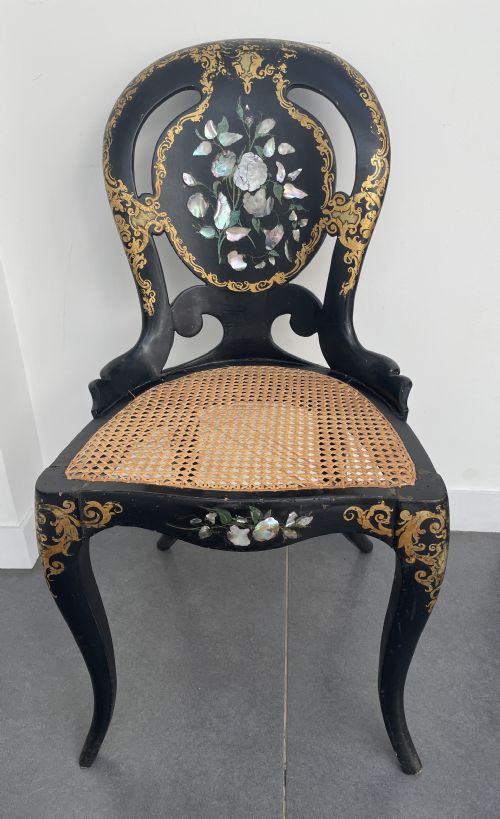
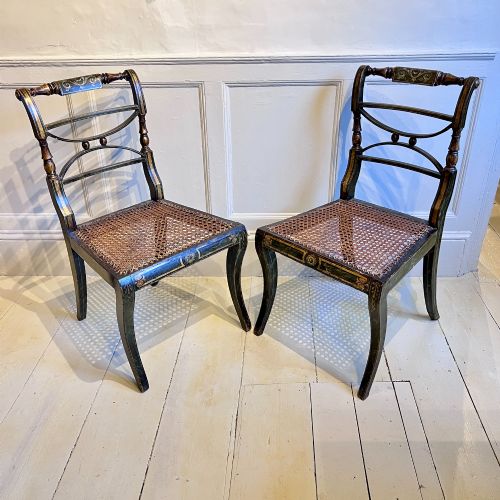
When you search for ebonised cane chairs, you encounter seating finished in a dark, lustrous dark stain or paint designed to imitate ebony, paired with woven plant material on the seat or back. These pieces span from the Regency era through the Victorian period, including revival styles and bentwood examples.
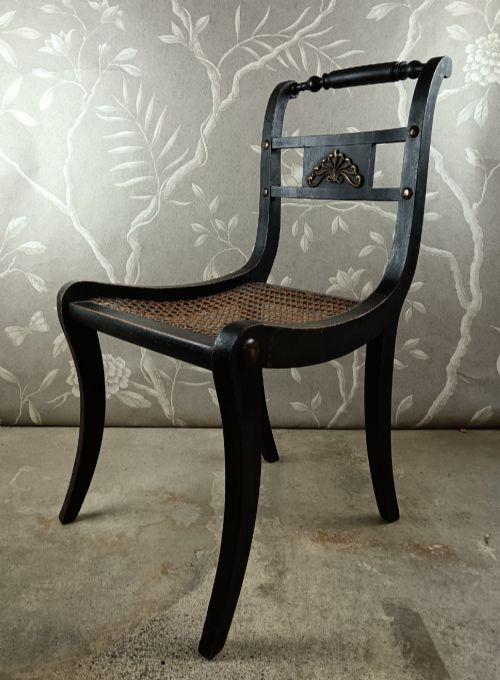
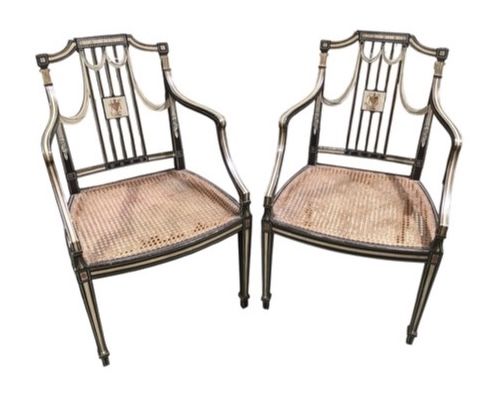
You are most likely to meet Regency and Victorian side chairs, armchairs, and dining sets on this page. These vary from formal library bergères with gilt accents to lighter bedroom and hall chairs featuring faux bamboo or bobbin turning.
The form stretches from single accent pieces to matched dining sets and children's chairs. They combine the crisp geometry of nineteenth-century design with the practical lightness of woven plant fibre.
How they were made
The framework relies on timber such as beech or exotic hardwoods shaped by turning, steam-bending, or joinery. Woodworkers applied dark finishes, sometimes adding paint, parcel gilt, or inlaid mother-of-pearl to catch the light against the deep dark surface.
Seats and backs utilise natural cane woven through drilled holes in the wooden frame. This technique creates a strong, flexible mesh that provides support while remaining light in weight.
Listings feature pieces spanning from the Regency era through the late Victorian period, incorporating materials like brass, gilt, and mother-of-pearl alongside ebonised wood and cane.
What varies in quality
The refinement of the turning and the crispness of the carved details separate standard production from finer cabinet work. Pieces attributed to notable makers display superior proportion and precise joinery in the framework.
The preservation of the original dark finish and the tightness of the woven cane determine the overall integrity of the piece. Subtle additions like parcel gilt highlights or gilt brass mounts elevate the standard of design.
Gillows·E W Godwin·Thonet
The Ebonised Cane Chairs Glossary
- Ebonised
- Wood treated with stain, paint, or chemical processes to imitate the dark, dense appearance of genuine ebony. This finish gained immense popularity during the Regency and Aesthetic movements.
- Cane
- Woven material made from the outer skin of rattan palms, used to create flexible and breathable seats and panel backs. It requires careful handling to maintain tension across the frame.
- Bergère
- An enclosed upholstered armchair featuring cane sides and back panels. These designs often include loose squab cushions for added comfort.
- Sabre leg
- A concave, outwardly curving furniture leg tapering toward the foot, typical of Regency classical revival designs. It provides stability while creating a sense of dynamic movement.
- Parcel gilt
- A decorative technique where specific carved details or mouldings are partially covered with gold leaf. This creates contrast against the dark ebonised wood surface.
Ebonised Cane Chairs: Frequently Asked Questions
How do I clean ebonised cane chairs?
Dust the wooden frame regularly with a dry cloth and apply occasional mild furniture wax to protect the dark surface. Keep the woven cane hydrated with a damp sponge to prevent it from becoming brittle.
Avoid soaking the woven material or placing the furniture near direct heat sources. Gentle maintenance preserves both the polish and the natural fibre.
Are these chairs comfortable for daily use?
The woven cane yields slightly to the body, offering a resilient and supportive seat that remains comfortable for meals or desk work. Many historic designs include ergonomic curves in the backrests.
Armchairs and bergères provide additional support, while side chairs work well around dining tables. Adding a thin cushion can increase comfort for prolonged sitting.
How can I date an ebonised cane chair?
Examine the timber species, the turning style of the legs, and the construction methods used in the frame. Regency pieces often feature sabre legs or faux bamboo turnings, while Victorian versions may incorporate mother-of-pearl inlay or bobbin turning.
Comparing the weave pattern and the depth of the dark finish against documented examples helps narrow down the period. Revivals from later decades often imitate these earlier profiles.
Can damaged cane seats be repaired?
Skilled craftspeople can re-weave damaged cane panels by threading new rattan through the existing holes in the wooden frame. This process restores the structural integrity and the appearance of the seat.
Professional restoration ensures the tension matches the original specification. Maintaining the historic wooden frame while renewing the cane keeps the piece functional.