
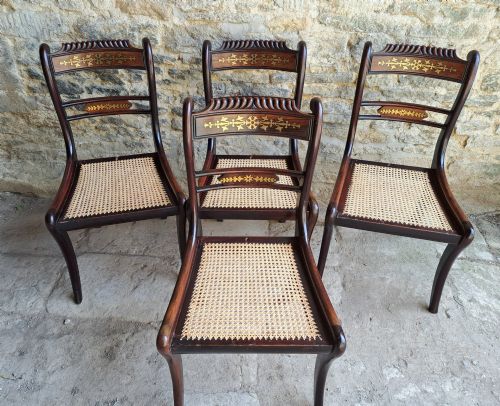
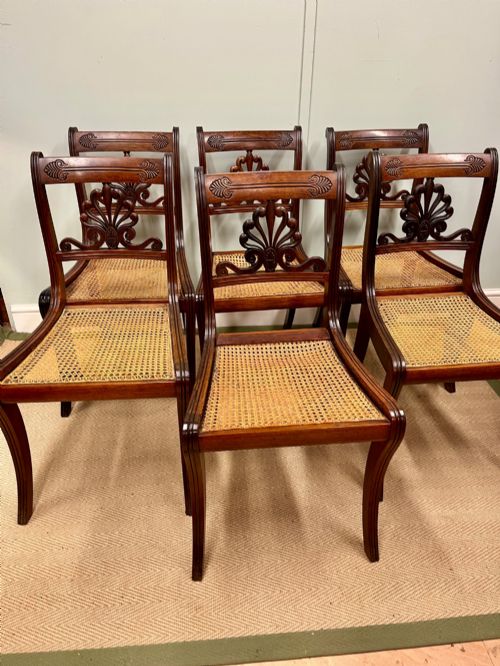
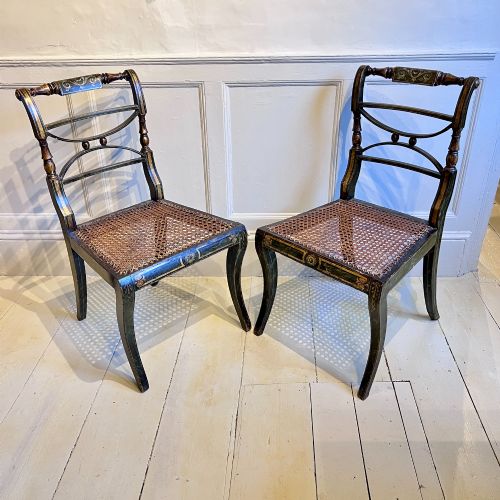
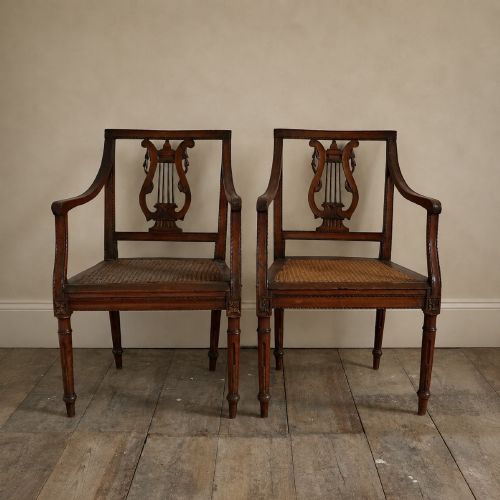

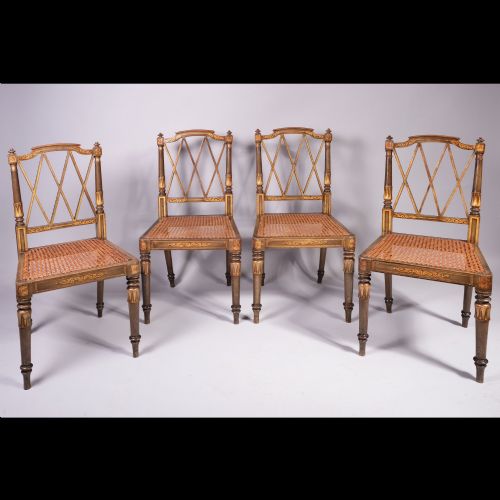
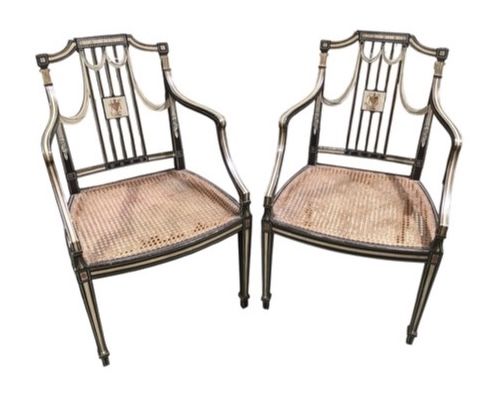
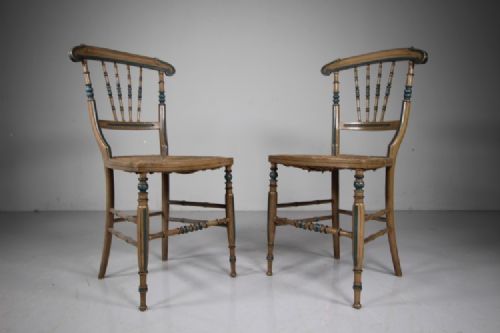
Regency Cane Chair
A regency cane chair brings lightness and refined classical proportion to a room through woven natural seating.
Regency Cane Chair
A regency cane chair encompasses dining chairs, library armchairs, bergères, and side chairs originating across the nineteenth century alongside later revival periods.
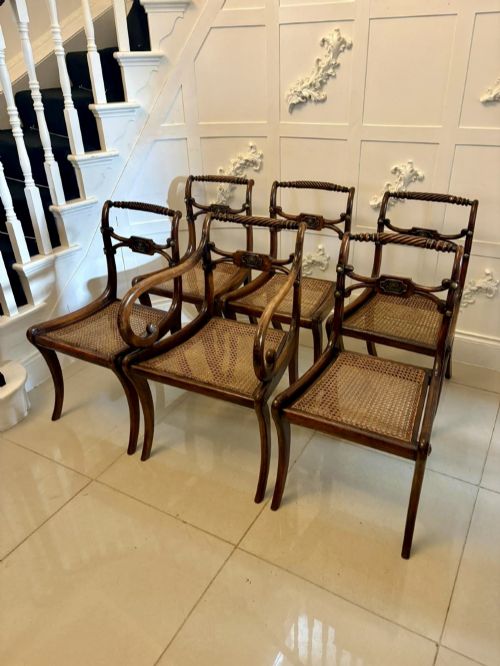
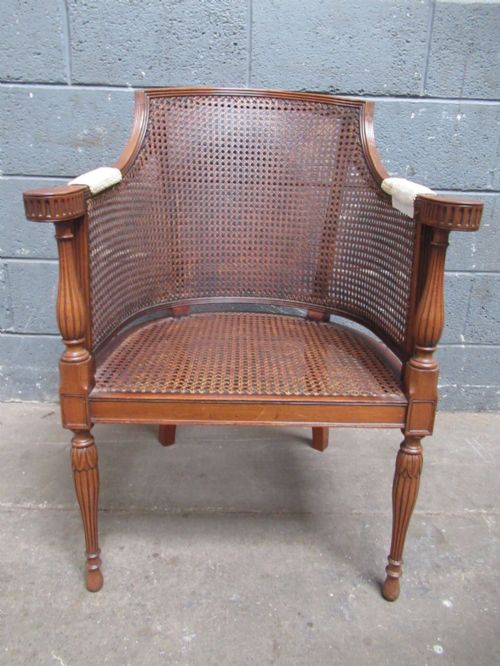
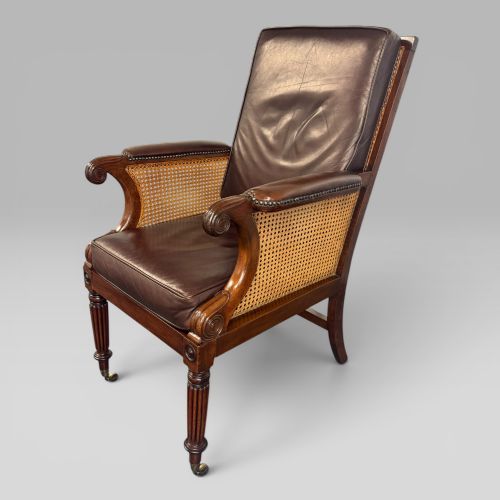
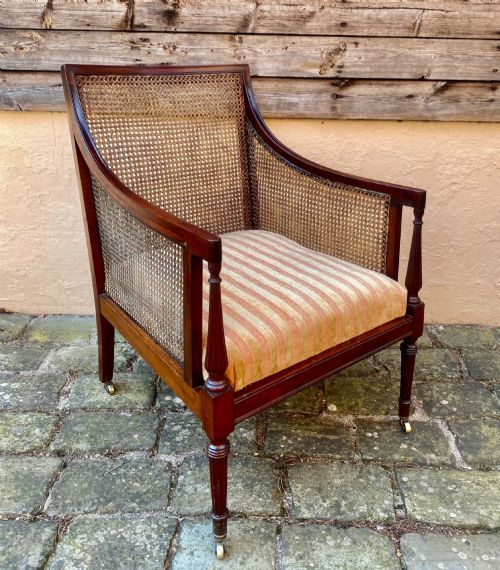
The most common forms on this page include mahogany dining chairs with cane seats and deep library bergères designed for reading rooms.
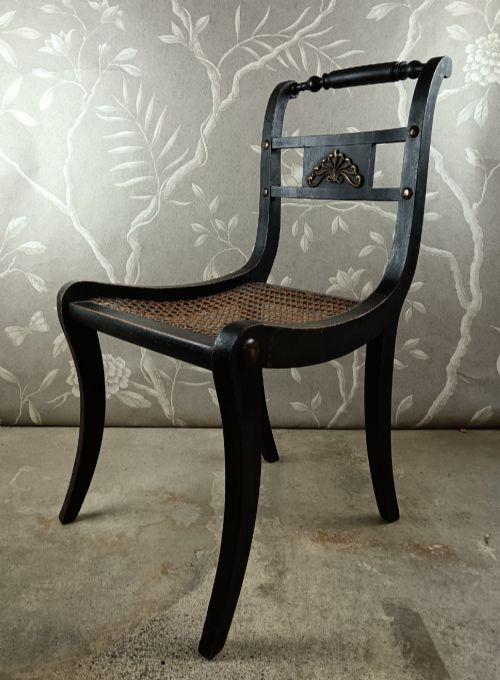
Makers drew on classical Greek and Roman models, producing klismos shapes, sabre legs, and turned supports that defined the era.
Materials and Construction
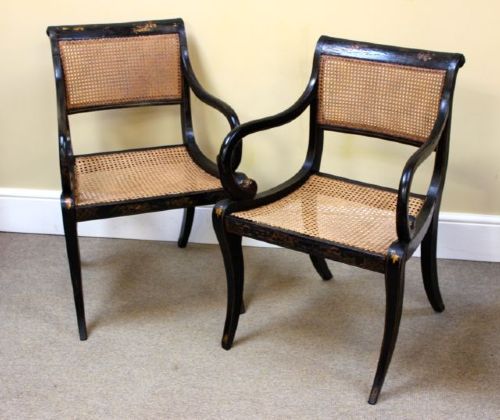
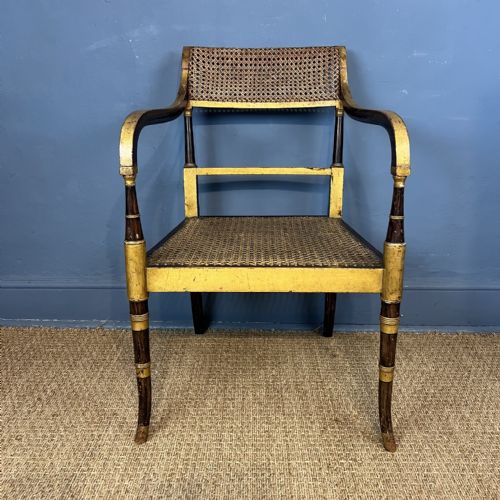
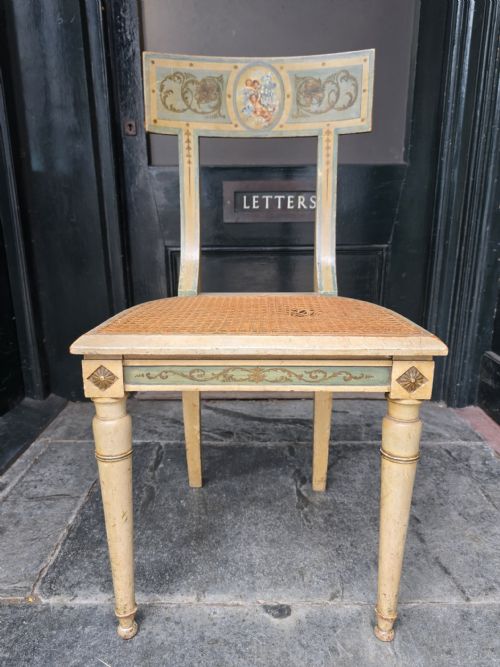
Frames rely heavily on timbers such as mahogany, rosewood, and padouk, often enhanced with ebonising, paint finishes, or parcel gilding.
Rattan cane is woven tightly into seat frames and back panels to provide a resilient and flexible support surface.
Brass inlay and mounts punctuate the timber structures, reflecting the neoclassical taste of early nineteenth-century workshops.
Regency Cane Chair Retail Price Guide 2026
Typical asking prices for regency cane chair among the pieces listed under this phrase on Sellingantiques today, from the lower quarter to the upper quarter. They describe what is for sale here now, not the wider market.
Specialist items include correctional deportment chairs intended to improve posture.
Craftsmanship and Survival
Superior examples show crisp carving to the sabre legs and back rails, with tight, uniform cane work that retains its tension.
The handling of secondary treatments like faux rosewood graining or hand-painted decoration separates standard production from finer cabinet work.
Original surviving cane adds substantial interest compared to later re-weaving, though structural rigidity of the timber frame remains paramount.
Gillows·Thomas Hope·John Gee
The Regency Cane Chair Glossary
- Bergère
- An enclosed upholstered armchair with cane sides and back panels. It offers a deep, comfortable seat often accompanied by loose cushions.
- Caning
- The practice of weaving peeled rattan cane strands through holes drilled in a wooden frame. This technique creates a breathable and lightweight seating surface.
- Sabre leg
- A concave sweeping leg that tapers toward the foot, mimicking the curve of a cavalry sword. It is a defining feature of classical seating.
- Faux rosewood
- A painted or grained surface finish mimicking the rich figuring of genuine rosewood. Craftsmen utilised maple or beech as a base timber.
- Klismos
- A graceful classical Greek chair form featuring outward-curving legs and a concave backrest. Revival makers adapted this shape during the nineteenth century.
Regency Cane Chair: Frequently Asked Questions
How do I care for cane seats?
Keep the woven rattan supple by wiping it occasionally with a damp cloth to prevent the material from drying out and snapping.
Avoid placing these chairs near direct heat sources or in overly dry environments, which can weaken the natural fibres over time.
Were these chairs used for dining?
Many examples on this page are dining chairs, often found in sets with multiple single chairs and a matching carver.
Their lightweight frames made them easy to move around formal dining tables during the nineteenth century.
What is a library bergere?
A library bergère is a deep, enclosed armchair featuring woven cane panels on the back and arms designed for prolonged reading.
These pieces typically accepted loose upholstered cushions to enhance comfort in private studies and drawing rooms.
How can I date a piece?
Dating relies on identifying timber choices like rosewood or mahogany, alongside structural traits such as sabre legs and brass inlay.
Comparing the turning, joinery, and painted decoration helps distinguish original early nineteenth-century production from later twentieth-century revivals.