


Georgian Cane Side Chairs
Georgian cane side chairs bring tactile woven seating and architectural grace to a room, offering enduring style through woven panels and timber frames.
Georgian Cane Side Chairs
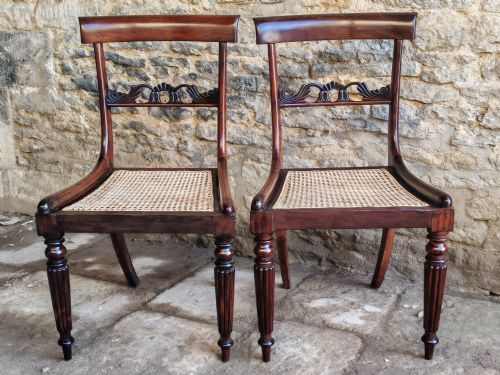
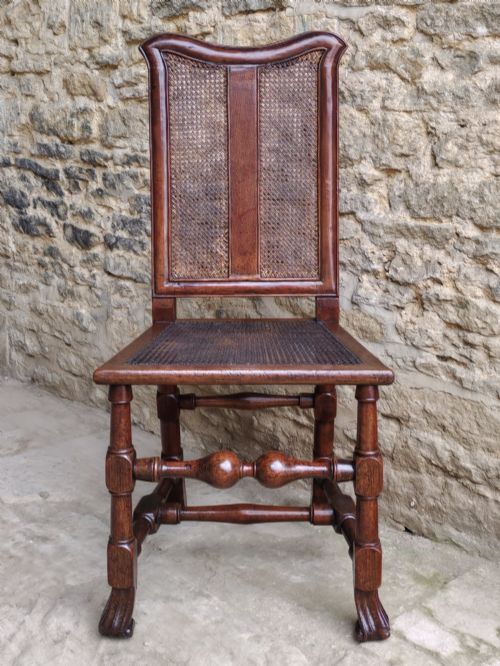
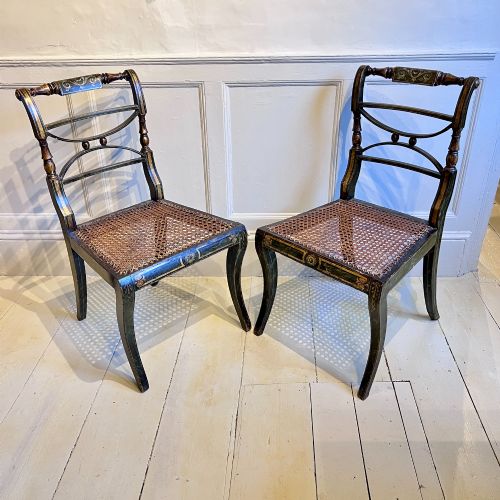
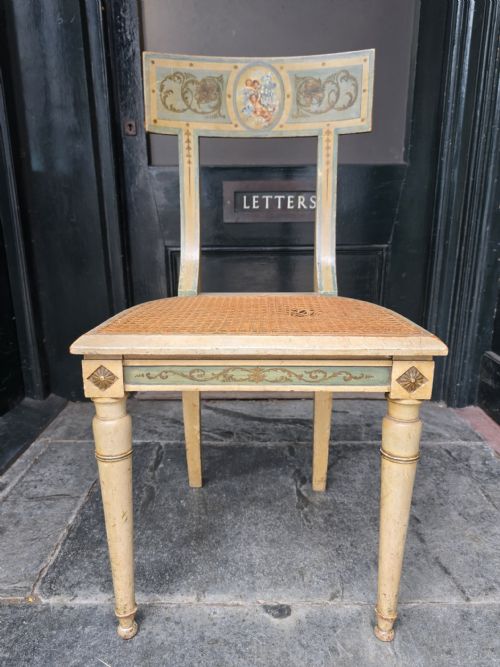
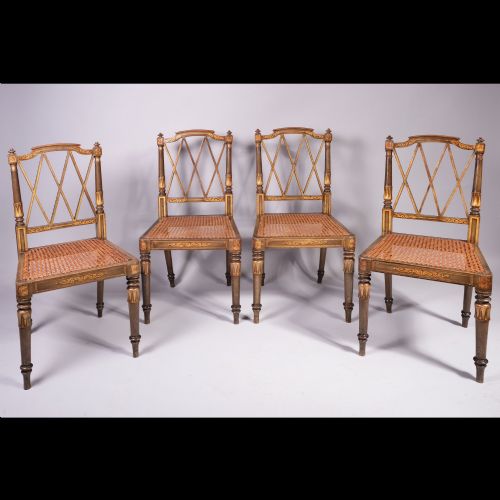
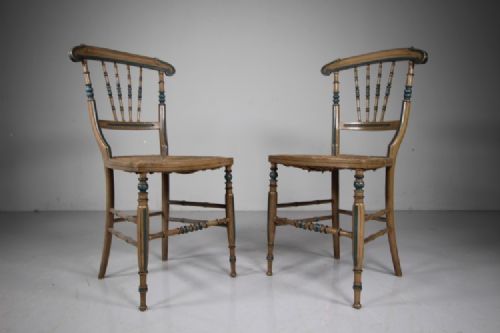
When you search for georgian cane side chairs, you are looking at timber dining and occasional seating featuring woven cane panels in the backrest or seat. The pieces on this page span the 18th century, the Regency period, and later 19th-century revivals.
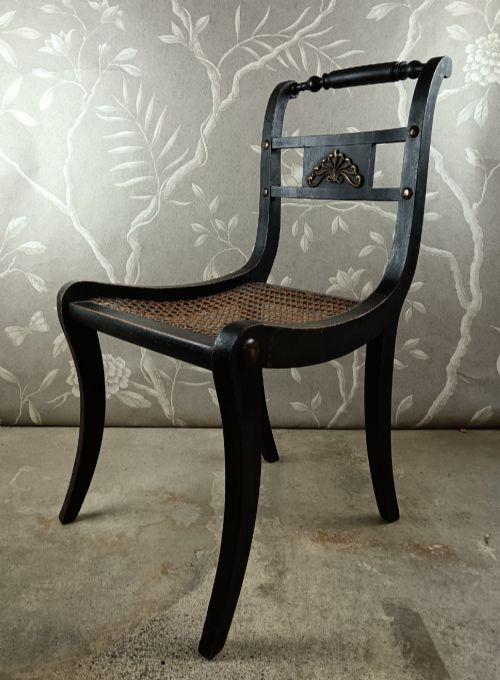
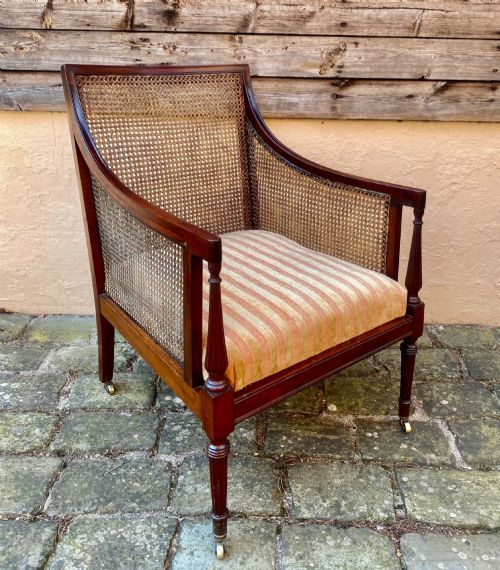
You will encounter mahogany, rosewood, and painted timber structures alongside walnut and ebonised finishes. Formats range from single bedroom chairs and sets of dining chairs to armchairs and library bergères.
How they were made
Cabinetmakers constructed the frames using solid timbers such as mahogany, walnut, and rosewood, often applying paint, simulated grain, or ebonisation for decorative effect. Brass details and carved elements enhanced the architectural profiles of the frames.
Seating panels utilised woven cane threaded through drilled holes in the wooden seat rails or set within recessed channels. Skilled artisans created tensioned patterns that supported the user while maintaining visual lightness.
Some chairs sport painted finishes pretending to be expensive rosewood because even Regency folk loved a clever budget hack.
What varies in quality
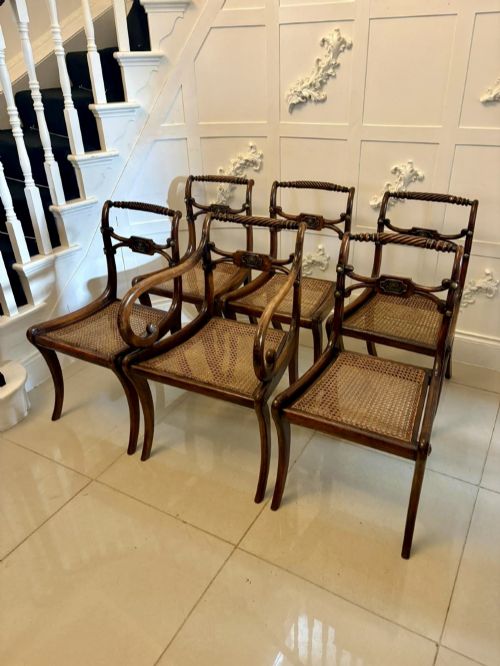
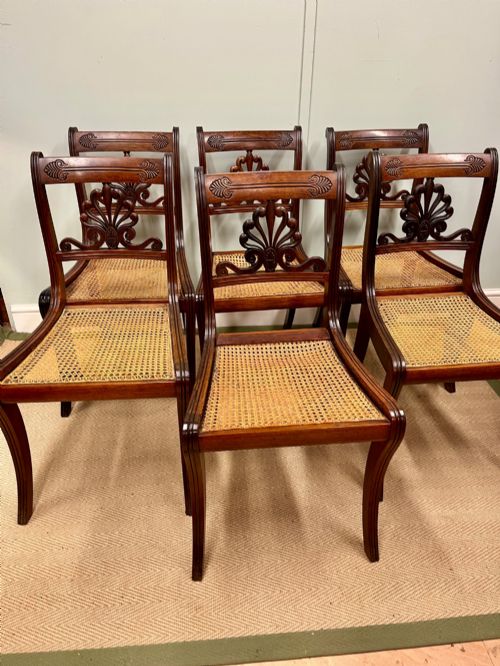
The sophistication of the timber carving and the precision of the frame joinery distinguish finer examples from simpler workshops. Details such as sabre legs, rope twist rails, or intricate painted decoration elevate the visual ambition of the seating.
The integrity and tautness of the woven cane indicate the standard of original construction and subsequent restoration. Original surfaces and retained decorative schemes carry more historical weight than heavily refinished or replaced elements.
The Georgian Cane Side Chairs Glossary
- Cane
- Woven material made from the outer skin of rattan palms, utilised for flexible and breathable seats and backrests. It provides a lightweight alternative to solid wood or upholstered padding.
- Bergère
- An enclosed upholstered armchair with wooden sides, frequently incorporating woven cane panels within the frame. This form gained popularity during the late 18th and early 19th centuries.
- Klismos
- An ancient Greek chair design featuring curved, backward-sweeping legs and a concave backrest rail, revived during the Regency period. This profile offers ergonomic comfort alongside classical aesthetics.
- Sabre leg
- A concave-curved leg that tapers toward the foot, characteristic of Regency furniture design. It draws inspiration from ancient Greek furniture found on pottery.
- Simulated rosewood
- Painted or stained timber treated to imitate the grain and rich colour of genuine rosewood. Craftsmen used this technique on lower-cost woods to achieve a fashionable Regency aesthetic.
Georgian Cane Side Chairs: Frequently Asked Questions
Are these chairs strong enough for daily use?
Solid hardwood frames provide robust structural integrity, though the woven cane panels require sensible treatment. Regular sitting poses no issue provided the cane tension remains sound and evenly supported.
Heavier usage suits sturdy mahogany or walnut frames, while delicate painted occasional chairs function best in low-traffic settings or bedrooms.
How do I care for antique cane seats?
Maintaining cane involves keeping the material lightly hydrated with a damp cloth occasionally to prevent brittleness. Avoid placing the seating in direct sunlight or near strong heat sources.
Weight distribution matters greatly, so adding a thin squab cushion helps protect older or finer cane panels from direct pressure.
How can I tell a Regency chair from an 18th-century one?
Regency seating typically displays classical influences such as sabre legs, rope twist rails, and painted or simulated rosewood finishes. They often reflect neoclassical restraint and archaeological inspiration.
Earlier 18th-century pieces rely on darker walnut or mahogany frames with simpler structural lines, distinct joinery methods, and proportions suited to earlier domestic interiors.
What is the difference between a side chair and a carver?
Side chairs feature a compact, armless design intended primarily for dining tables or auxiliary seating around a room. Their streamlined proportions allow several to fit neatly beneath a table.
Carvers include integrated armrests and slightly wider proportions, traditionally positioned at the head of a dining table or utilised as desk chairs.