


Gilt Decorated Chairs
These gilt decorated chairs bring classical elegance and rich surface detail into a room, offering striking form alongside functional seating.
Gilt Decorated Chairs
When you search for gilt decorated chairs, you encounter seating that marries painted or ebonised wooden frames with metallic gilding, creating a decorative impact that goes beyond plain timber. The selection spans armchairs, side chairs, dining chairs, elbow chairs, single bedroom chairs, day beds, and chaise longues, reflecting a diverse range of domestic seating.
You are most likely to meet Regency examples alongside Victorian interpretations, Louis XVI revivals, and Baroque revival pieces. These objects draw on Georgian, 19th-century, 1870, 1900, and 1920 periods, showing how makers across different decades adapted classical lines for contemporary interiors.
How they were made
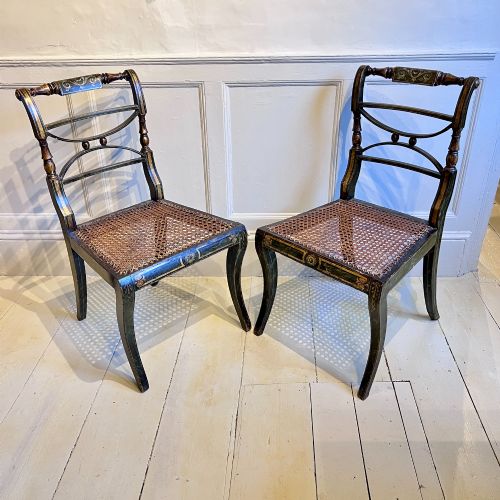
The construction relies on wood bases treated with paint, ebonised finishes, or simulated satinwood, upon which parcel gilt and metallic detailing is applied. Artisans incorporated cane seats, fabric upholstery, leather, and brass elements to complete the functional and decorative scheme.
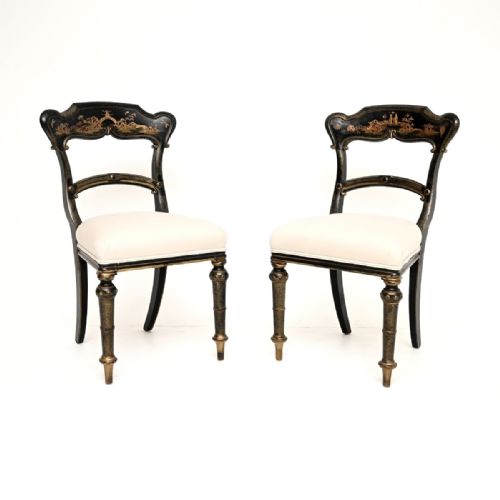
Surfaces often feature lacquered wood or intricate painted motifs, sometimes paired with floral upholstery or carved frames to enhance the visual depth of the piece.
Some single bedroom chairs manage to look entirely regal despite their modest domestic origins.
What varies in quality
The sophistication of the surface decoration sets the finer pieces apart, particularly where ebonised finishes, simulated satinwood, and hand-applied gilding show careful layering and preservation. The integration of high-grade materials like cane, leather, and quality fabrics alters the tactile experience of the seating.
Proportion and stylistic cohesion also define the upper tier, where forms referenced from Regency, Louis XVI, and Baroque revivals maintain a strict architectural balance in their carving and painted details.
The Gilt Decorated Chairs Glossary
- Parcel Gilt
- Partial gilding applied to specific carved or raised areas of a wooden frame to highlight decorative motifs against a painted or dark background.
- Ebonised
- Wood finished with a dark stain or paint to imitate the appearance of ebony, frequently paired with gilding on Regency and Victorian seating.
- Cane
- Woven plant material used to form resilient, open-patterned seats or backs, commonly seen on 19th-century side chairs.
- Simulated Satinwood
- Paintwork executed to mimic the golden, figured grain of genuine satinwood without using the solid exotic timber.
- Elbow Chair
- An armchair featuring structural arms that provide comfortable lateral support, often used as carvers at the ends of dining tables.
Gilt Decorated Chairs: Frequently Asked Questions
What periods do these chairs come from?
The pieces span from the Georgian era and the Regency period through to Victorian times, 1870, 1900, and the early 20th century.
Revival styles such as Louis XVI and Baroque also appear, demonstrating how later makers reinterpreted earlier classical designs.
Where were these chairs used in the home?
Dining chairs and sets of elbow chairs served around formal dining tables, while side chairs and armchairs fitted into drawing rooms and libraries.
Day beds, chaise longues, and single bedroom chairs provided specialised seating and resting spots in private chambers and boudoirs.
How do I care for ebonised and gilded surfaces?
Keep the wood away from direct sunlight and moisture to protect the delicate balance of paint, ebonising, and metallic leaf.
Dust gently with a dry, soft cloth, avoiding harsh modern cleaning chemicals that can strip the historic finishes.
What materials are used for the seats?
Seating surfaces vary according to the chair type and period, utilising woven cane, traditional fabric upholstery, and leather.
Some pieces combine painted wooden frames with padded squabs or fixed upholstered pads covered in floral or plain textiles.
How do I distinguish Regency from Victorian pieces?
Regency designs tend to favour restrained classical lines, simulated woods, and precise ebonised framing inspired by ancient Greek and Roman forms.
Victorian and later revival pieces often introduce heavier proportions, distinct lacquered chinoiserie, or more exuberant Baroque decorative flourishes.