
Antique Cane Back Seating
Antique cane back seating brings open woven panels and solid timber frames together across dining chairs, armchairs and sofas.
Antique Cane Back Seating
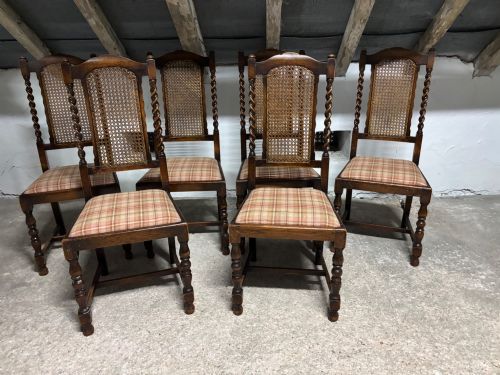
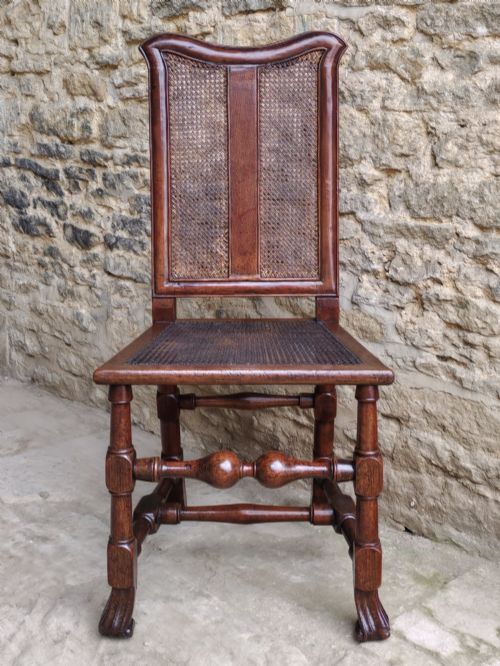
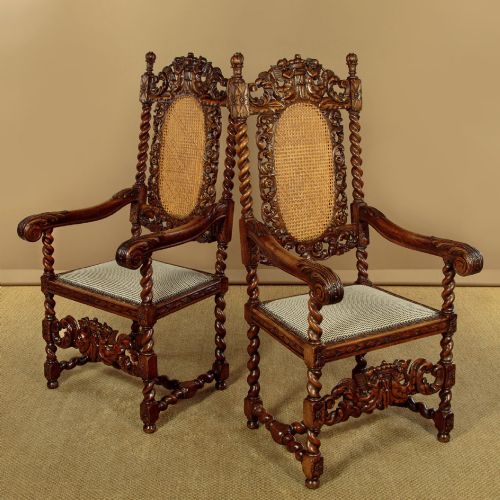
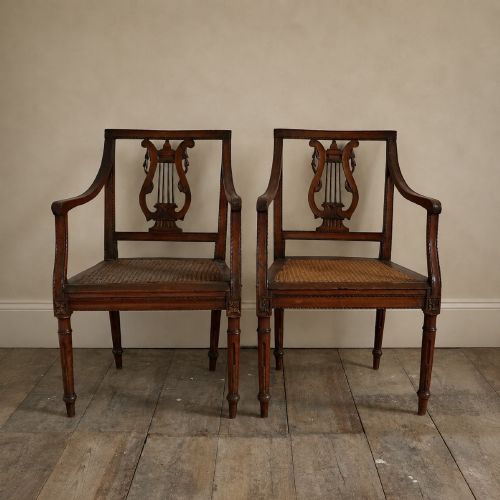
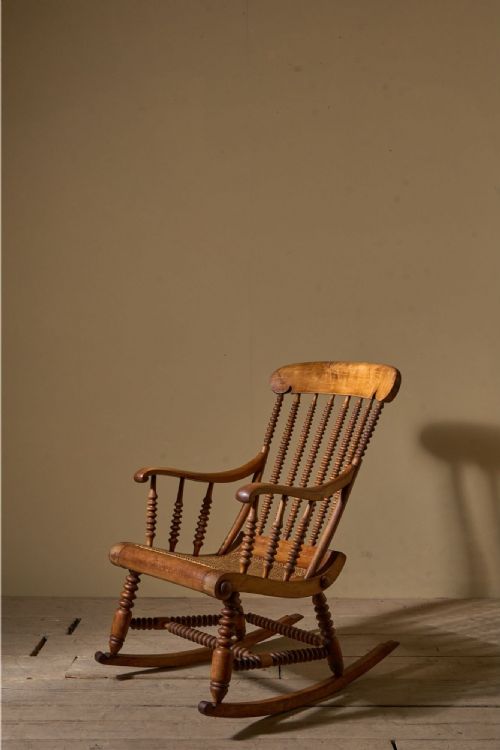
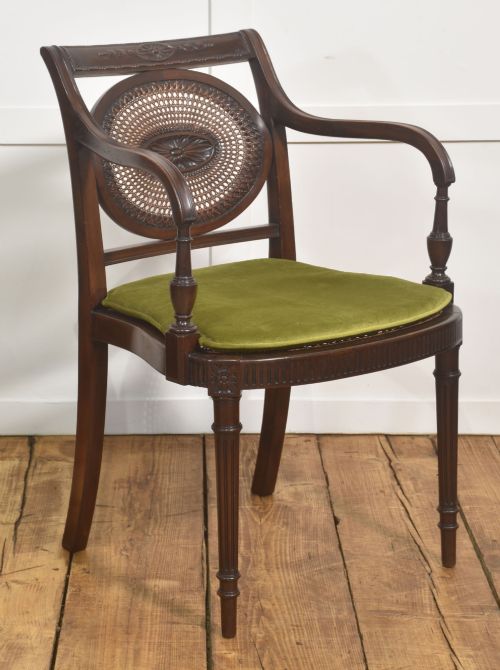
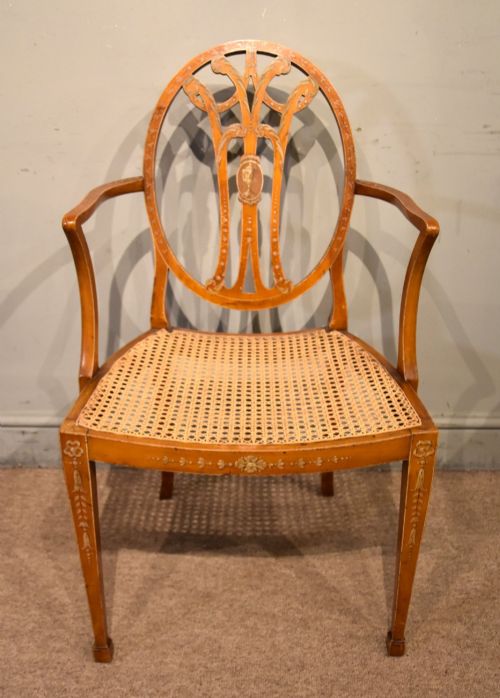
Antique cane back seating comprises chairs, armchairs, sofas and daybeds built with woven cane panels set into wooden frames. The pieces on this page span from the eighteenth century through the Victorian period and into the early twentieth century, taking in revival designs such as Carolean, William and Mary, and Regency styles.
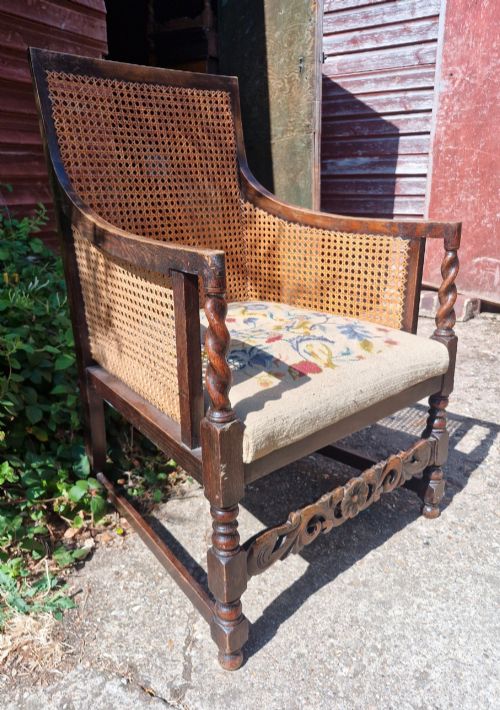
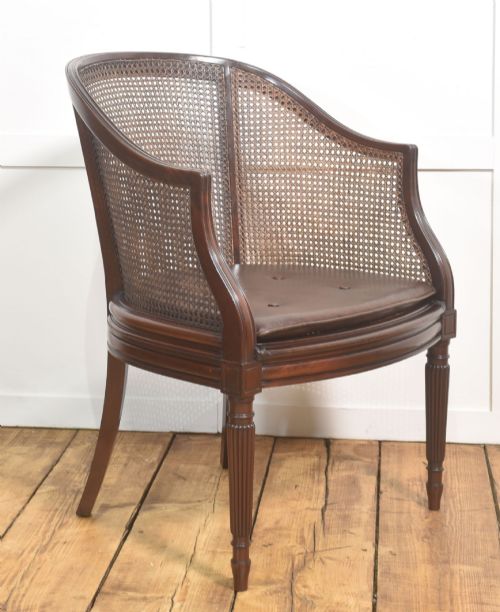
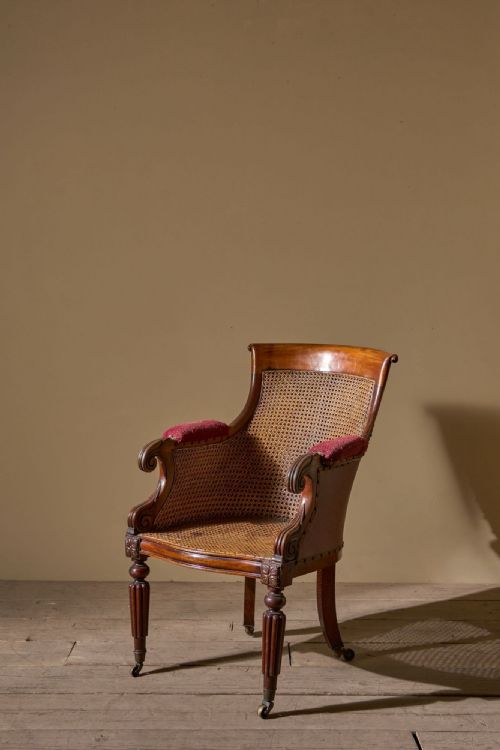
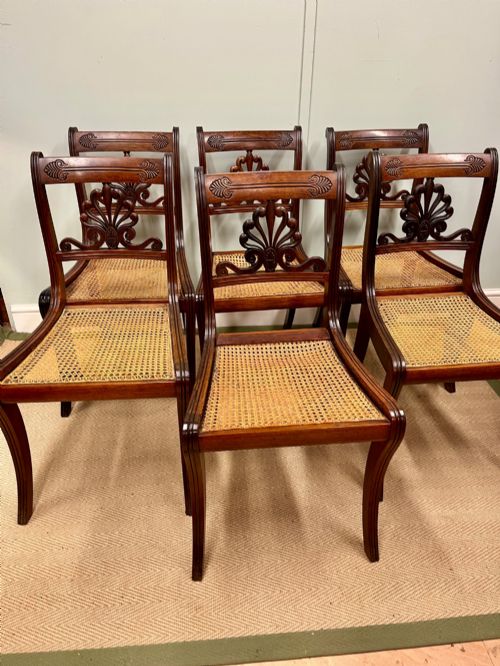
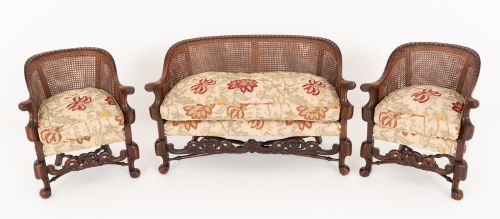
Dining chairs and side chairs appear alongside larger library armchairs, tub chairs, bergere suites and small couches. Woods including mahogany, walnut, oak, satinwood and rosewood form the structural framework for the woven cane seats and backs.
Materials and Technique
Frames rely on traditional cabinet timbers like mahogany, walnut and oak, frequently turned, carved or painted to follow the prevailing taste of the period. Skilled hands shape the wood to support the tension of the woven panels.
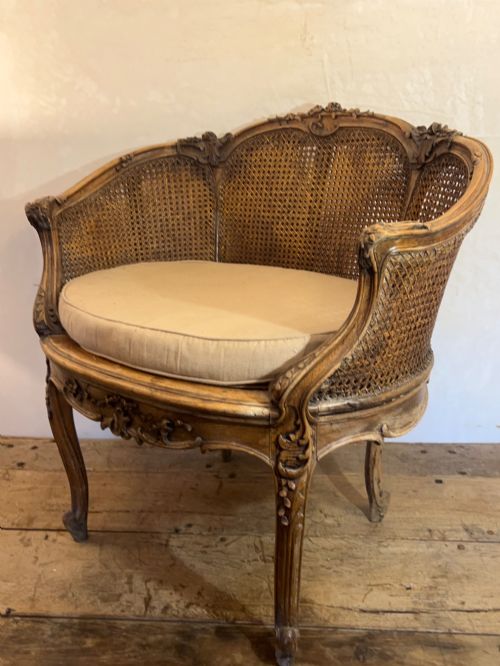
The woven cane work itself utilises natural rattan strips threaded through pre-drilled holes in the wooden frame or fitted into a channel. Feather cushions occasionally supplement the seating surface in upholstered bergere sofas and armchairs.
A folding campaign chair allows a Victorian traveller to sit in woven cane comfort miles from the nearest proper drawing room.
Judging the Workmanship
Quality rests in the crispness of the timber carving, the regularity of the frame joints and the fineness of the cane weave. Tighter, more uniform weaving patterns demand greater skill and hold up better under daily use.
The choice of timber defines the character of the piece, with dense grain and rich surface patination distinguishing finer examples from standard production. Cohesion between the frame style and the woven panels marks out superior workshop output.
James Shoolbred·Waring & Gillow
The Antique Cane Back Seating Glossary
- Bergere
- A French-style upholstered armchair with enclosed sides, where cane or upholstery fills the space between the armrests and the seat rail. These comfortable seats often feature loose squab cushions.
- Cane
- Strips of rattan palm peeled and woven into open geometric patterns for chair backs and seats. This flexible material provides lightweight yet supportive seating.
- Klismos
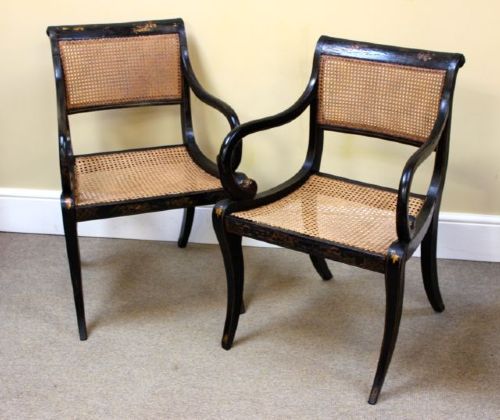
- An ancient Greek chair design with curved rear legs and a concave backrest, revived during the Regency period. The elegant sweeping lines offer an ergonomic curve.
- Carolean
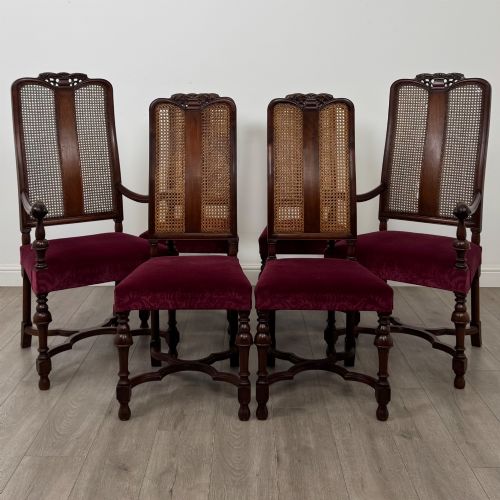
- A seventeenth-century English style characterised by rich carving, scrollwork and tall cane backs, revived frequently in the Victorian and Edwardian eras. This ornate aesthetic celebrates elaborate woodwork.
- Parcel Gilt
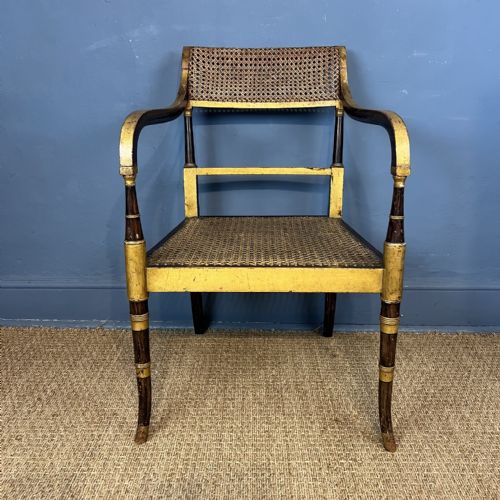
- Woodwork partially decorated with thin layers of gold leaf to highlight carved details and mouldings. This decorative touch adds contrast against dark timbers like rosewood.
Antique Cane Back Seating: Frequently Asked Questions
How do I care for cane furniture?
Keep cane seating away from direct heat sources and strong sunlight to prevent the natural rattan fibres from drying out and snapping.
Light dusting with a soft brush keeps the weave clean, and occasional damp sponging helps maintain the moisture in older cane.
Can broken cane seats be repaired?
Traditional hand-woven cane panels can be unlaced and rewoven by skilled craftspeople using matching rattan strands.
Machine-pressed cane sheets inserted into a groove require a different repair method using spline glue and pressure.
Are these chairs suitable for dining?
Dining chairs and side chairs offer sturdy upright support designed for table use, provided the cane panels remain tight.
Armchairs and bergere models serve better in libraries or living rooms as reading seats.
How do I date a cane chair?
Examine the timber species, turning style and joinery methods to connect the piece with specific historical periods.
Revival pieces from the Edwardian era often mimic seventeenth or eighteenth-century forms through machine-cut details rather than hand carving.