


Black Gilt Dining Chairs
Black gilt dining chairs bring striking contrast and historic elegance to a room, offering rich dark surfaces brightened by metallic detail.
Black Gilt Dining Chairs
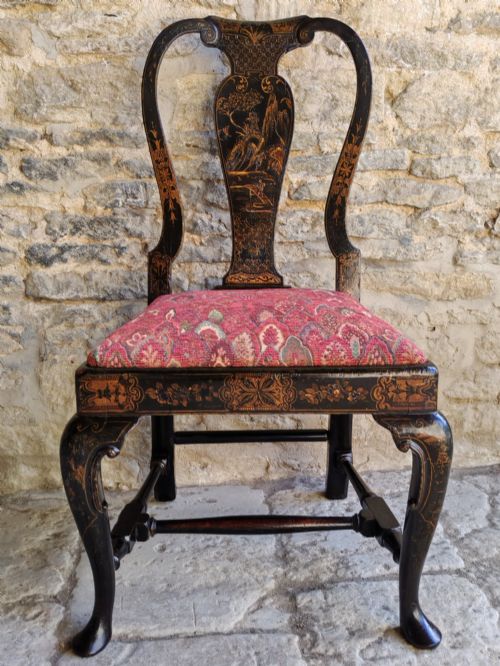
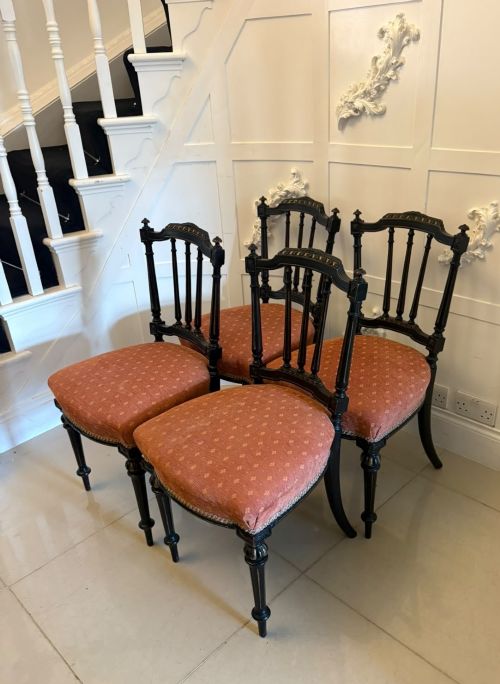
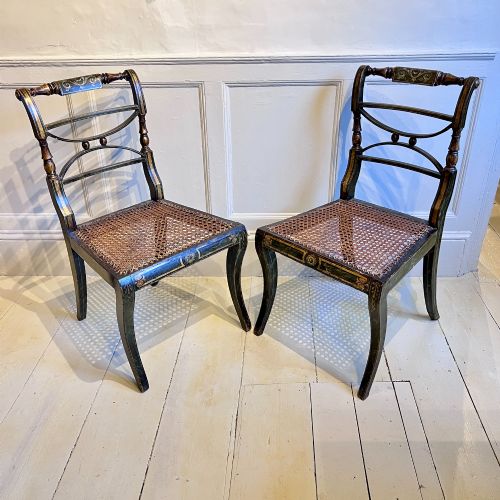
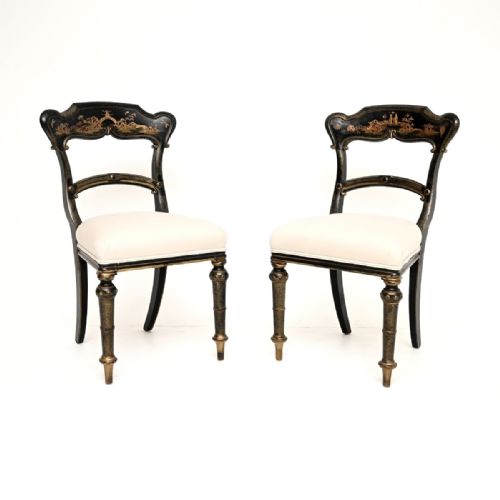
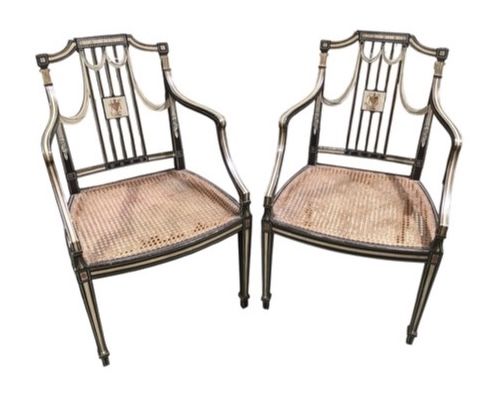
The selection ranges from seventeenth century japanned pieces and eighteenth century Dutch lacquered examples to Victorian ebonised seating and Regency painted models. Most pieces appearing on the page reflect Regency style, Victorian manufacture, or early twentieth century revivals of earlier aesthetics.
How they were made
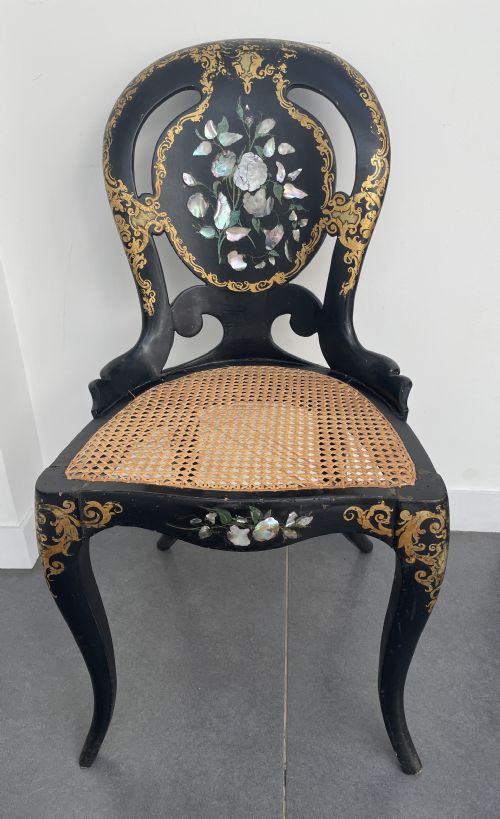
Construction relies upon woods such as ebonised, painted, or lacquered wood, providing a dark foundational surface for subsequent decoration. Makers applied gilt ornamentation and parcel gilt highlights directly onto these prepared wooden frames.
Seating areas incorporate woven cane or upholstered fabric inserts, whilst specific examples feature detailed mother of pearl inlay. Surface decoration spans traditional japanning, lacquerwork, and hand-painted motifs executed in the manner of the Regency and Chinoiserie styles.
What varies in quality
The refinement of the gilt decoration and the execution of painted or lacquered surfaces dictate the visual impact of each chair. Crisp detailing in Regency style motifs or delicate execution of chinoiserie scenes separates exceptional work from simpler commercial output.
The integrity of the underlying ebonised or painted wooden frame and the preservation of original decorative schemes determine the enduring character of the piece. Consistency across a set of chairs, particularly in larger groupings of four or six, influences how successfully the pieces function together around a dining table.
The Black Gilt Dining Chairs Glossary
- Ebonised wood
- Timber stained or painted black to imitate expensive ebony. This dark finish provides the primary contrasting background for gilt highlights.
- Parcel gilt
- Wood or other material partially gilded with gold leaf or metallic paint. This technique emphasises carved details and structural lines.
- Cane
- Material woven from stripped rattan plants to form light seating panels. It offers a resilient and flexible surface for chair seats.
- Chinoiserie
- European artistic style reflecting Chinese motifs and decorative techniques. It appears frequently on lacquered and painted furniture from the eighteenth and nineteenth centuries.
Black Gilt Dining Chairs: Frequently Asked Questions
How do I date a black gilt chair?
Dating relies upon stylistic markers, structural construction, and the specific nature of the surface decoration. Eighteenth century examples often show distinct japanned or lacquered techniques, whereas nineteenth century pieces frequently adopt Regency or Victorian proportions.
Changes in chair backs, leg forms, and the integration of cane or fabric seats further help separate original period pieces from later revivals.
Are these chairs suitable for daily dining?
Historic seating requires thoughtful placement and consideration of everyday use. Many examples function well for regular dining when paired with appropriate tables and protected surfaces.
Sturdiness varies between lighter cane-seat models and heavier upholstered elbow chairs, making certain pieces better suited for specific domestic settings.
What is the difference between ebonised and lacquered finishes?
Ebonised wood involves staining or painting timber to achieve a uniform black appearance. Lacquered and japanned surfaces involve layered varnish finishes that create a glossy, reflective depth.
Lacquered pieces often incorporate hand-painted scenes or metallic dust details, whereas ebonised surfaces focus primarily on tonal darkness combined with gilt highlights.
How should I care for gilt and painted surfaces?
Preserving delicate surface decoration requires gentle cleaning methods avoiding abrasive materials or harsh chemical polishes. Dusting with a soft, dry cloth protects the underlying paint and metallic leaf.
Maintaining stable room humidity prevents the timber beneath from expanding or contracting, which safeguards both the finish and the structural joinery.