
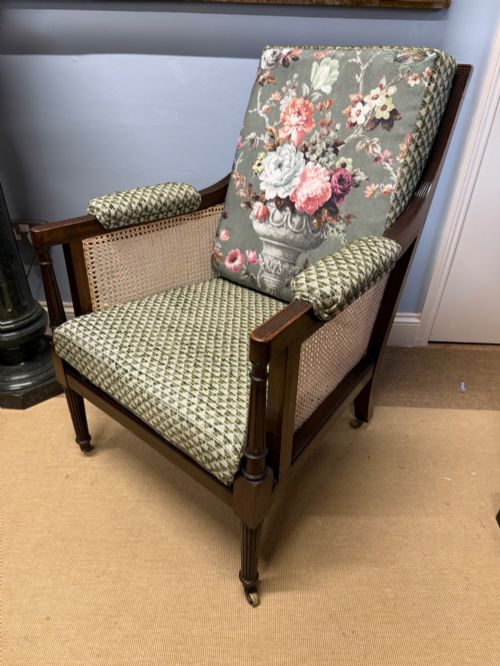


Traditional Cane Back Chairs
Traditional cane back chairs offer resilient natural woven seating across periods ranging from the nineteenth century to the twentieth.
Traditional Cane Back Chairs
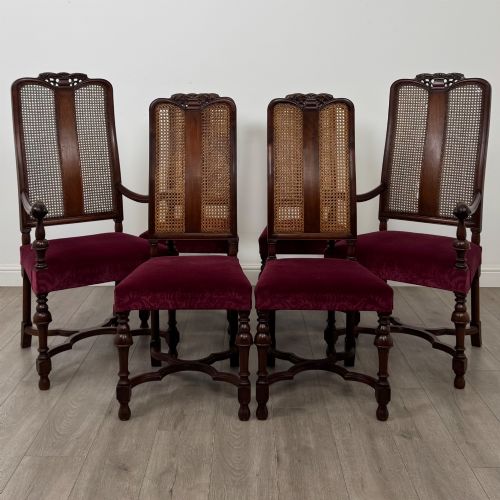
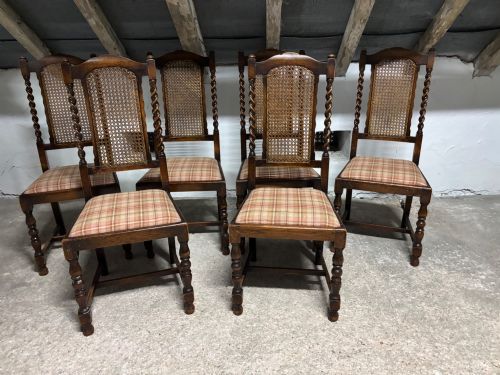
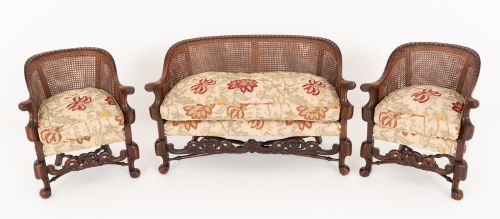
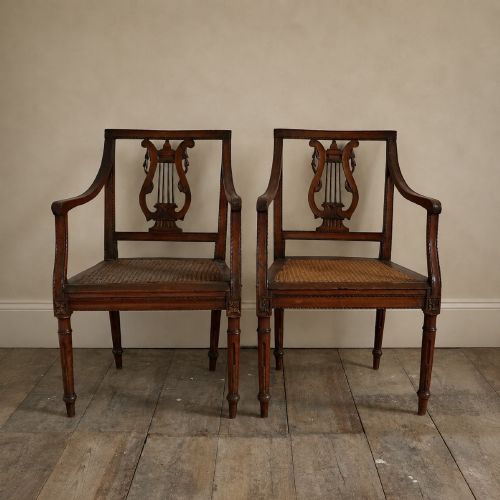
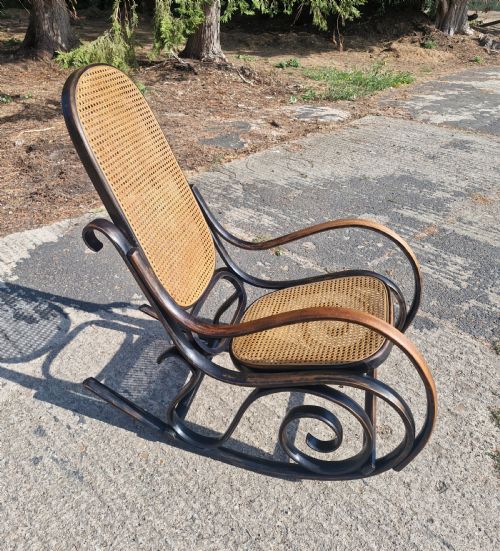
Traditional cane back chairs encompass a wide variety of seating forms designed for multiple domestic rooms, including dining chairs, armchairs, rocking chairs, and complete seating suites. The examples found here span from the early nineteenth century through to the early twentieth century, taking in both original period pieces and revival interpretations.
The styles represented draw heavily upon historical design vocabulary, featuring Jacobean Revival, Carolean Revival, Regency, and English Country aesthetics. Buyers encounter everything from single library armchairs and bergères to substantial sets of dining chairs intended for formal tables.
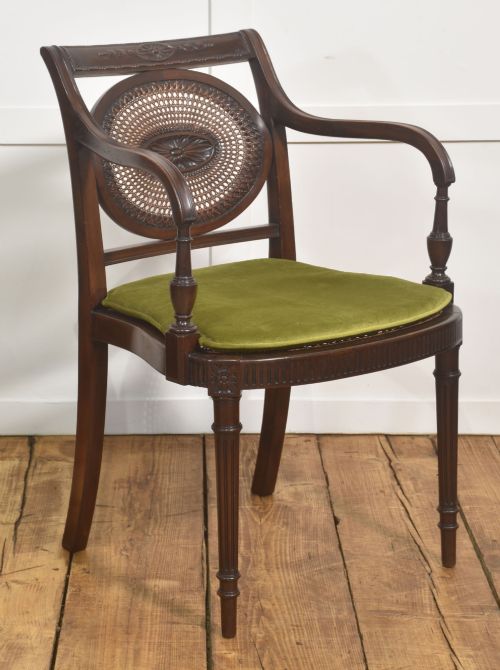
Materials vary according to the period and region of manufacture, with frames constructed in mahogany, oak, beech, and bamboo. Many designs incorporate secondary elements such as fabric or velvet cushions, brass details, and leather to complement the woven cane or rattan back panels and seats.
What varies in quality
The standard of timber selection and joinery distinguishes finer examples from simpler provincial seating, with dense mahogany and quarter-sawn oak providing superior durability. Carved details on the crest rails and arms show sharper hand-chiselling on pieces produced by skilled workshops rather than mass production.
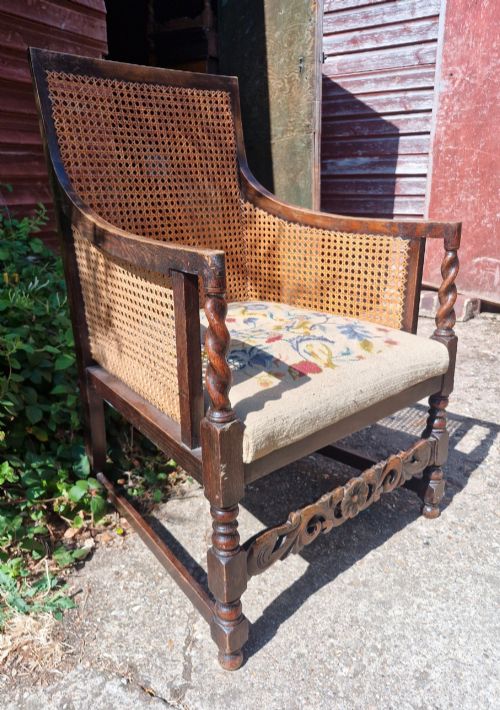
The condition and tightness of the cane weaving also determine the overall calibre of a piece. Evenly tensioned strands woven through cleanly drilled frame holes represent careful craftsmanship, whereas brittle or unevenly replaced cane indicates later restoration work.
Form variations range from single rocking chairs and tub chairs to large dining sets numbering up to fifteen matching pieces.
The Traditional Cane Back Chairs Glossary
- Bergère
- An enclosed upholstered armchair featuring solid wooden sides and a woven cane back or seat. This French-inspired form became particularly popular during the Regency and Edwardian periods.
- Canework
- The craft of weaving materials such as rattan, cane, or bamboo into decorative and supportive panels for furniture. It provides a lightweight yet durable surface for chair backs and seats.
- Jacobean Revival
- A nineteenth and early twentieth century style that imitates the heavy, carved oak furniture of the seventeenth century. These chairs often feature high backs and turned supports.
- Bobbin turned
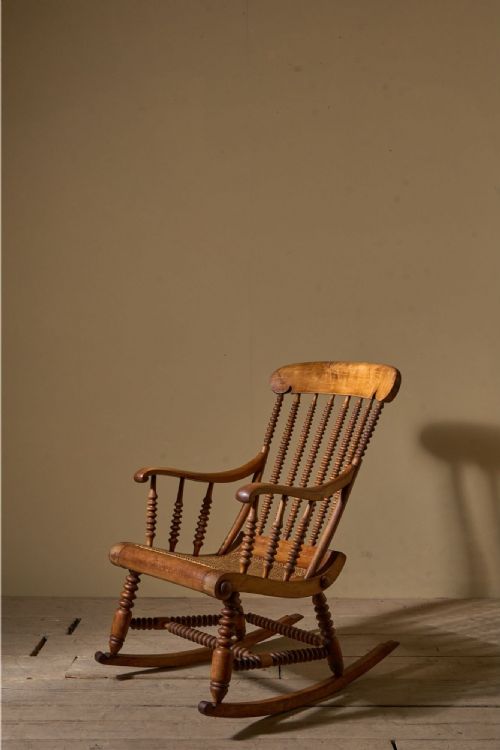
- A method of turning wood on a lathe to create a series of rounded spheres or discs resembling a string of bobbins. This decorative turning appears frequently on nineteenth-century rocking chairs and open armchairs.
- Klismos
- An ancient Greek chair design characterised by curving, sweeping legs and a concave backrest. Revival versions from the nineteenth century pair this classic silhouette with woven cane seats.
Traditional Cane Back Chairs: Frequently Asked Questions
Can I use dining chairs daily?
Most antique dining chairs constructed from solid mahogany or oak remain structurally sound for regular daily use around a dining table. Check the joints and the tightness of the cane before subjecting them to heavy family traffic.
Adding matching squab cushions or loose pads can protect the woven cane seats from excessive wear and tear. Period pieces from the nineteenth century were built for utility and handle normal domestic living comfortably when treated with respect.
What is a bergere armchair?
A bergère is a comfortable upholstered armchair featuring enclosed wooden sides and traditionally a cane back panel. They often include a loose seat cushion upholstered in fabric, velvet, or leather.
Originating in earlier French centuries, these chairs reappeared in mahogany and oak during the Regency and Edwardian eras. Their deep seats make them well suited for reading rooms and libraries.
How to date these chairs?
Examine the timber species, the turning style, and the construction methods used in the frame. Oak frames with heavy carving often point toward Jacobean Revival pieces from the late nineteenth or early twentieth century, while clean mahogany lines frequently suggest Regency or Edwardian production.
Look closely at the cane weaving holes and the type of screws or fasteners holding the frame together. Machine-drilled holes and modern fixings generally indicate later twentieth-century execution.