




Caned Back Bedroom Chairs
These caned back bedroom chairs bring light textures and timber frames into a room, offering practical seating with a delicate woven profile.
Caned Back Bedroom Chairs
Caned back bedroom chairs are lighter occasional seats designed for personal chambers rather than formal reception rooms. Buyers searching for caned back bedroom chairs encounter pieces originating across the nineteenth and early twentieth centuries, spanning Victorian, Edwardian, and Regency periods.
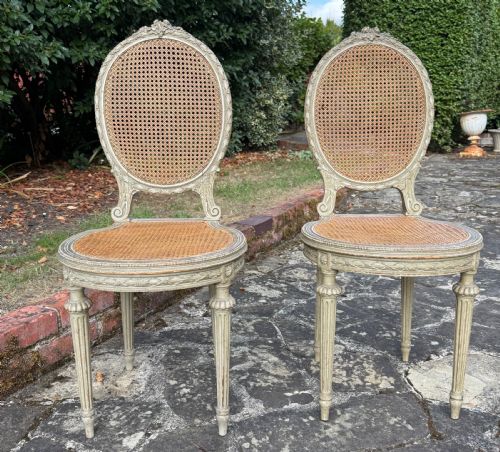
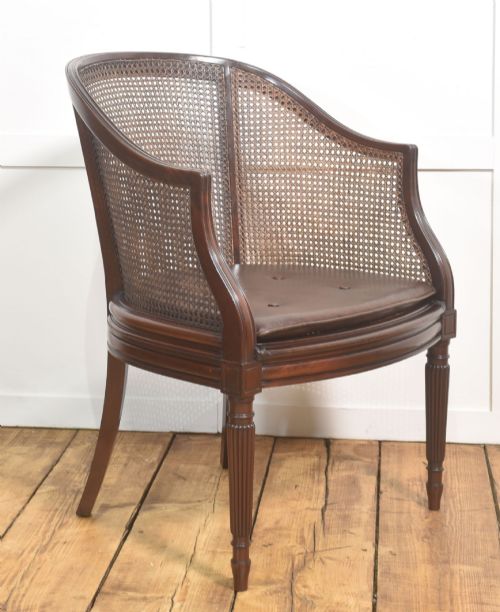
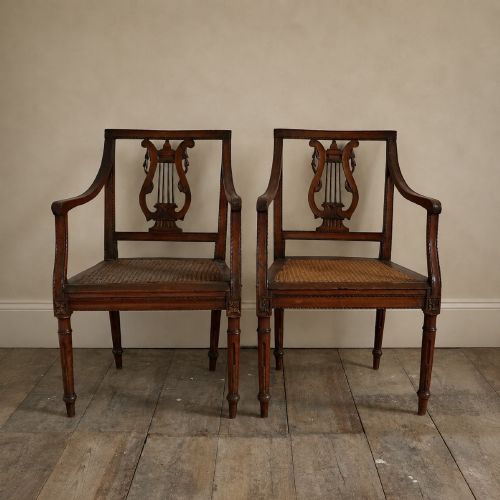
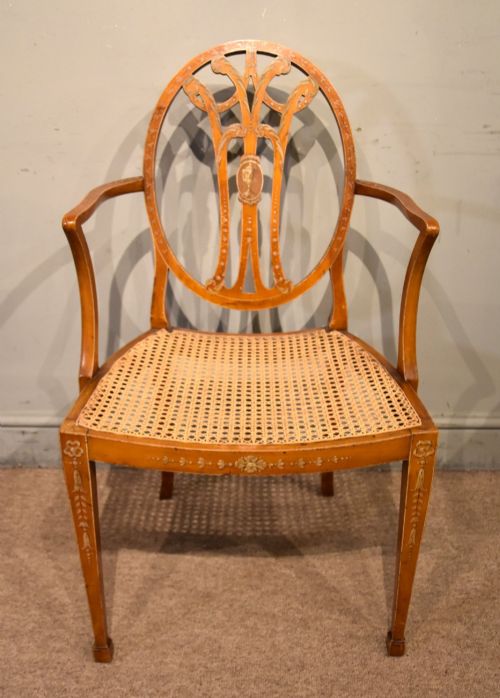
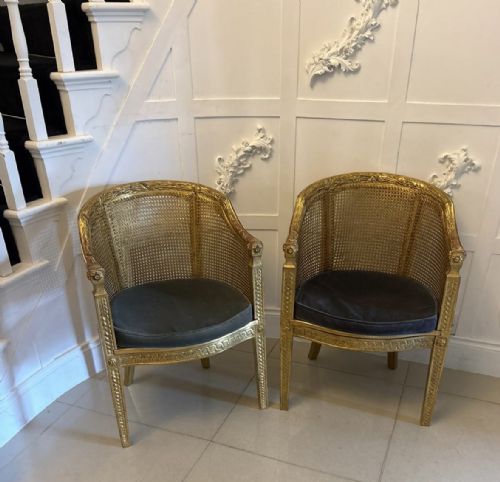
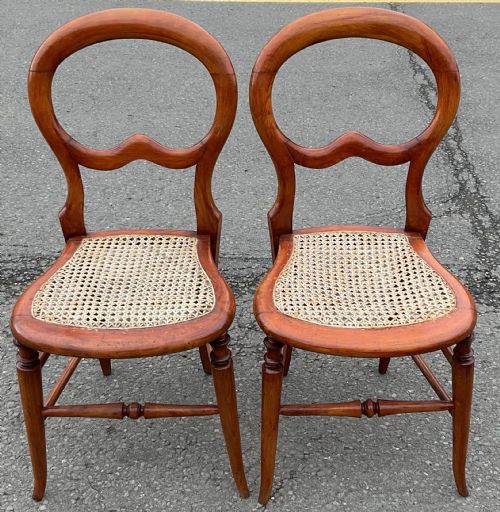
The selection on this page ranges from simple side chairs to painted occasional chairs and tub armchairs. Most examples rely on timber frames paired with woven cane panels to create an airy silhouette.
Origin styles vary widely, encompassing French Louis designs alongside straightforward British regional pieces. This mix provides buyers with options ranging from gilded frames to sturdy oak.
How they were made
Frames rely on traditional cabinet timbers including mahogany, oak, satinwood, and rosewood, shaped through standard joinery. Artisans also utilised giltwood and applied paint finishes to create decorative surfaces on specific French and English models.
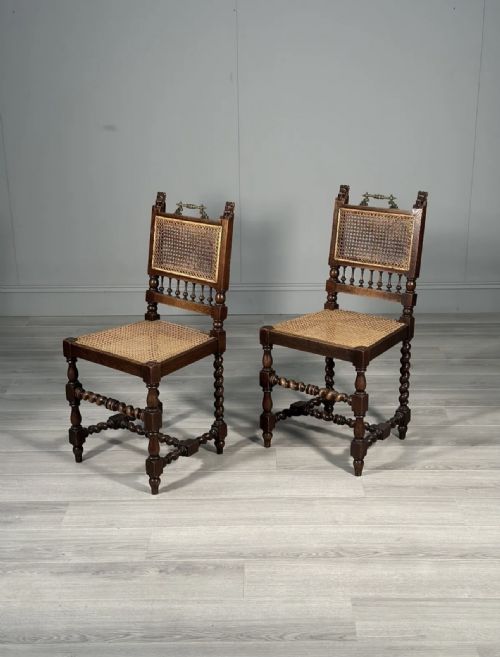
The defining characteristic of these chairs is the woven cane or rattan insert used for backs and occasionally seats. Split cane strands are threaded through drilled holes in the timber frame to form resilient, flexible panels.
Period representations span from Regency and 1860s Victorian up to Edwardian and 1920s designs.
What varies in quality
Quality rests in the crispness of the timber carving and the precision of the cane weaving. Tighter, more uniform cane work denotes higher craftsmanship than loose or hastily executed webbing.
Timber selection and structural joinery differentiate standard production from finer pieces. Heavier carving, sophisticated painted decoration, and balanced proportions elevate certain examples above simpler functional chairs.
The Caned Back Bedroom Chairs Glossary
- Cane
- The peeled bark of the rattan palm used for weaving seats and backs. It provides a strong yet flexible surface.
- Bergere
- An enclosed upholstered or caned armchair with solid sides originating in France. These chairs often feature exposed wooden frames.
- Tub armchair
- A comfortable chair featuring a continuous curved back and arms forming a rounded enclosure. They appear frequently in Edwardian examples.
- Barley twist
- A spiral turning technique used on furniture legs and supports. This style is particularly common on early twentieth-century oak pieces.
- Giltwood
- Timber coated with a thin layer of gold leaf or gesso. This finish is typical on decorative nineteenth-century French seats.
Caned Back Bedroom Chairs: Frequently Asked Questions
Are these chairs sturdy enough for daily use?
Most of these chairs are designed as occasional seating rather than heavy daily lounging furniture. Their lighter wooden frames and woven panels suit bedrooms and sitting rooms well.
Care should be taken with the cane work to prevent punctures or stretching over time. Placing them away from direct heat sources helps preserve the natural flexibility of the material.
What is the difference between a side chair and an armchair?
Side chairs are built without arms, making them compact enough to tuck neatly against dressing tables or walls. They take up minimal floor space while offering a decorative touch.
Armchairs include supporting rests on either side, providing a more enclosed and comfortable seat. They function well as standalone accent pieces in larger bedrooms.
How should I clean cane webbing?
Cane requires gentle maintenance to prevent the natural fibres from becoming brittle. A soft brush or a damp cloth removes dust effectively without soaking the material.
Applying a light coat of boiled linseed oil occasionally can help maintain moisture in older cane. Avoid harsh chemical cleaners that strip the natural oils from the wood and webbing.