
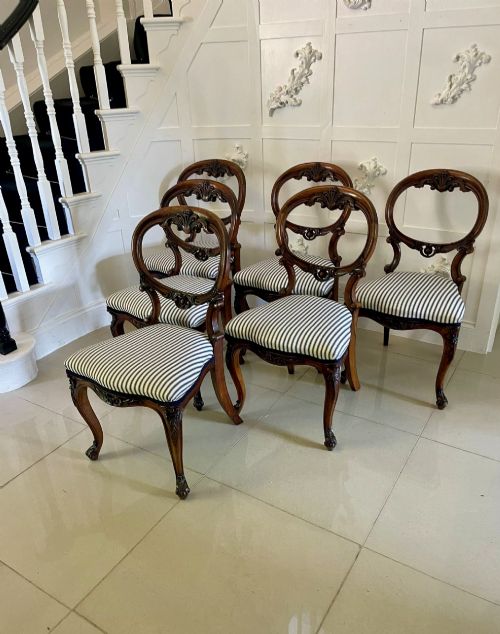
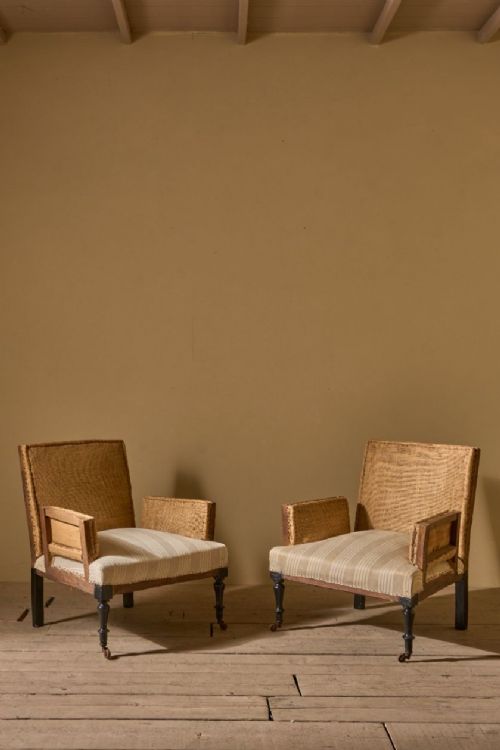
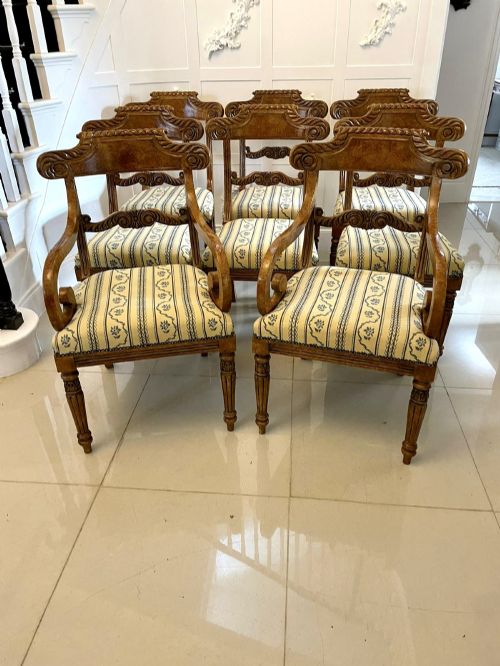
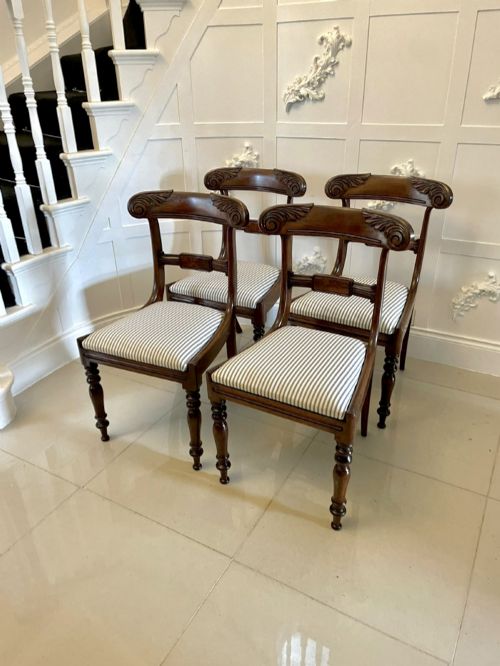
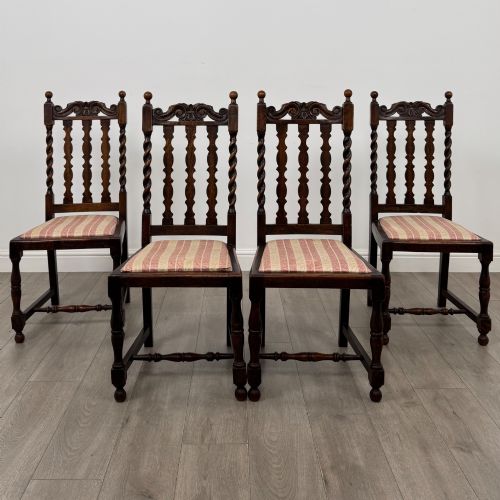
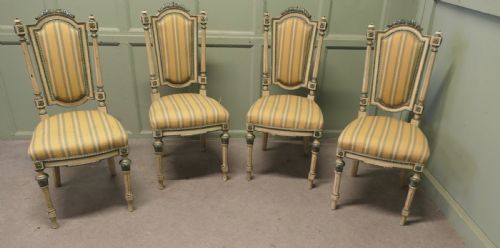
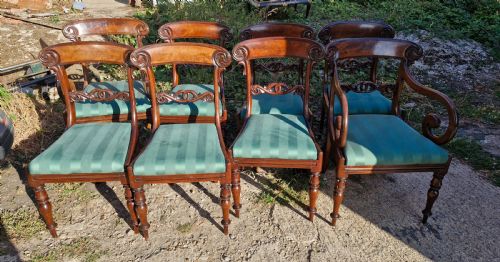
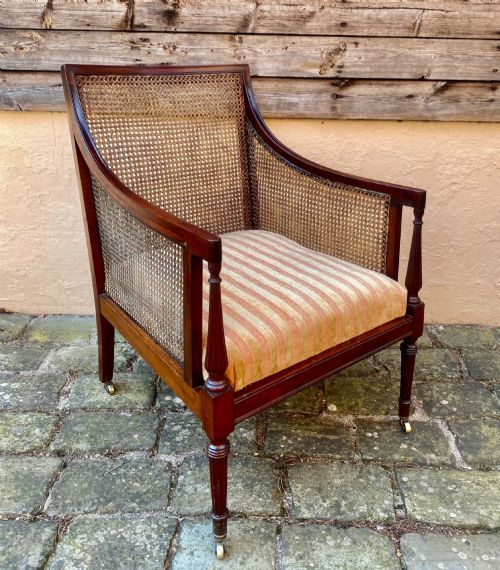
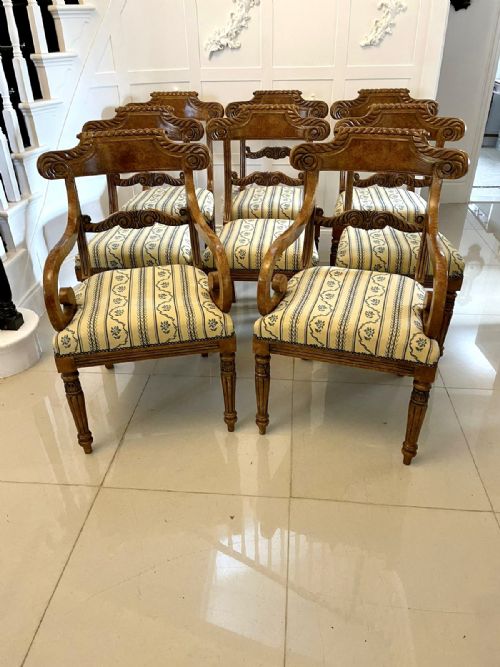


Striped Upholstered Side Chairs
Striped upholstered side chairs bring pattern and formality to a room, offering upright seating shaped by centuries of changing taste.
Striped Upholstered Side Chairs
Striped upholstered side chairs appear across multiple historical periods, ranging from the Regency era through the Victorian period and into the Edwardian years. These seating pieces take various forms, including dining chairs, salon chairs, and bedroom chairs designed for occasional use.
The selection on this page relies heavily on nineteenth-century examples alongside Edwardian and early twentieth-century designs. Buyers encounter solitary chairs, pairs, and larger sets tailored for formal dining rooms or quiet bedroom corners.
Materials and construction methods
Carpenters and cabinetmakers built the frames of these chairs using hardwoods such as mahogany, walnut, oak, and satinwood, occasionally applying ebonising or faux finishes like painted birds-eye maple. Structural joints relied on traditional woodworking techniques to support upright frames and carved elements.
Upholstery textiles finish the seats and backs, integrating fabrics, velvet, and coastal stripe patterns secured over padding. Brass details sometimes appear on castors or decorative mounts, complementing the timber frames.
Listings span the Regency, Victorian, and Edwardian periods, utilising mahogany, walnut, oak, and satinwood alongside fabric and velvet upholstery.
Judging the quality of the pieces
Quality rests in the crispness of the timber carving and the architectural balance of the frame, whether displaying Regency restraint or Victorian elaboration. Finer examples show careful timber selection, precise joinery, and harmonious proportions across pairs and larger sets.
The execution of the upholstery work and the preservation of the original wood finish influence the character of each piece. Greater distinction belongs to chairs retaining robust construction and sympathetic fabric choices that complement their period.
The Striped Upholstered Side Chairs Glossary
- Balloon-back chair
- A chair featuring an oval or rounded open back resembling a balloon, popular during the Victorian period. This design often incorporates carved mahogany or walnut framing.
- Side chair
- An upright chair without arms, traditionally used at the side of a dining table or placed against a wall. These pieces provide compact seating across various historical styles.
- Salon chair
- A light, decorative chair designed for formal reception rooms rather than heavy daily dining use. They often feature painted finishes or French styling.
- Cabriole leg
- A furniture leg that curves outward at the knee and tapers inward toward an ankle or foot, inspired by animal forms. This shaping frequently appears on Victorian and Edwardian seating.
- Ebonised
- Wood finished with a dark, opaque stain or polish to imitate expensive ebony. This technique gained favour in nineteenth-century design.
Striped Upholstered Side Chairs: Frequently Asked Questions
Where should I place a side chair?
Side chairs fit neatly beside dressing tables, in hallways, or paired with a small desk where space is limited.
They also serve as extra seating in living rooms when hosting guests without crowding the floor plan.
How do I identify a Victorian chair?
Victorian chairs often feature darker hardwoods like mahogany and walnut, accompanied by rounded balloon backs or heavy scroll carving.
Cabinetmakers of this era favoured robust proportions and ornate detailing compared to earlier Regency designs.
Are these chairs suitable for dining?
Many pieces on this page originated as dining chairs and provide sturdy upright support for meal times.
Sturdier oak and mahogany sets suit daily use, while delicate salon or bedroom chairs work better for occasional seating.
What defines an Edwardian chair?
Edwardian seating typically displays lighter timbers, simpler lines, and a revival of earlier classical styles.
These chairs often incorporate striped upholstery fabrics and restrained woodwork suited to brighter early twentieth-century interiors.