


Regency Single Chairs
Regency single chairs are classic seating options that bring architectural proportion and warmth to a room without crowding the floor space.
Regency Single Chairs
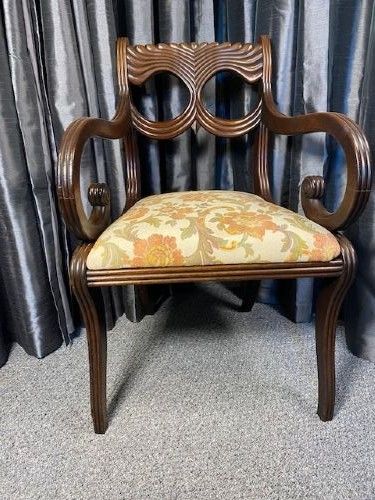
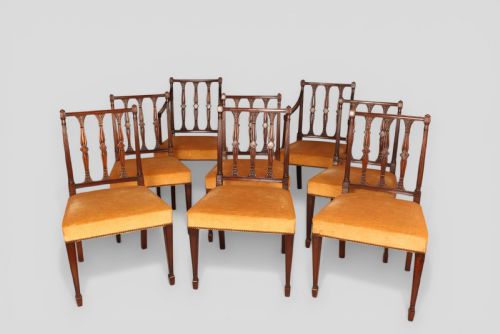
When you search for regency single chairs, you are looking at individual dining, side, and bedroom seats designed to stand alone or complement a larger suite. These pieces date from the early nineteenth century and later revivals, reflecting classical influences through clean lines and restrained ornamentation.
The versions most commonly met on this page are mahogany dining chairs constructed with single frames. They frequently appear alongside sets or as occasional pieces, showcasing the enduring appeal of the period's cabinet-making traditions.
How they were made
Makers relied primarily on mahogany and flame mahogany to build the frames of these chairs, sometimes incorporating walnut, rosewood, and painted wood surfaces. Timber selection governed the visual weight of the furniture, with dense grains polished to a deep lustre.
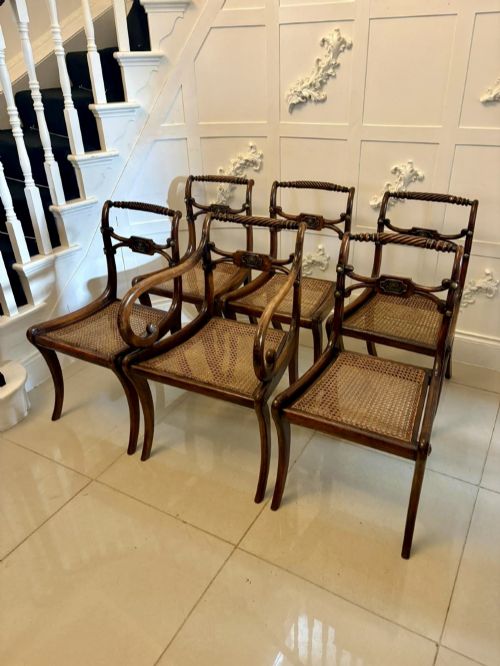
Support and comfort were integrated through cane seats, traditional upholstery fabric, and needlepoint. Brass inlay and turned front legs completed the construction, adding structural stability alongside decorative detail.
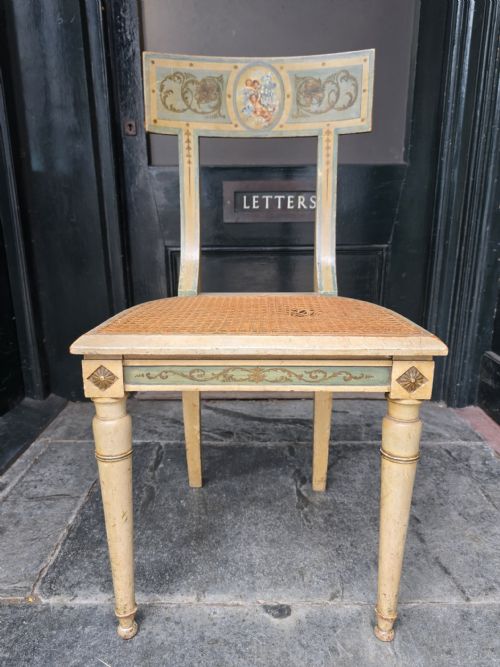
Some single bedroom chairs received cheerful painted decorations during the nineteen-twenties, proving that historical seating knows how to lighten up.
What varies in quality
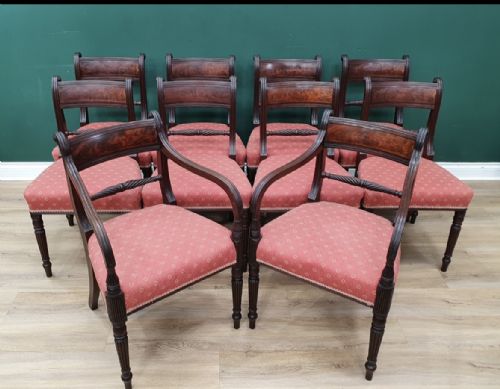
The distinction between ordinary and exceptional chairs lies in the crispness of the turning and the selection of timber. Grain matching across a set indicates a maker who paid close attention to the visual rhythm of the wood.
Proportion and joinery integrity dictate long-term durability. Chairs that retain their original timber surfaces without excessive sanding or structural replacement command greater respect from collectors.
The Regency Single Chairs Glossary
- Carver
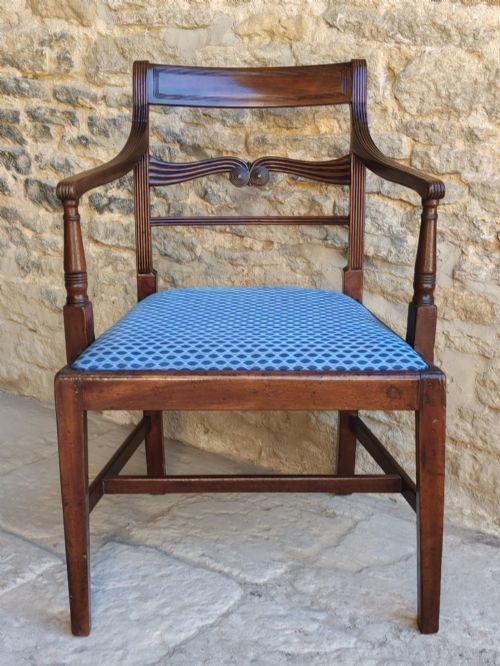
- An armchair designed to match a set of single chairs, typically placed at the head of a dining table. These pieces feature integrated armrests while maintaining the stylistic profile of the smaller seats.
- Cane
- Woven rattan material used to form light, resilient seat bases. This technique provides natural give and a textured appearance distinct from solid wood or upholstered pads.
- Needlepoint
- Stitched textile worked on a canvas mesh ground, often used for historic seat covers. It introduces patterned colour and tactile depth to the top of the chair frame.
- Flame mahogany
- Timber cut from the fork of the mahogany tree to reveal a rippled, flickering grain pattern. Cabinet-makers used this veneer on prominent surfaces to catch the light.
Regency Single Chairs: Frequently Asked Questions
What is a single chair?
A single chair is an individual seat without arms, intended for dining, occasional use, or placement in a bedroom or hallway. These pieces stand independently or complement larger matched suites.
Historically, they formed the majority of dining sets, allowing several guests to be seated comfortably around a table without the bulk of armchairs.
How do I use them at home?
These chairs fit easily into contemporary interiors as desk seats, dressing table chairs, or occasional seating in a living room. Their modest footprint allows them to be tucked into corners when not in use.
They also mix effectively with modern dining tables, introducing texture and history to a dining space.
Are cane seats original?
Many chairs retain their traditional woven cane panels, though fragile examples are often re-caned by modern craftspeople. Careful inspection reveals whether the cane is an older replacement or a recent repair.
Original webbing underneath can also help determine the age and construction methods of the piece.
How do I identify Regency style?
Regency style draws heavily on classical Greek and Roman forms, featuring sabre legs, reeded framing, and occasional brass mounts. The aesthetic favours restraint and balanced proportions over heavy carving.
Mahogany and rosewood are typical woods, often finished with a dark, polished sheen that highlights the grain.