




Painted Ebonised Dining Chairs
These painted ebonised dining chairs bring dark finishes and crisp decoration into a room, offering both durability and historic character.
Painted Ebonised Dining Chairs
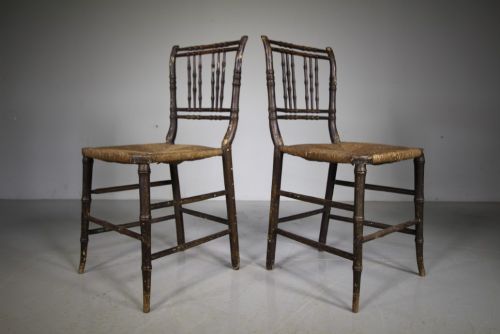
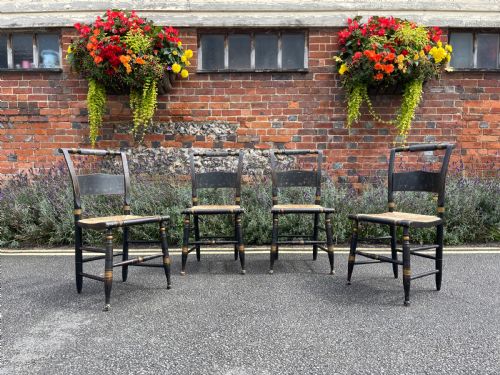
Painted ebonised dining chairs span the late eighteenth, nineteenth, and early twentieth centuries, encompassing genuine period pieces alongside later revivals. Buyers seeking these painted ebonised dining chairs encounter armchairs, side chairs, and elbow chairs built to formal and domestic scales.
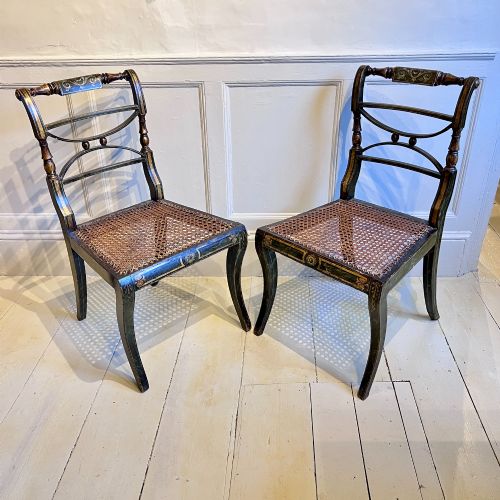
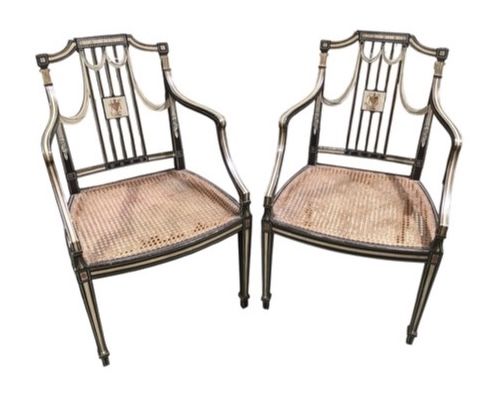
The selections on this page run from Regency originals and George III armchairs through to later Regency style and nineteen-twenties interpretations. Materials range from ebonised wood and pine to caned and rushed seating, often enriched with parcel gilt highlights.
How they were made
Construction relies on solid timber frames fashioned into shield backs, spider backs, and open arms, utilising traditional joinery methods suited to daily dining use. Wood surfaces receive dark ebonised finishes paired with applied paint and sometimes parcel gilt detailing.
Seating areas incorporate woven cane, rush, or padded fabric drop-in pads supported by pine and various hardwoods. Decoration often includes hand-painted motifs and distinctive structural elements such as block feet.
Listings feature periods from the eighteenth century up to nineteen-twenty, alongside later twentieth-century additions.
What varies in quality
Quality rests in the crispness of the ebonised finish and the preservation of original painted or gilt decoration. Finer examples display meticulous hand-painted details and well-balanced proportions across armchairs and side chairs.
The integrity of the structural frame and the tightness of cane or rush seating separate standard utility pieces from more ambitious cabinet work. Age and period adherence also influence the standing of each individual chair.
The Painted Ebonised Dining Chairs Glossary
- Ebonised
- Wood stained or painted black to imitate costly ebony. This dark finish became particularly fashionable during the Regency period and later revivals.
- Parcel Gilt
- Woodwork partially decorated with gold leaf or gold paint alongside another colour. It highlights carved details and mouldings.
- Cane
- Woven split rattan used for resilient and lightweight chair seats. It provides a flexible surface that complements light framing.
- Shield Back
- A chair back shaped like a heraldic shield, popularised in the eighteenth century by designers like Hepplewhite. It offers an elegant silhouette for dining seats.
Painted Ebonised Dining Chairs: Frequently Asked Questions
Are these chairs comfortable for daily use?
Most examples function well for dining when paired with appropriate cushions, though caned and rushed seats offer a firmer sit than modern upholstery.
Buyers often select them for regular dining rooms where their sturdy timber construction supports everyday gatherings.
How do I identify a Regency period chair?
Regency pieces typically display classical restraint, sabre legs, and sophisticated painted or ebonised surfaces characteristic of the early nineteenth century.
Later revivals from the twentieth century often emulate these exact proportions while utilising slightly different secondary timbers.
Can I mix different sets around a table?
Mixing side chairs and armchairs from similar eras creates a traditional, collected dining room aesthetic.
Matching pairs can anchor the heads of a table while single chairs line the sides.
How should I care for painted and ebonised wood?
Protect the surfaces by keeping them away from direct sunlight and maintaining steady indoor humidity levels.
Dust gently with a soft dry cloth and avoid harsh chemical polishes that might lift delicate painted decoration.