
Inlaid Accent Chairs
These inlaid accent chairs bring together period timbers and contrasting botanical or geometric lines for striking decorative seating.
Inlaid Accent Chairs
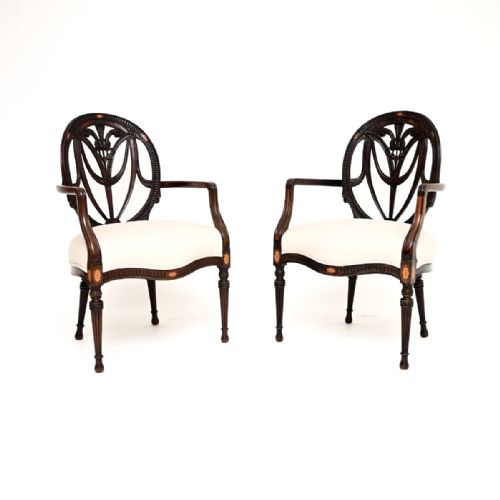
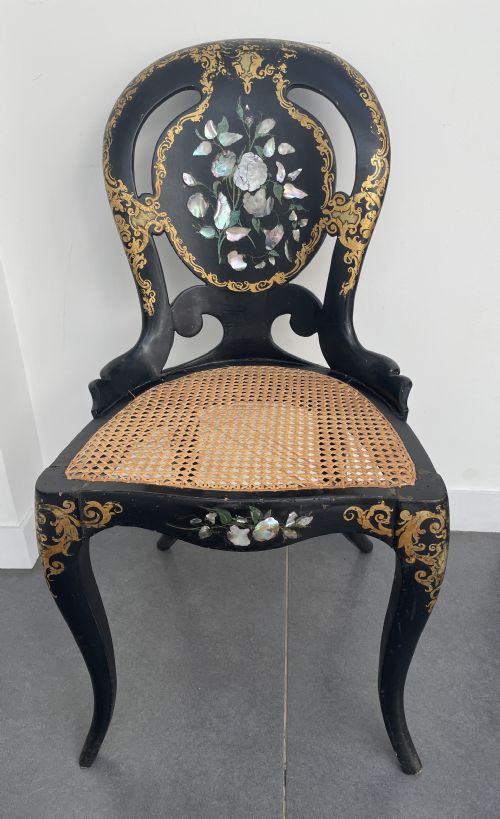
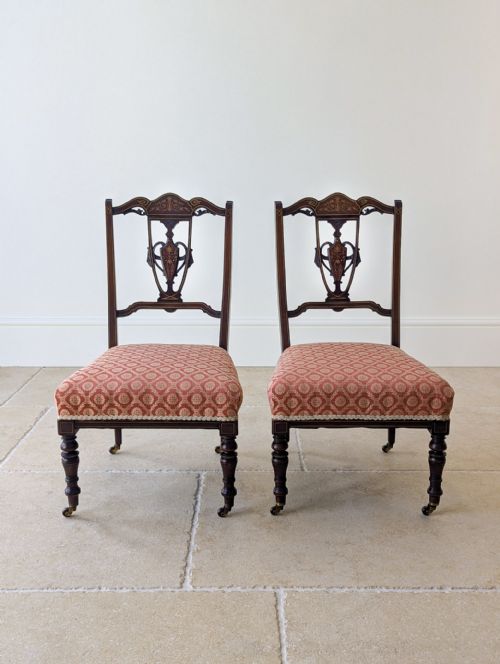
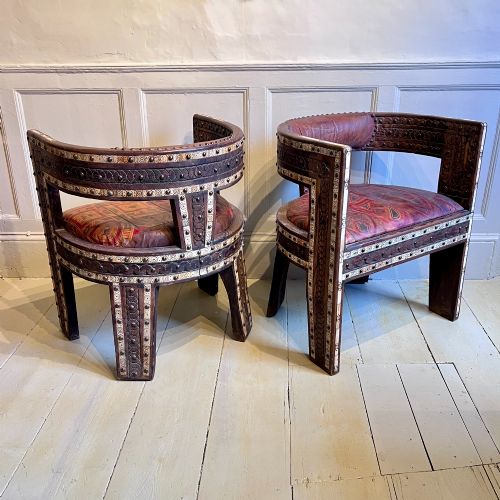
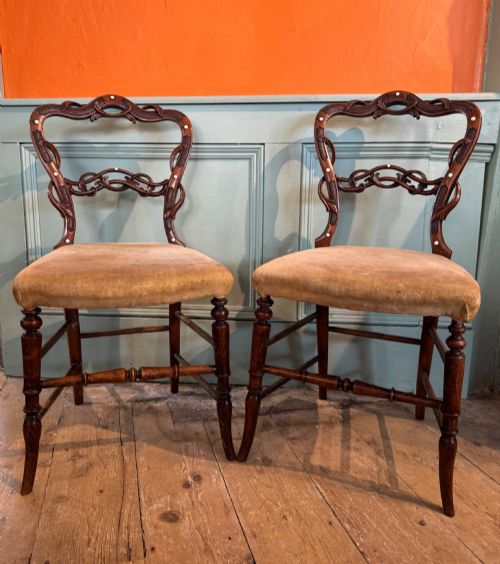
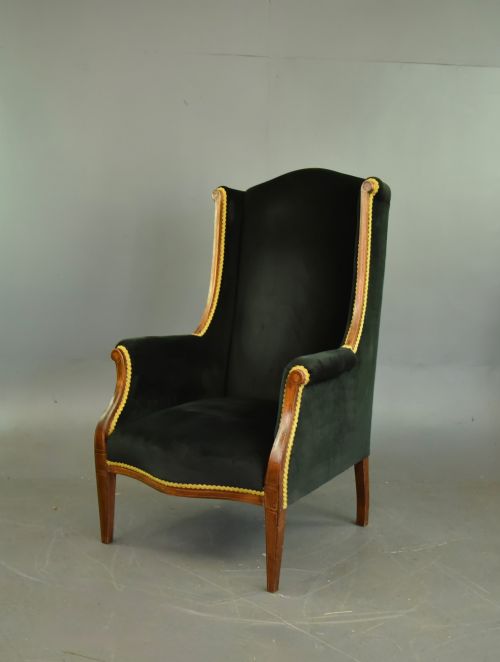
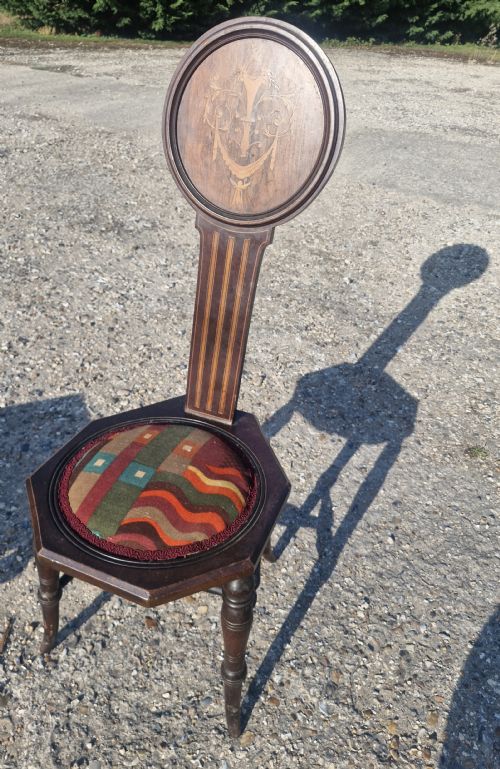
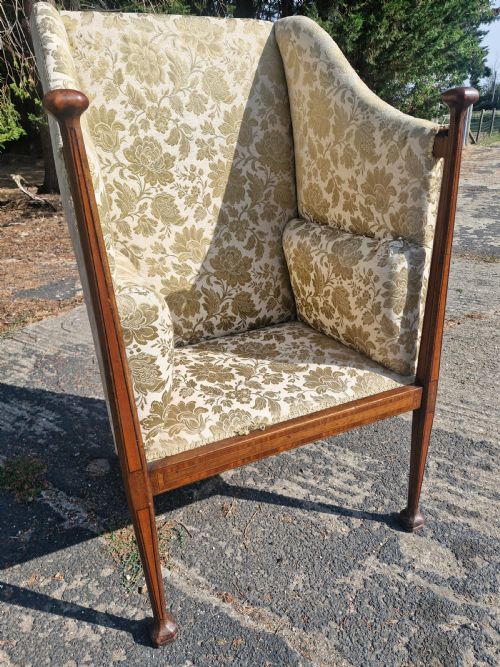
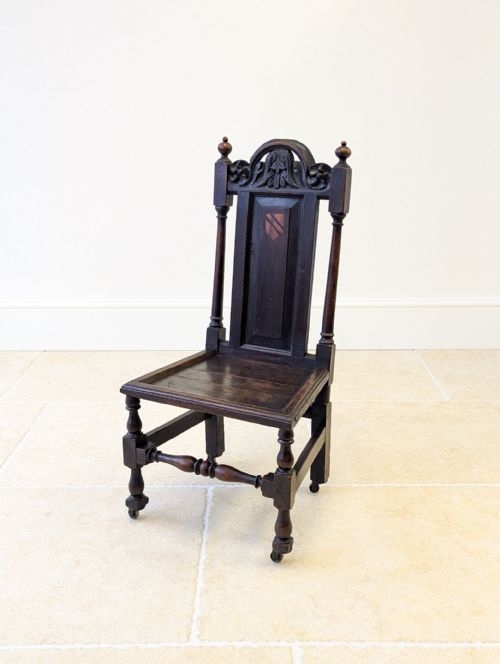
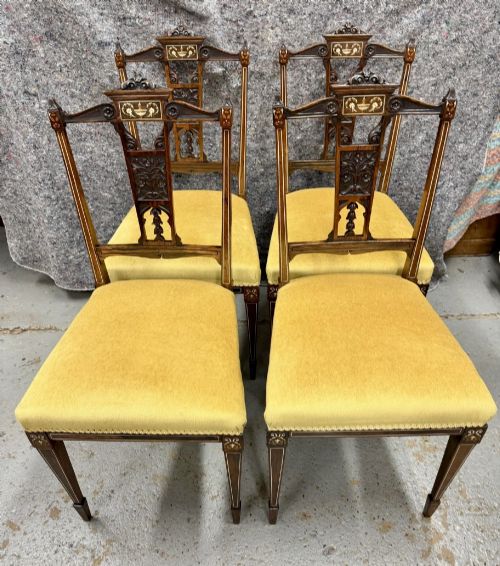
Inlaid accent chairs encompass occasional seats, salon chairs, and carver armchairs designed to catch the eye rather than serve at a dining table. When exploring inlaid accent chairs, the most common examples you encounter date from the Edwardian period and the late nineteenth century.
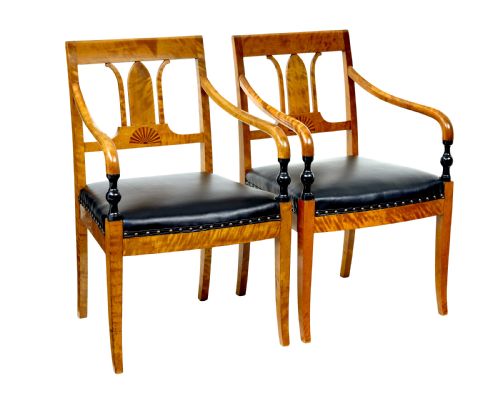
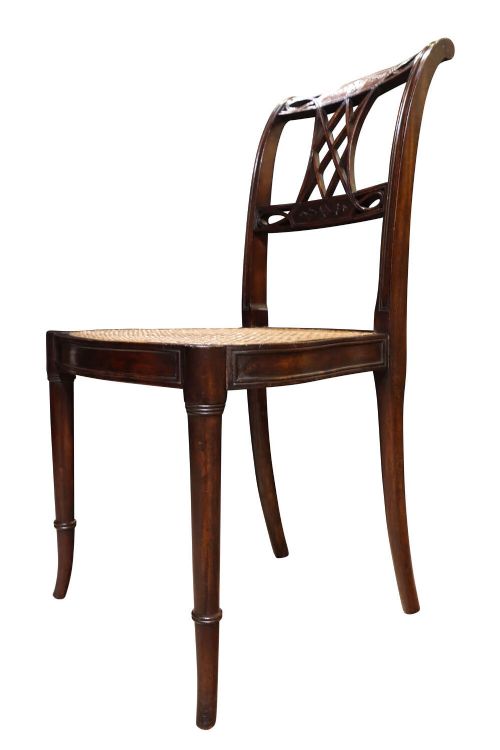
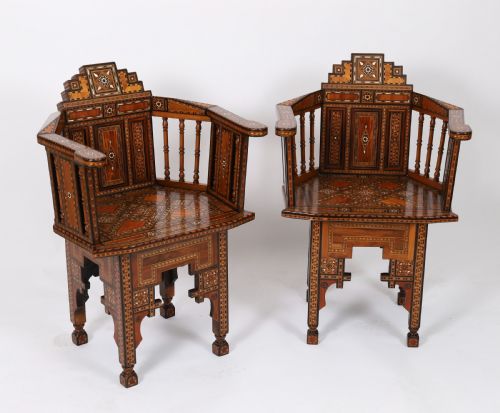
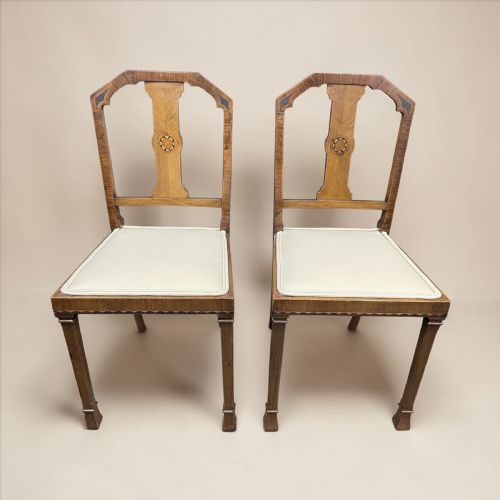
The selection ranges from mahogany bedroom chairs with delicate floral decoration to substantial Victorian and Georgian forms featuring elaborate parquetry. Makers utilised diverse seating formats, including cane seats, upholstered pads, and carved wooden backs, to suit polite reception rooms and boudoirs.
Materials and Construction
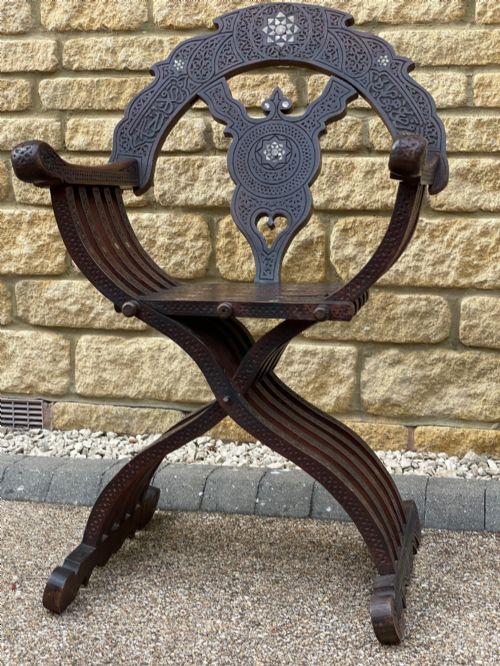
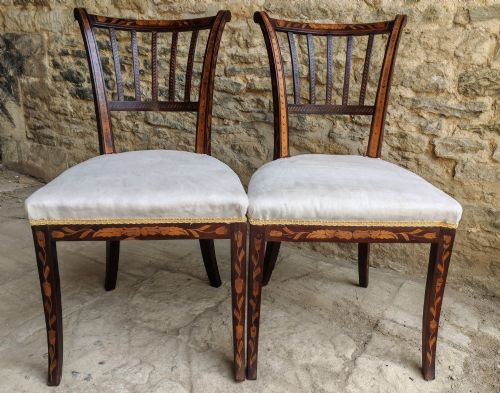
Cabinetmakers built these frames primarily in mahogany, walnut, and satinwood, applying contrasting timber veneers and stringing to create decorative motifs. Surface embellishment often incorporates mother of pearl, bone, and brass inlays set flush into the primary wood.
Seating portions utilise traditional upholstery fabrics such as velvet alongside woven cane and leather panels. Joinery techniques combine standard mortise and tenon frames with careful hand-cut recesses for intricate marquetry panels.
Listings feature periods spanning from the eighteenth century through the Georgian, Victorian, and Edwardian eras into the nineteen-thirties.
Assessing Quality and Execution
Quality reveals itself in the crispness of the wood inlay and the precision with which contrasting materials sit within their channels. Fine examples display tight, seamless marquetry without gaps or heavy filler around the edges.
Structural integrity of the timber frame and the retention of original decorative elements dictate the standing of a piece. Finer seating balances robust joinery with delicate carving and well-executed surface grain.
The Inlaid Accent Chairs Glossary
- Marquetry
- Decorative patterns formed by fitting together thin slices of wood veneer and other materials onto a structural surface. This technique allows for elaborate pictorial or geometric designs across chair backs and seats.
- Stringing
- Thin lines of contrasting timber inlaid into shallow channels on chair legs and rails. It defines the outlines of panels and panels of secondary wood.
- Parquetry
- Geometric mosaic woodwork arranged in repeating patterns such as cubes or triangles. It frequently appears on nineteenth-century continental and Levantine seating.
- Satinwood
- A durable, lustrous yellow timber utilised for contrasting inlay work and occasional chair frames. It provides a bright golden tone opposite darker mahogany.
- Carver
- An armchair designed with arms, often taller and more substantial than the side chairs in a matching set. They served as principal seating at tables or as parlour statement pieces.
Inlaid Accent Chairs: Frequently Asked Questions
Where were these chairs placed originally?
These decorative seats stood in parlours, bedrooms, and drawing rooms where guests gathered for conversation rather than formal dining. Their primary purpose was to provide portable, visually striking seating that complemented interior woodwork.
They often moved around the room as needed, serving as occasional chairs for reading or resting near a window or fireplace.
How do I identify an Edwardian piece?
Edwardian examples typically feature lighter mahogany or beech frames with Sheraton Revival influences, including delicate floral satinwood inlay. They often incorporate cane panels or light upholstery suited to early twentieth-century interiors.
Compared to heavier Victorian predecessors, these chairs prioritise slender proportions and restrained decorative motifs.
What is the difference between side and arm chairs?
Side chairs are built without armrests, designed to tuck neatly against walls or around occasional tables when not in use. Armchairs include structural supports for the arms, offering a more substantial silhouette.
In many periods, makers produced matching sets containing several side chairs paired with a pair of armchairs for the heads of the grouping.
How should I care for inlaid wood surfaces?
Protect inlaid wood by keeping chairs away from direct sunlight and sudden temperature shifts that cause timber and veneer to warp or split. Apply a microcrystalline wax periodically to nourish the polished surface without building up residue.
Avoid using liquid polishes or harsh chemical cleaners that can loosen delicate mother of pearl, bone, or brass stringing.