




Pair Regency Carver Chairs
A pair regency carver chairs brings balanced proportion and architectural line to a reception room or study.
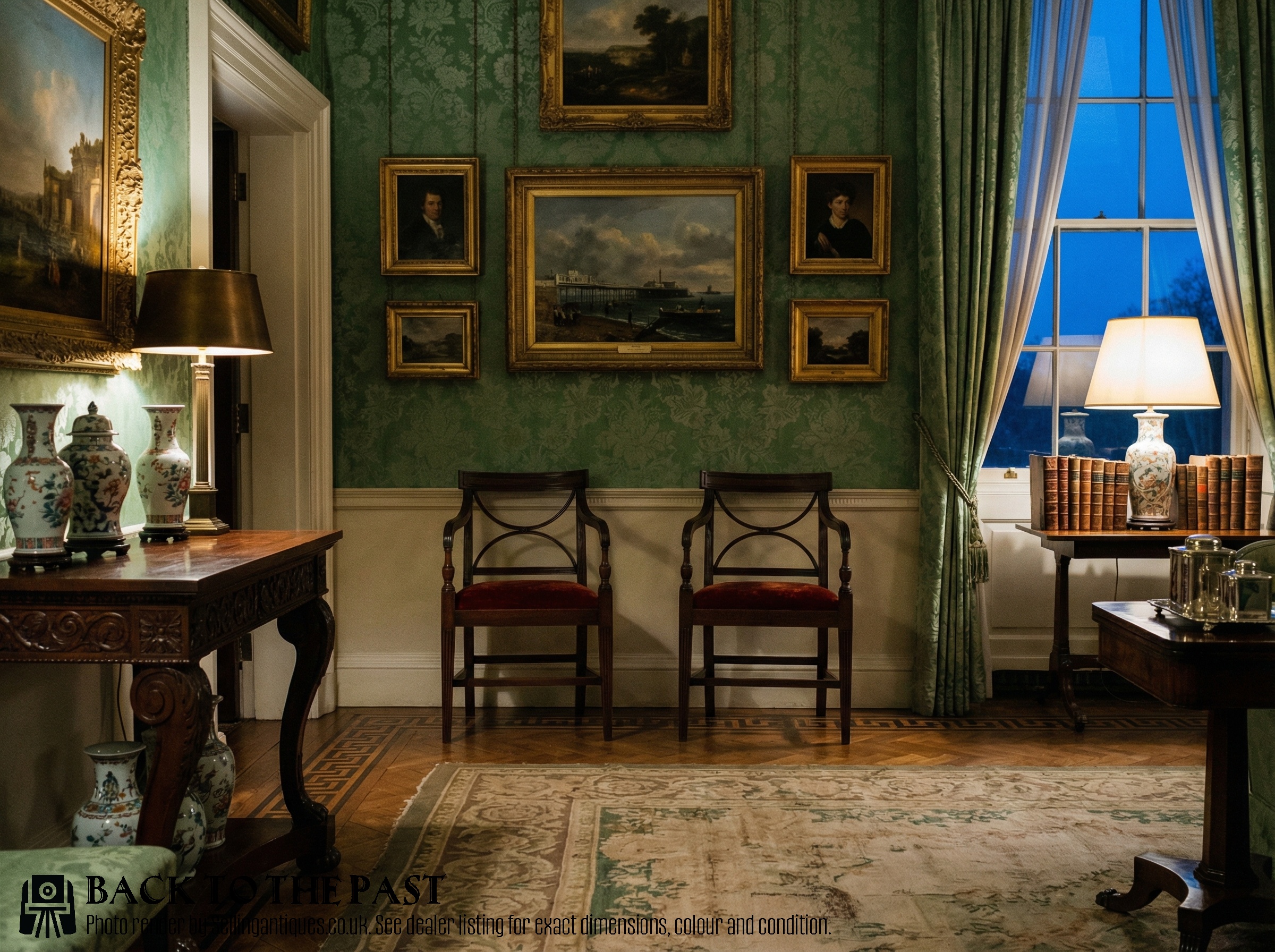
Materials and construction
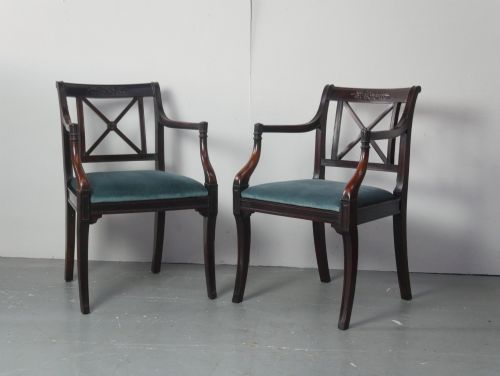
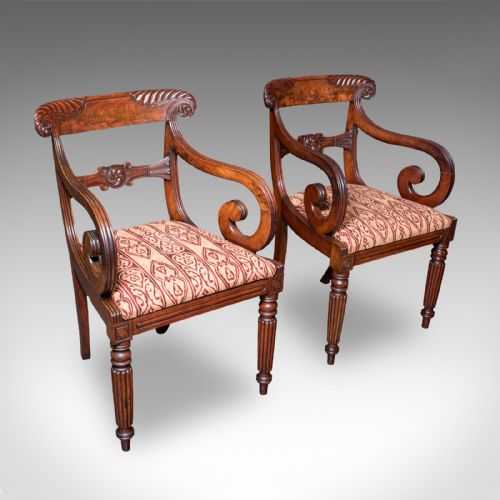
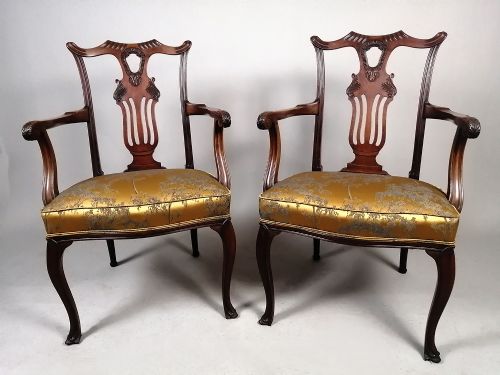
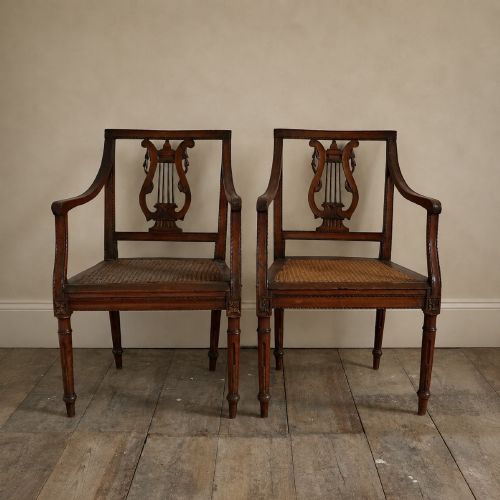
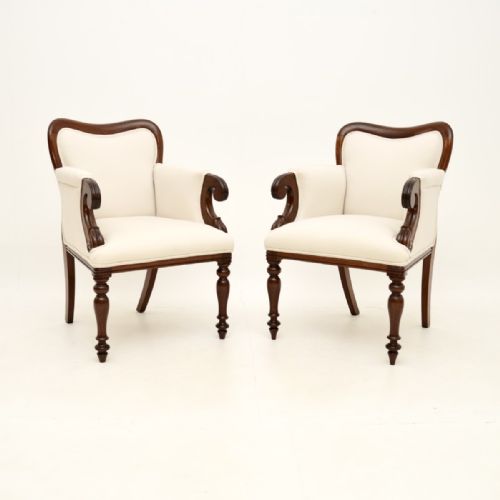
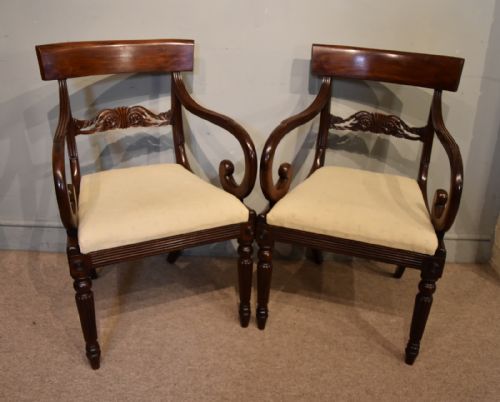
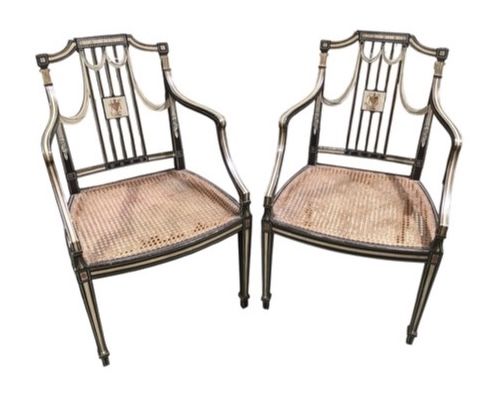
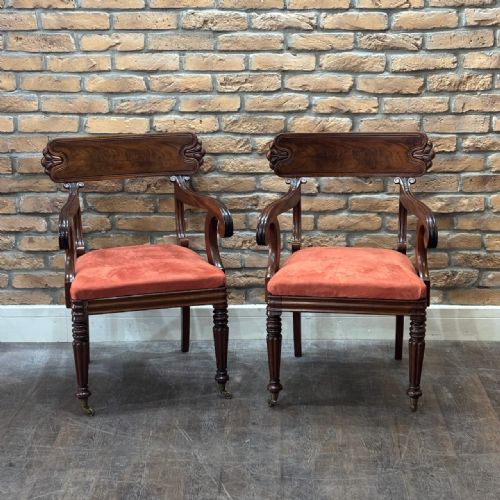
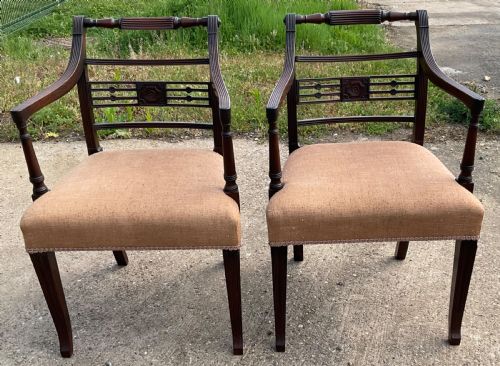
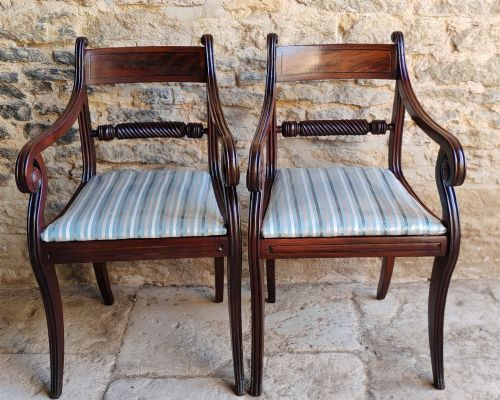
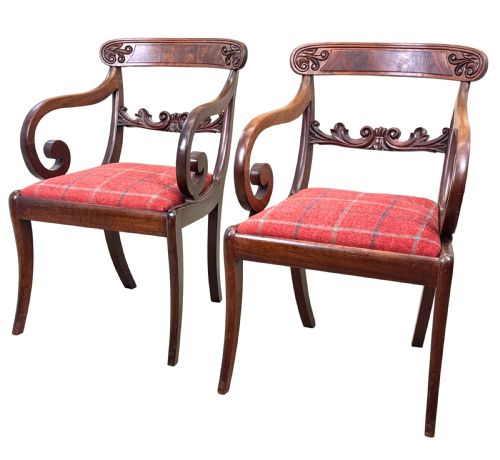
Makers relied primarily on solid and figured mahogany, complemented by accents of ebonised wood, brass, and painted finishes. Frames often incorporate curved splats, scroll arms, and turned or reeded legs that demonstrate precise cabinet-making techniques.
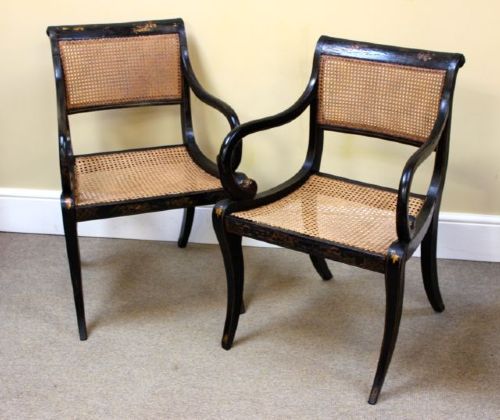
Seating support varied widely between traditional drop-in frames upholstered in leather, fabric or velvet, and woven cane panels designed for lightness and ventilation.
Distinctions in quality
The upper tier of pieces is distinguished by dense, highly figured timber grain and crisp, hand-carved detailing along the crest rails and arm terminals. Subtle touches such as precise brass inlay or ebonised highlights elevate the craftsmanship.
Simpler workshop output relies on plain mahogany stock with minimal ornamentation and standard joinery, serving utilitarian rather than grand interior functions.
Pair Regency Carver Chairs Retail Price Guide 2026
Typical asking prices for pair regency carver chairs among the pieces listed under this phrase on Sellingantiques today, from the lower quarter to the upper quarter. They describe what is for sale here now, not the wider market.
Some chairs sport faux bamboo frames for an exotic Regency flourish.
Henry Thomas Peters
The Pair Regency Carver Chairs Glossary
- Carver chair
- An armchair designed with open elbows, traditionally placed at the head of a dining table or utilised at a desk.
- Lyre back
- A chair back featuring an open splat shaped in the exact contour of a classical stringed musical instrument.
- Ebonised wood
- Timber treated with a specialised stain or finish to imitate expensive ebony, offering sharp dark contrast.
- Reeded legs
- Cylindrical furniture legs carved with parallel convex mouldings that resemble clustered reeds.
- Scroll arm
- An armrest curving outward and downward in a tight circular volute inspired by classical architecture.
Pair Regency Carver Chairs: Frequently Asked Questions
Where should I place a pair?
These armchairs sit naturally at either end of a generous dining table or as flanking accent seats in a library.
Their substantial arms and formal presence also make them well suited for placement beside a fireplace or writing desk.
How do I identify the period?
Examine the timber selection, leg turnings, and back splat architecture to determine the era of production.
While original Regency pieces display crisp hand carving and native joinery, revival pieces from later decades often utilise heavier framing.
Are they comfortable for daily use?
Most examples provide an upright, supportive sit intended for formal dining or administrative tasks rather than deep lounging.
Upholstered leather and padded fabric seats offer a comfortable surface for extended periods at a desk.
Can I mix different wood tones?
Deep brown mahogany pairs effortlessly with walnut and darker fruitwood furniture already present in a traditional interior.
Matching the general proportion of the frames matters more than achieving an exact timber hue across the room.