



Yellow Upholstered Side Chairs
Yellow upholstered side chairs bring colour and period character to a room, offering practical seating paired with striking textiles.
Yellow Upholstered Side Chairs
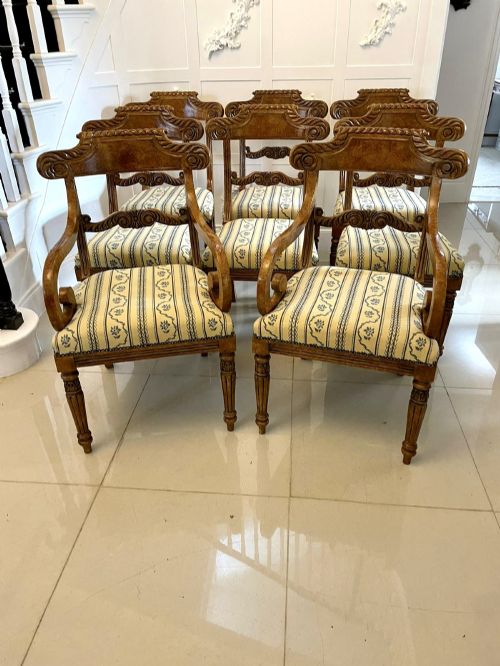
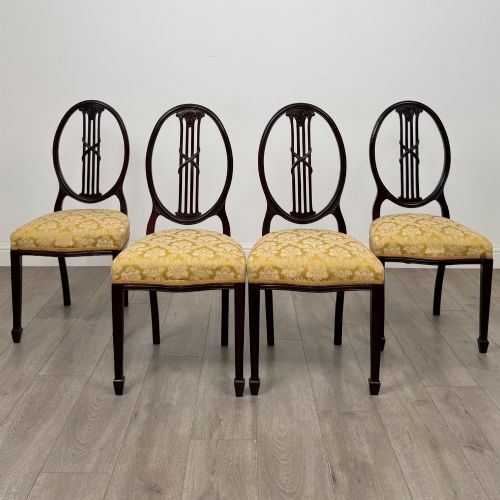
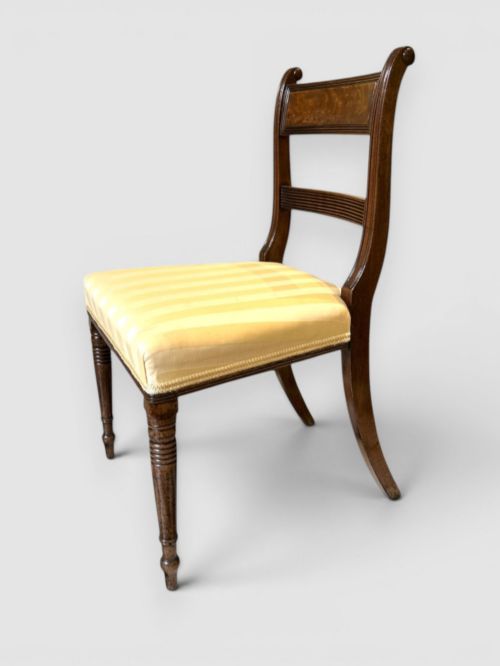
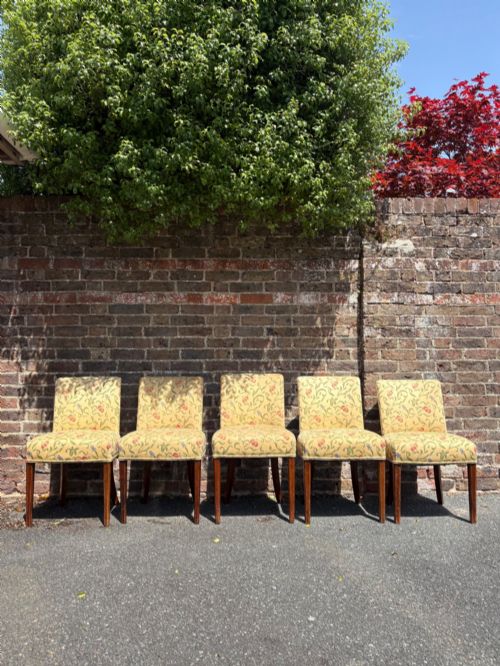
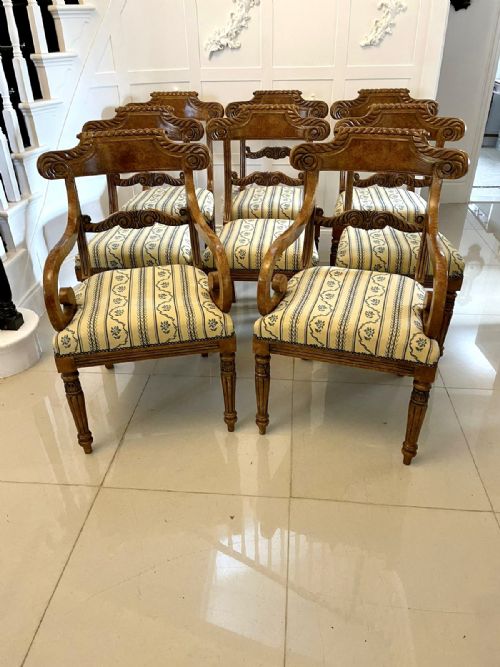
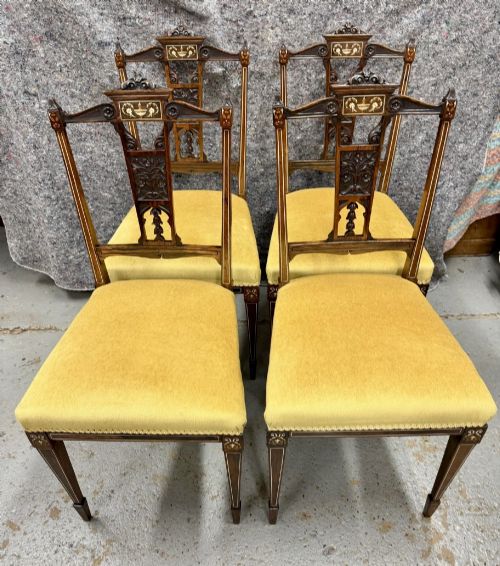
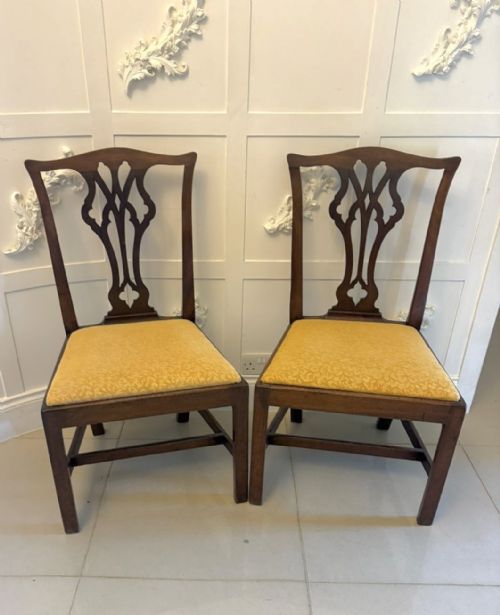
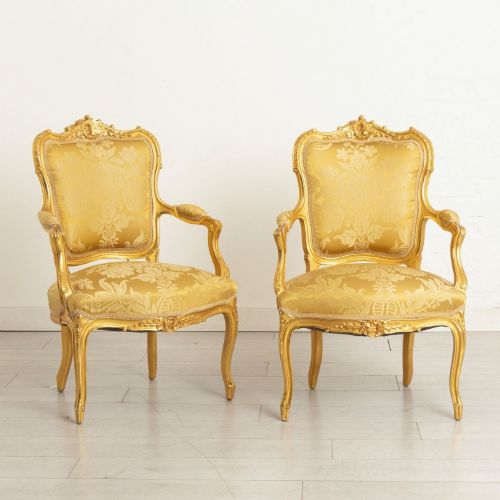
Yellow upholstered side chairs encompass seating originating from the eighteenth century through to the twentieth century, covering styles such as Regency, Victorian, Edwardian, and Art Deco. Buyers seeking these pieces will encounter various chair types, including formal dining seats, salon chairs, and bedroom or nursing chairs.
The construction typically relies on timber frames such as mahogany, walnut, rosewood, oak, and satinwood, paired with textile coverings. Many examples reflect revival movements, including Hepplewhite, Sheraton, and George II styles, alongside French painted or giltwood pieces.
Materials and construction
Makers built the structural frames using hardwoods like mahogany, walnut, and oak, often shaping them through turning, carving, or applying faux finishes such as simulated rosewood or birds-eye maple. Brass castors, inlay, and carved details frequently complete the framework of the seat.
Upholstery techniques involve securing textiles like velvet, silk, needlepoint, and various upholstery fabrics over padding. Frames incorporate traditional joinery suited to the period of origin, from Georgian proportions to twentieth-century oak construction.
Some chairs sport faux birds-eye maple or simulated rosewood finishes for a fancy look on a budget.
Proportions, timber, and finish
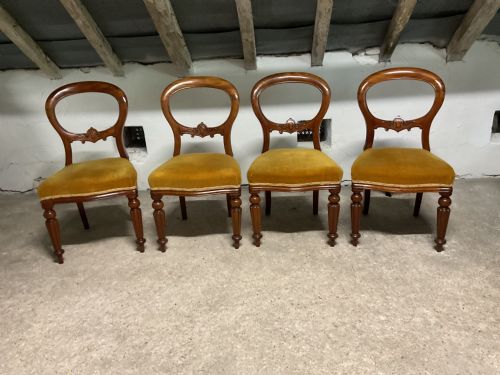
Quality rests primarily in the timber selection and the crispness of the carving or inlay work on the frame. Denser grain, superior cabinetmaking, and well-proportioned balloon backs or curved rails distinguish finer examples from standard production.
The harmony between the frame and the textile choice dictates the overall success of the piece. Superior items maintain original structural integrity while utilising appropriate period-style fabrics that complement the wood tone.
Blyth And Sons·James Shoolbred
The Yellow Upholstered Side Chairs Glossary
- Balloon back
- A rounded, oval-shaped chair back popular during the Victorian period. This design provides ergonomic support while creating a distinct profile.
- Carver
- An armchair, typically designed for the head of a dining table. These pieces match smaller side chairs in a larger set.
- Giltwood
- Wood that has been treated with a thin layer of gold leaf. This finish appears frequently on decorative salon and armchair frames.
- Stuff over
- An upholstery method where the fabric covers the seat rails entirely, concealing the wooden frame beneath. This technique became common on nineteenth-century dining chairs.
Yellow Upholstered Side Chairs: Frequently Asked Questions
How do I date a yellow upholstered side chair?
Dating relies on identifying the timber, joinery methods, and stylistic cues present in the frame. Characteristics such as balloon backs, turned legs, or specific revival styles point to periods like the Victorian era or Regency period.
Examining underneath the seat reveals construction details that separate eighteenth-century examples from later nineteenth and twentieth-century interpretations.
Are these chairs suitable for daily dining use?
Many yellow upholstered side chairs originated as dining furniture and remain sturdy enough for regular use. Solid hardwood frames provide the necessary strength for daily seating.
Buyers should check that the joints remain tight and the internal webbing supports the upholstery adequately before putting them into service.
What is a salon chair?
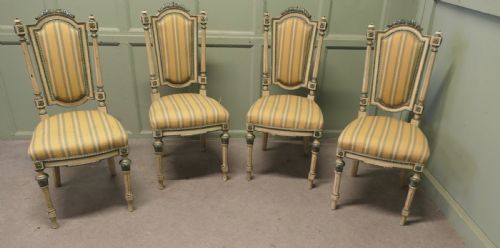
A salon chair is a lightweight, decorative seat intended for entertaining guests in a reception room. These pieces often feature painted finishes, giltwood, or intricate inlaid woodwork rather than heavy structural framing.
They tend to be slightly more ornamental than standard dining chairs while still offering functional seating.
Can I mix different chair styles around a table?
Combining various side chairs creates an eclectic interior scheme common in traditional and contemporary settings. Matching timber tones or similar period aesthetics helps unify the arrangement.
Ensure seat heights remain comparable so guests sit at a comfortable level relative to one another.