



Rope Twist Dining Chairs
Rope twist dining chairs bring sculptural carved backs and classical elegance to the dining table.
Rope Twist Dining Chairs
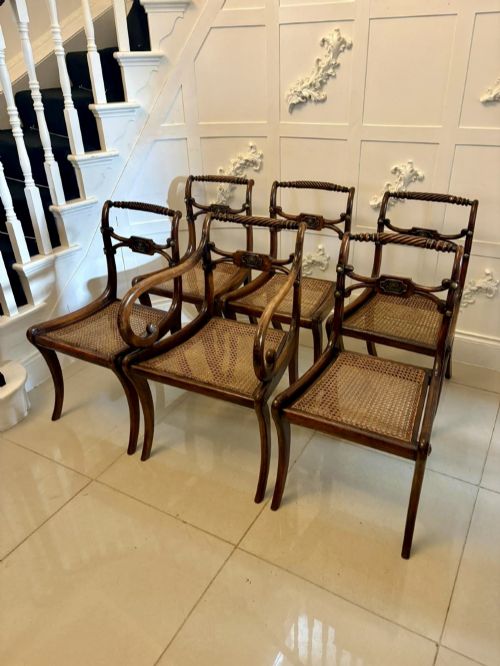
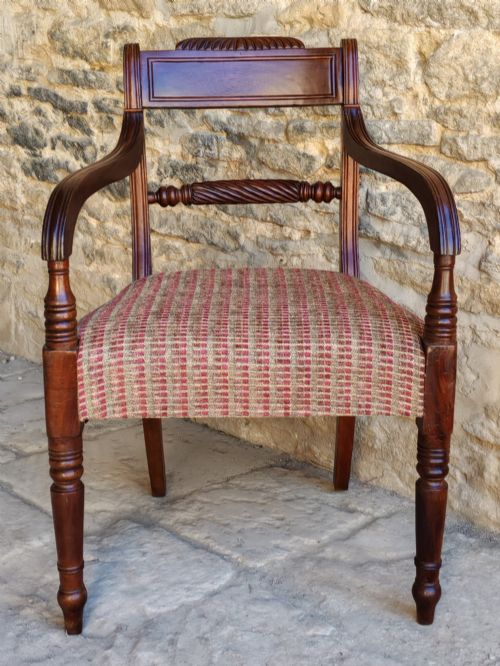
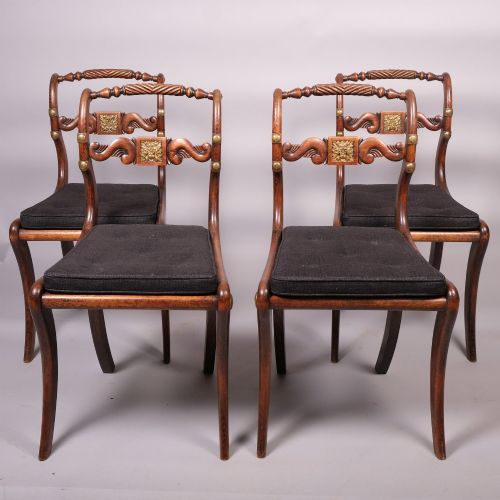
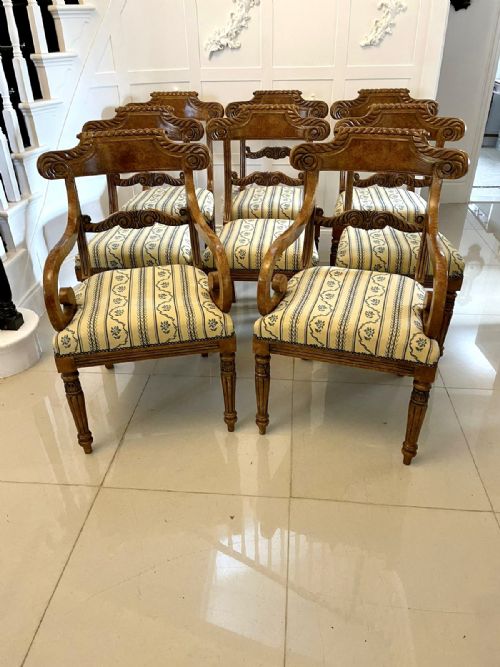
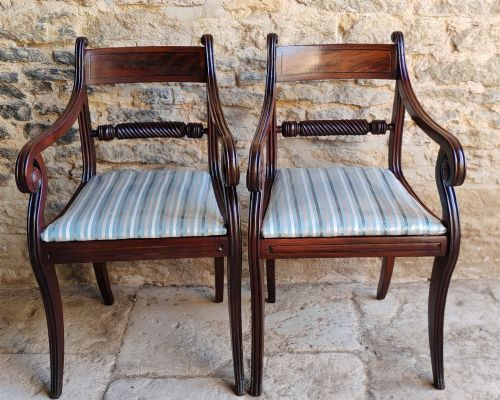
When you search for rope twist dining chairs, you encounter seating solutions primarily rooted in the Regency and Georgian periods, alongside later twentieth-century interpretations. These pieces predominantly take the form of dining chairs, carver chairs, armchairs, and side chairs designed to accompany a dining table.
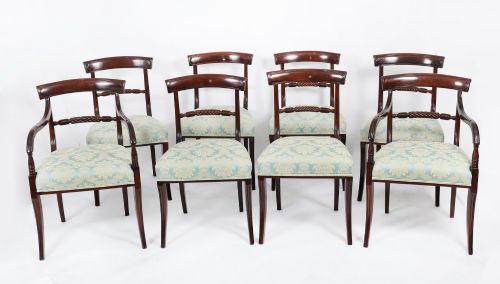
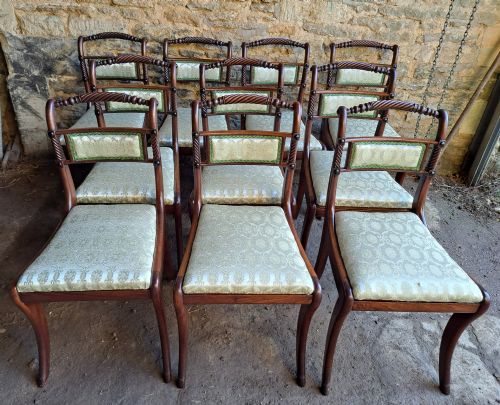
You are most likely to meet mahogany examples on this page, often appearing as matched sets or smaller groupings with carved ropeback details. The selection spans single chairs and carver configurations, frequently featuring drop-in upholstered seats, fabric, or cane work.
How they were made
Cabinetmakers utilised solid timbers such as mahogany and woods finished with simulated rosewood or ebonised surfaces to construct the frames. These surfaces were sometimes decorated or turned to emulate exotic graining and distinct visual textures.
Seats incorporated traditional methods using cane panels, drop-in upholstered inserts, and various upholstery fabrics secured over internal framing and brass detailing.
Rope Twist Dining Chairs Retail Price Guide 2026
Typical asking prices for rope twist dining chairs among the pieces listed under this phrase on Sellingantiques today, from the lower quarter to the upper quarter. They describe what is for sale here now, not the wider market.
Mahogany and simulated rosewood dominate the timber selections across these nineteenth-century dining chair listings.
What varies in quality
The standard of carving on the signature ropeback top rail distinguishes finer examples from simpler production. Crisp execution in the twist and secure joinery at the stiles elevate a set above standard utilitarian seating.
Timber selection and the integrity of the original wood grain, whether genuine mahogany or carefully executed simulated rosewood, dictate the visual depth and enduring stability of the chair frame.
The Rope Twist Dining Chairs Glossary
- Carver chair
- An armchair designed specifically for the head of a dining table, featuring supportive side arms. These often match a set of smaller side chairs.
- Regency
- A stylistic period spanning the early nineteenth century characterised by classical revival motifs and refined proportions. Furniture from this era often incorporates simulated rosewood and carved ropeback details.
- Cane
- Woven plant material utilised to create breathable, flexible seating inserts within a wooden frame. It provides a lightweight alternative to fully upholstered pads.
- Simulated rosewood
- A painted or stained wood finish applied to mimic the rich grain and deep colour of genuine rosewood. Cabinetmakers employed this technique during the Regency period to achieve a luxurious appearance using alternative timbers.
Rope Twist Dining Chairs: Frequently Asked Questions
How are rope twist dining chairs dated?
Dating relies on stylistic markers such as leg turning, timber choice, and the specific profile of the carved backrest. Regency and Georgian examples display proportions and joinery techniques typical of the early nineteenth century.
Comparing structural details against documented pieces from the same era helps establish a reliable timeline for each chair.
Are carver chairs sold separately?
Carvers often appear as pairs or individual armchairs alongside larger sets of single dining chairs. They were originally intended for the heads of the table.
Many listings offer mixed groupings combining single chairs and carver chairs to seat a larger party.
What seat materials are used?
Seats typically feature woven cane, drop-in upholstered pads, or traditional fabric coverings. Each material affects the overall weight and maintenance needs of the chair.
Cane offers a light, open texture, while upholstered pads provide cushioned support.
How do I care for mahogany frames?
Mahogany frames require regular dusting with a soft cloth and protection from direct sunlight and moisture. Maintaining stable room humidity prevents the timber from drying out.
Avoiding harsh chemical polishes preserves the original finish and patina of the wood.