
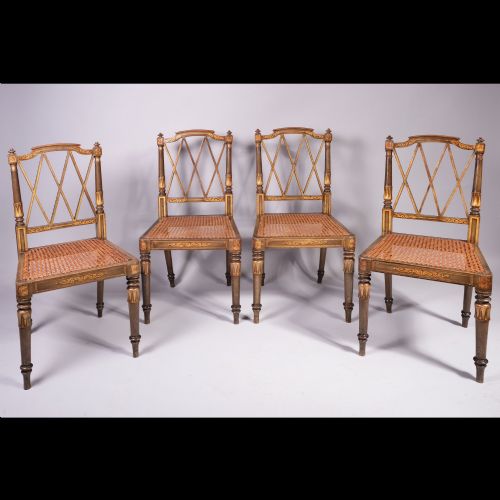
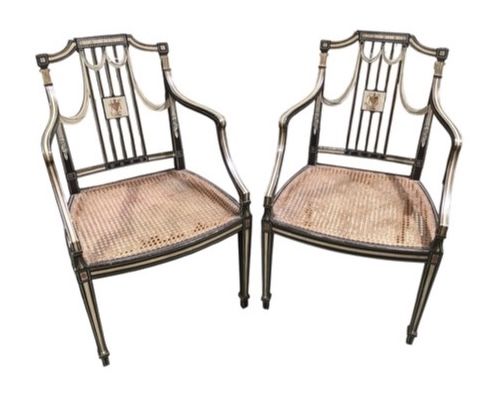
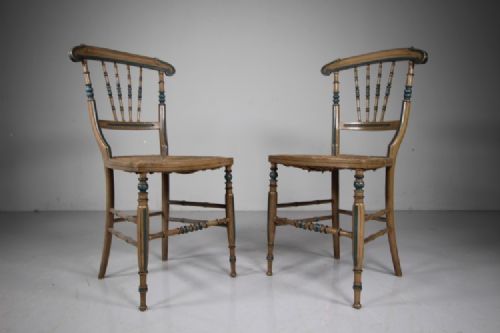
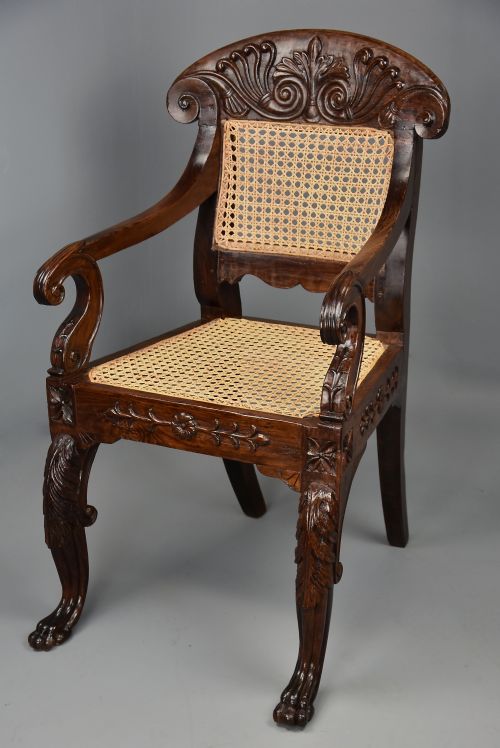
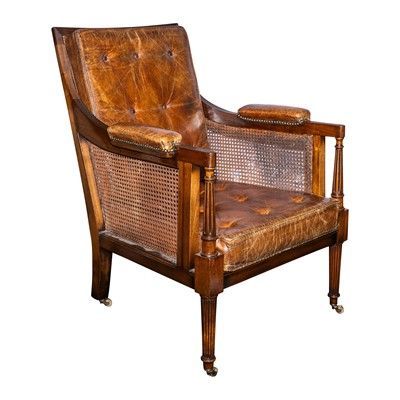


Regency Cane Side Chairs
Regency cane side chairs bring architectural clarity and woven texture to a room, combining restrained classical forms with practical lightness.
Regency Cane Side Chairs
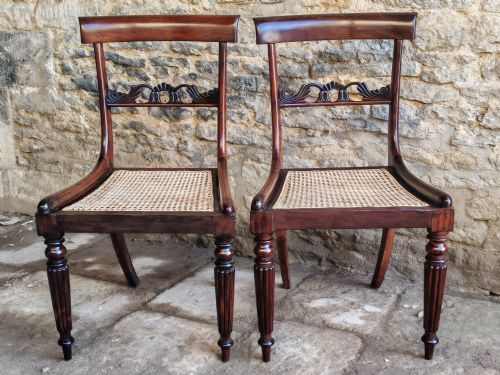
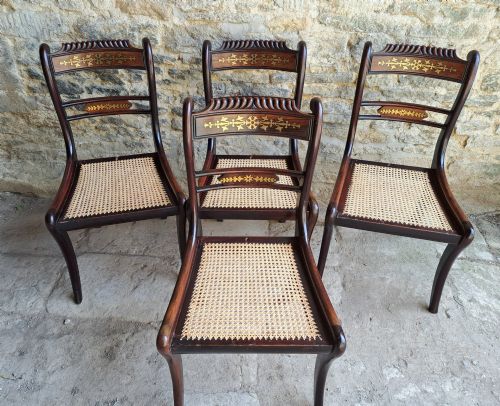
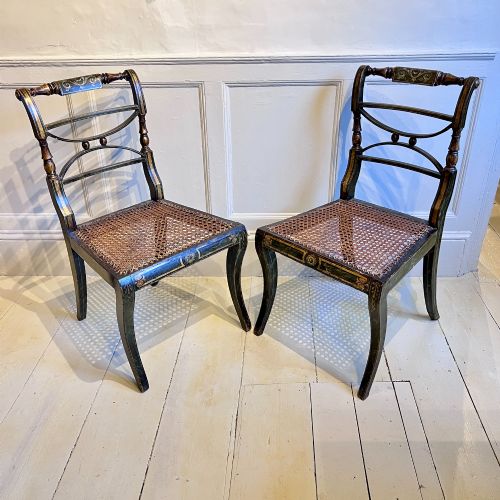
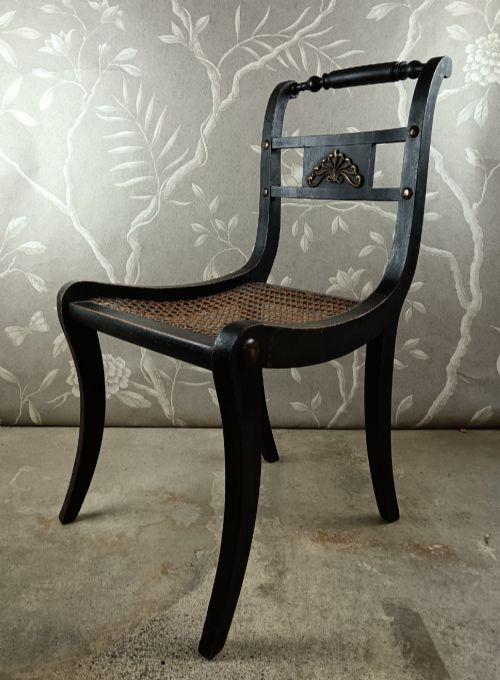
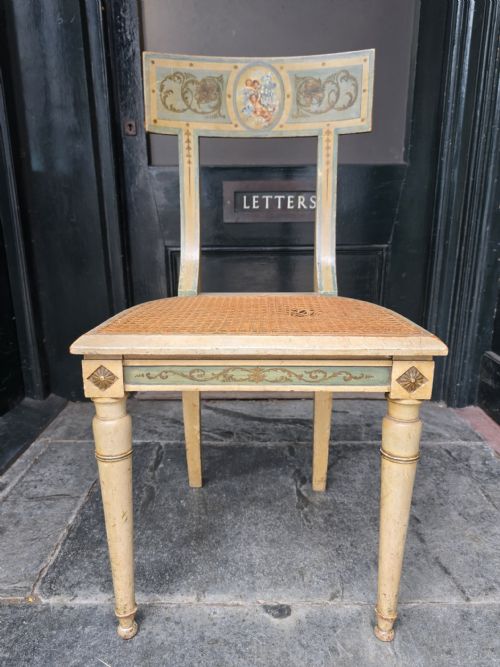
When you search for regency cane side chairs, you encounter seating built primarily for dining rooms, halls, and parlours during the early nineteenth century and later revival periods. The inventory spans straightforward mahogany dining seats to elaborate painted, ebonised, and brass-inlaid examples that reflect classical design influences.
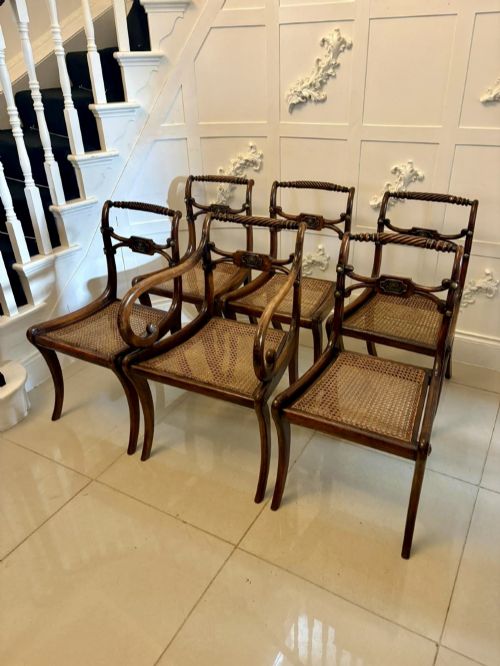
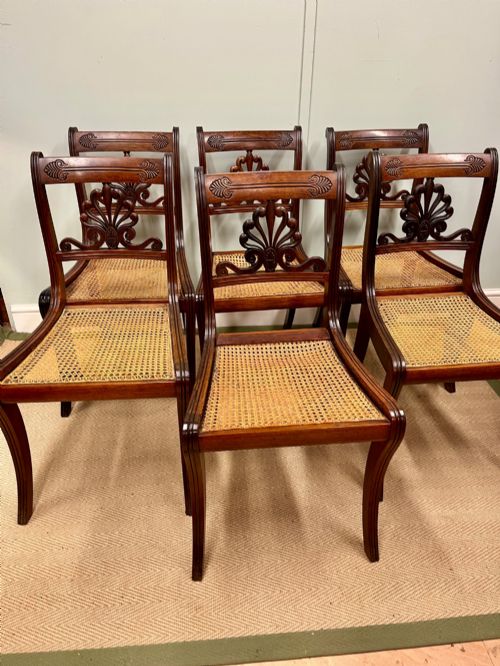
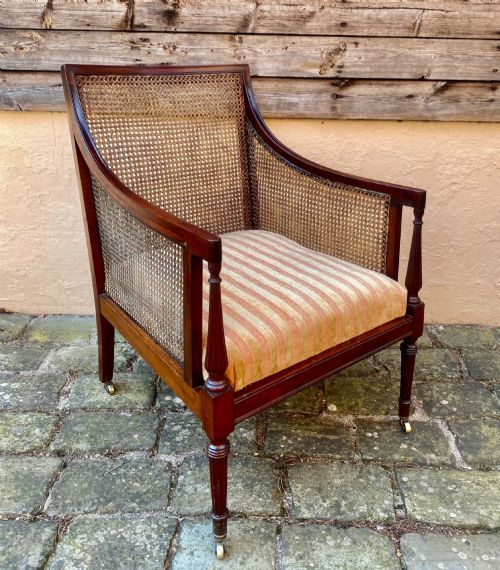
The form typically relies on an open or carved back rail, often taking Trafalgar, sabre-legged, or rope-twist shapes, paired with a woven cane panel in the seat frame. While many survive as pairs or larger dining sets, individual occasional chairs and library armchairs also appear within the selection.
The periods represented stretch from the strict Regency era and Georgian crossovers into nineteenth-century adaptations and early twentieth-century revivals. Buyers find both authentic early pieces and later interpretations reflecting the enduring appeal of the style.
Materials and construction
Timbers dictate much of the character in these seats, with dense hardwoods like mahogany and rosewood appearing alongside painted, ebonised, and simulated wood surfaces. Makers utilised brass inlay, parcel gilding, and carved details to accentuate the clean structural lines of the frames.
Cane provides the tensile, resilient surface for the seats, woven through drilled holes along the rebated inner edges of the wooden rails. This traditional method allows the seat to remain lightweight while supporting regular use.
Structural joinery relies on pegged mortise and tenon joints designed to withstand the outward pressure exerted by woven cane tension. Secondary woods support the internal framing beneath the finished surfaces.
Listings feature timbers including mahogany, rosewood, padouk, and ebonised wood alongside painted finishes.
Distinctions in quality
The refinement of the carving and the crispness of the turning separate standard production pieces from workshop examples attributed to notable makers. Crisp reeding, deeply articulated sabre legs, and precise brass inlay indicate superior hand execution.
The integrity of the timber framing and the tightness of the original cane work determine the structural survival of the piece. Replacements or repairs to the primary wood elements shift the balance of originality in a set.
Gillows
The Regency Cane Side Chairs Glossary
- Cane
- Woven rattan peel used to create a resilient, open-pattern seat panel. It offers flexibility and breathability compared to upholstered pads.
- Sabre leg
- A curved chair leg that tapers toward the foot, sweeping outward in imitation of a classical cavalry sword. This form defines many seats from the period.
- Bergère
- An enclosed upholstered armchair with solid sides, often fitted with a cane back and seat. These larger seats provide comfortable lounge seating.
- Klismos
- An ancient Greek chair shape featuring concave curved legs and a sweeping backrest. Makers revived this silhouette during the classical periods.
- Simulated rosewood
- Painted or stained wood grain designed to imitate exotic timber. This technique allowed makers to achieve a decorative finish economically.
Regency Cane Side Chairs: Frequently Asked Questions
How do I identify an original period piece?
Examine the timber shrinkage, joinery methods, and tool marks visible on the underside of the seat frame. Early pieces show hand-cut joinery and aged patination consistent with nineteenth-century workshop practices.
Compare the proportions and carving detail against documented examples from the same era. Revivals from later decades often display machine-cut uniformity and different secondary woods.
Can I use these chairs for daily dining?
Most antique seats handle normal daily use provided the cane panels remain taut and healthy. Avoid placing excessive weight on the centre of older woven panels without supportive cushions.
Consider adding loose squab cushions to distribute weight evenly across the cane surface. This preserves the historical weave while improving comfort during prolonged sitting.
How should I care for cane seats?
Keep the woven rattan hydrated by occasionally wiping the underside with a damp cloth in dry indoor environments. Prevent brittle fibres by avoiding direct placement near intense heat sources.
Inspect the tension periodically and address small broken strands promptly to prevent the entire mesh from unravelling under pressure.
What is the difference between side chairs and carvers?
Side chairs feature armless designs intended primarily for dining tables or bedroom placement. Their compact footprints allow multiple chairs to tuck neatly around a table.
Carvers include integrated armrests and typically stand at the head of a dining set. They provide a more substantial presence and greater support than standard side chairs.