


Parcel Gilt Chairs
Parcel gilt chairs bring gleaming highlights to wood and painted surfaces, catching candlelight and daylight alike.
Parcel Gilt Chairs
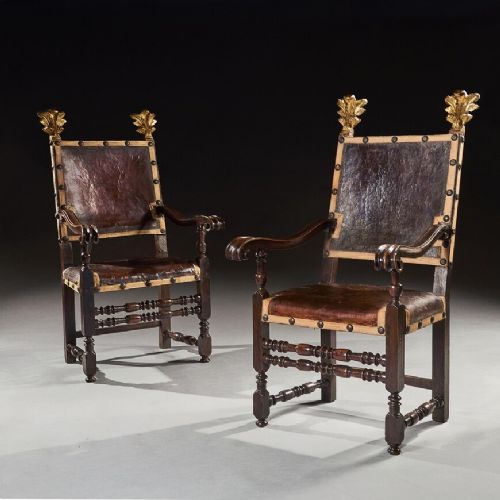
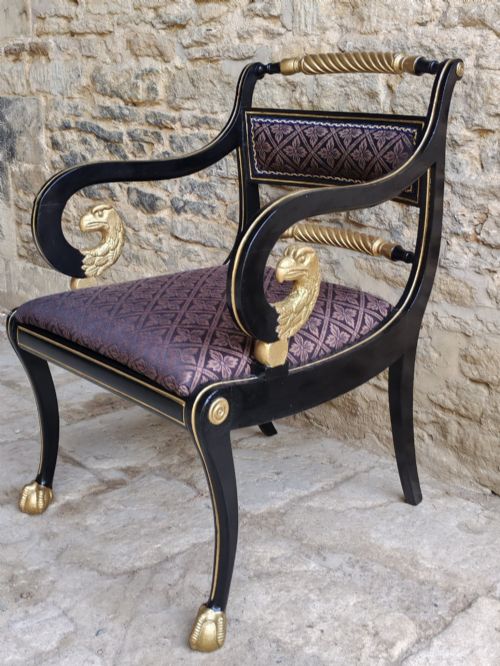
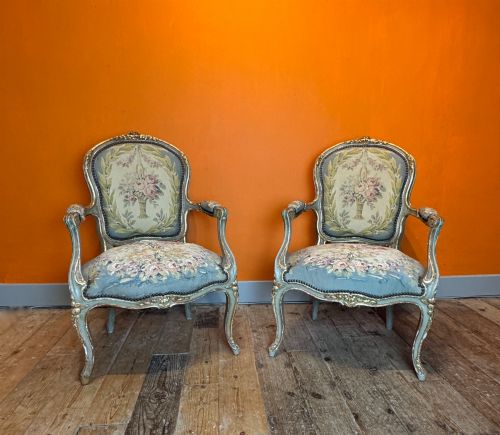
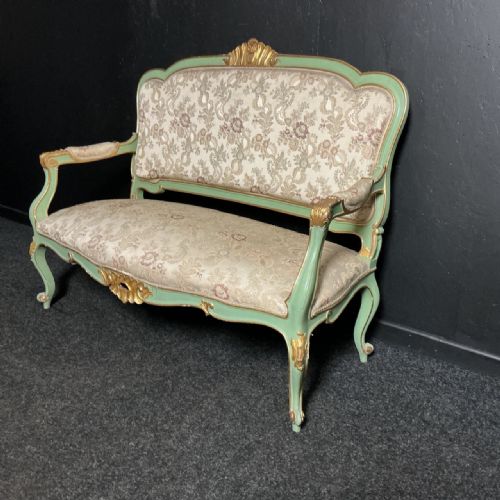
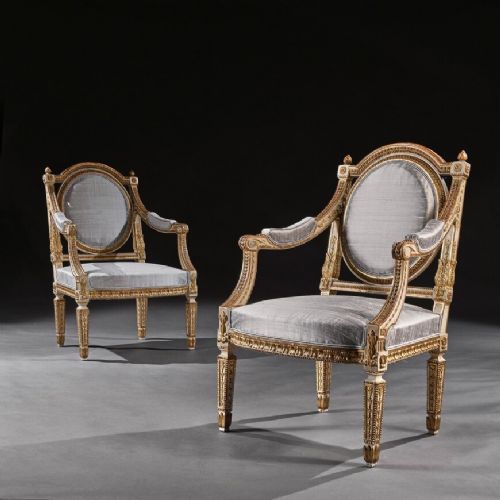
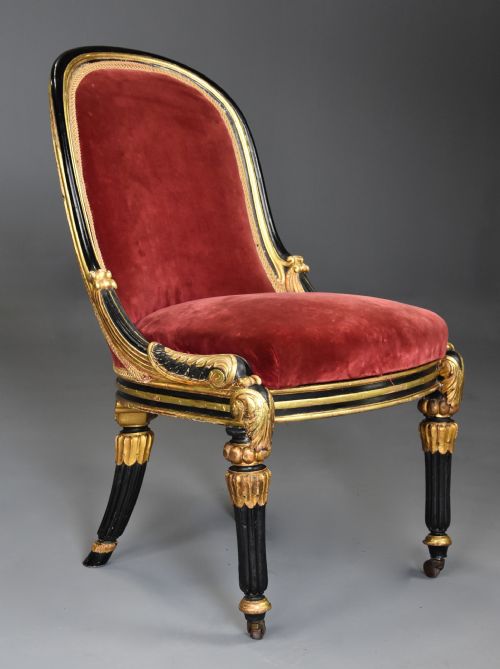
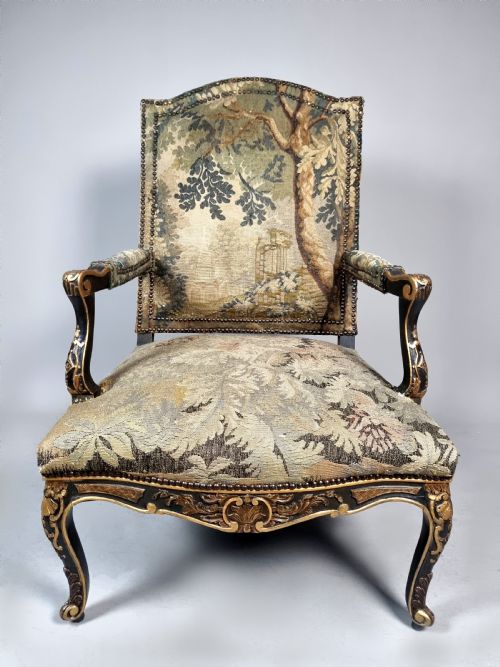
Parcel gilt chairs combine exposed wood, painted surfaces, or ebonised finishes with selectively applied gold leaf to accentuate carved details. When searching for parcel gilt chairs, buyers encounter forms ranging from imposing armchairs and dining suites to compact window seats and boudoir chairs.
Italian Baroque, Regency, and 18th-century French styles dominate the available selection, often appearing in pairs or larger sets. Walnut, mahogany, and beech serve as the primary foundational woods beneath the gilt work.
Makers across England, France, and Italy produced these seating options to project status in formal reception rooms and libraries. The survival of such pieces demonstrates a long-standing appreciation for selective gilding over entire furniture frames.
Materials and construction
Craftsmen shaped the structural frames from solid timbers such as walnut, mahogany, satinwood, and rosewood, alongside softer woods destined for paint and gesso. Carved ornamentation such as acanthus leaves, fluting, and moulding received layers of gesso to provide a smooth bed for the application of gold leaf.
Partial gilding required meticulous brushwork to apply gold leaf only to raised motifs, leaving the surrounding painted or polished wood exposed. Upholstery techniques varied widely across the periods, incorporating horsehair stuffing, leather, tapestry, and silk velvet secured with decorative brass tacks.
Some chairs retain original leather or tapestry upholstery, having outlasted numerous generations of parlour gossip.
Assessing quality
Quality rests primarily in the crispness of the hand-carved ornament beneath the gesso and gold leaf. Superior examples display deep, sharp relief work on elements like floral swags and scrolling arms rather than soft, rounded moulding.
The integrity of the underlying timber frame and the precision of the joinery distinguish exceptional seating from utilitarian output. Furthermore, the harmonious balance between the painted or polished wood ground and the burnished gold leaf dictates the visual success of the piece.
Daniel Marot·George Smith·Gillows
The Parcel Gilt Chairs Glossary
- Parcel Gilt
- Furniture decorated with gold leaf applied only to specific carved areas rather than the entire surface. This technique highlights particular decorative motifs against a contrasting wood or painted background.
- Gesso
- A plaster mixture applied to wood frames to prepare a smooth surface for gilding or painting. It allows carvers to achieve sharp details before the gold leaf is laid down.
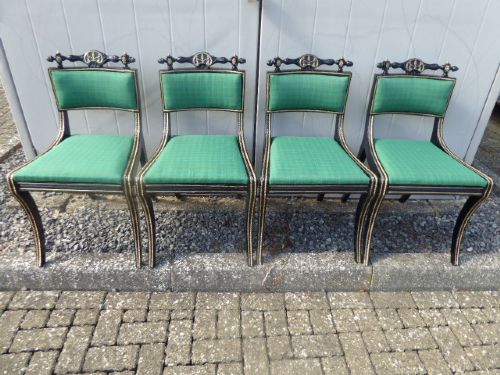
- Sabre Chairs
- Seating featuring curved, outward-swooping legs reminiscent of a cavalry sword. This form appears frequently in Regency designs.
- Bergere
- An enclosed upholstered armchair with wooden sides originating in France. These seats often feature exposed frames with parcel gilt accents.
- Ebonised
- Wood treated with a dark finish to imitate expensive ebony. This dark ground provides a striking contrast for parcel gilt highlights.
Parcel Gilt Chairs: Frequently Asked Questions
What periods do parcel gilt chairs come from?
The pieces span several centuries, with particular concentrations from the 17th, 18th, and 19th centuries. Makers revived these decorative techniques during specific historicist phases such as the Regency and Victorian eras.
Design influences stretch from Italian Baroque and Rococo to French Louis XVI and English neoclassical styles. Each era adapted the partial gilding method to suit contemporary interior fashions.
How were parcel gilt chairs used originally?
Owners placed these decorative seats in principal reception rooms, drawing rooms, and formal libraries to signal wealth and taste. Armchairs and high-back dining sets served both functional seating needs and visual display.
Smaller pieces like window seats, boudoir chairs, and hall chairs occupied transitional spaces or private apartments. Their ornate surfaces ensured they caught the light during evening gatherings.
How do I care for parcel gilt furniture?
Protect the delicate gold leaf and painted surfaces by keeping chairs away from direct sunlight and fluctuating humidity. Dust gently with a soft, dry cloth rather than using liquid polishes or chemical cleaners.
Avoid placing heavy items on delicate frames, and handle armrests with care to prevent wearing down the historical gilding over time.
How do I distinguish Regency parcel gilt chairs?
Regency examples frequently incorporate ebonised or bronzed wood finishes paired with classical motifs like sabre legs and X-frames. Design influences often trace back to pattern books by makers of the early 19th century.
These pieces typically exhibit a restrained architectural linearity compared to the exuberant curves of earlier Rococo or Baroque variants.