

Antique Black Side Chairs
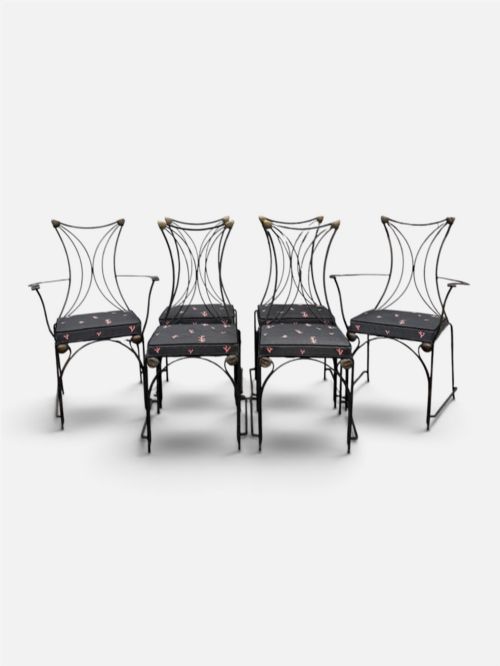
Antique black side chairs bring dark elegance and formal utility to a room, ranging from painted Regency models to ebonised Victorian designs.
Antique Black Side Chairs
When you search for antique black side chairs, you encounter seating designed primarily for dining rooms, halls, and salons across several centuries. The selection spans the 17th century through to the early 20th century, encompassing diverse global traditions from British revival styles to Anglo-Indian craftsmanship.
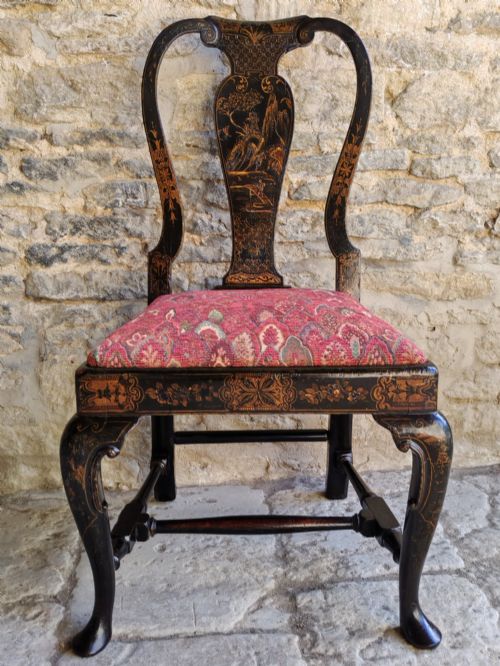
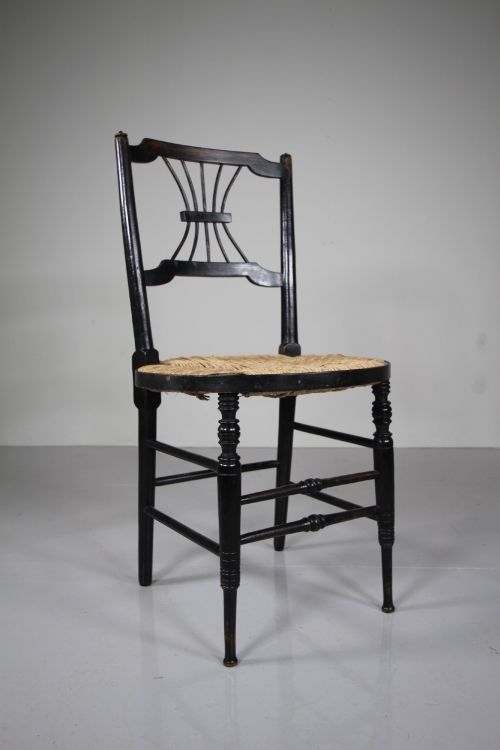
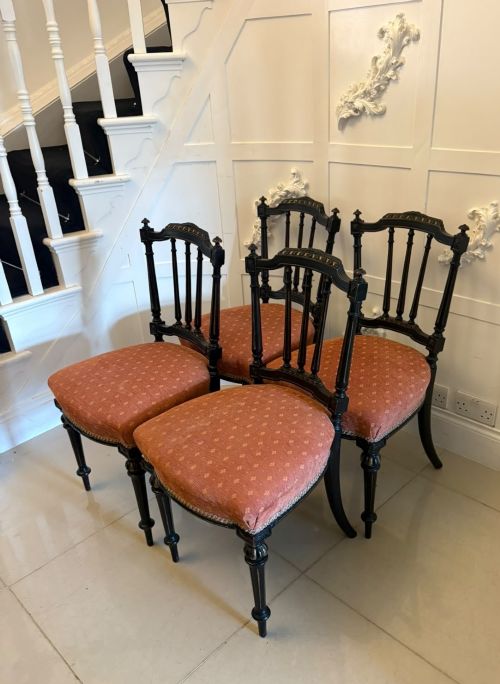
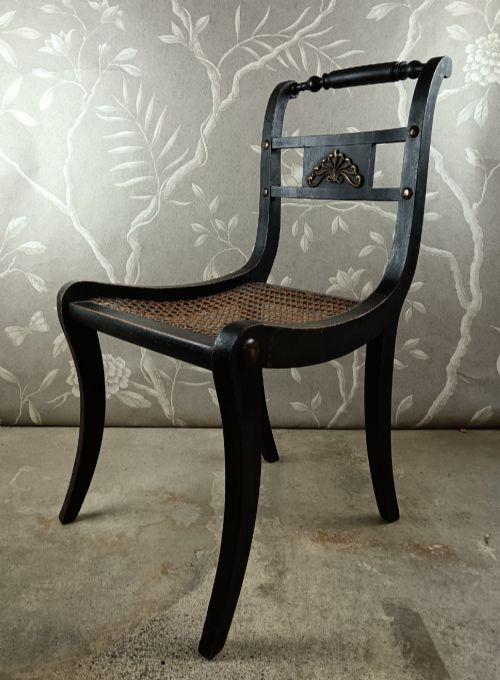
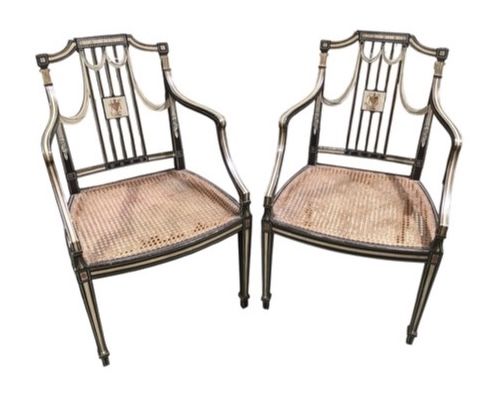
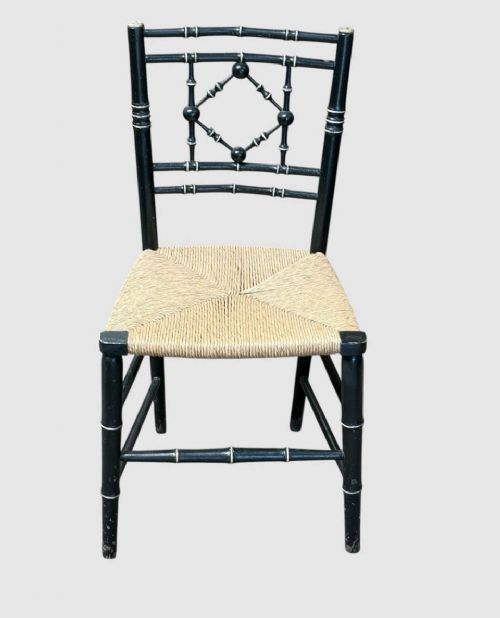
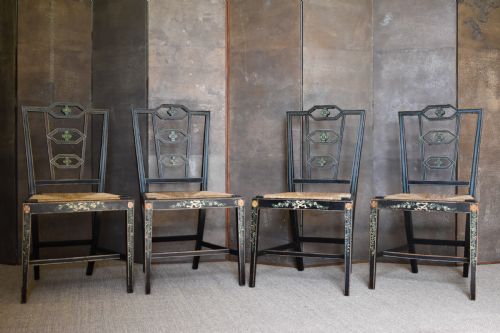
The version you are most likely to meet on this page is the 19th-century ebonised or painted Victorian side chair, often displaying Aesthetic Movement influences. These pieces draw on earlier Regency and Georgian forms, frequently utilising simplified lines or rich gilt decoration.
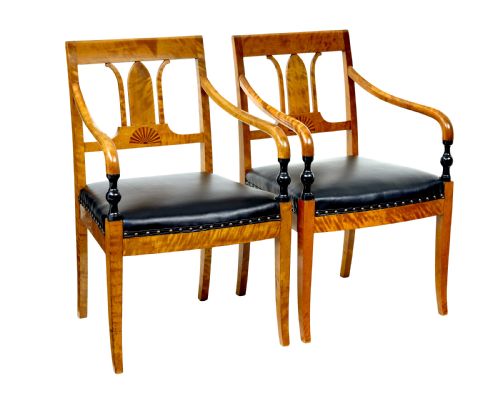
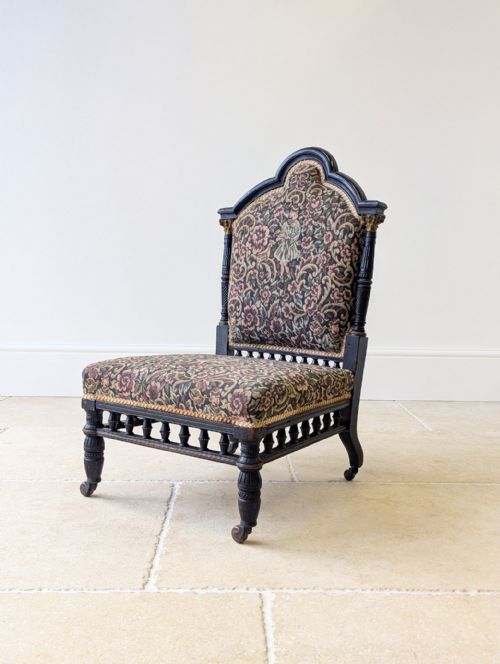
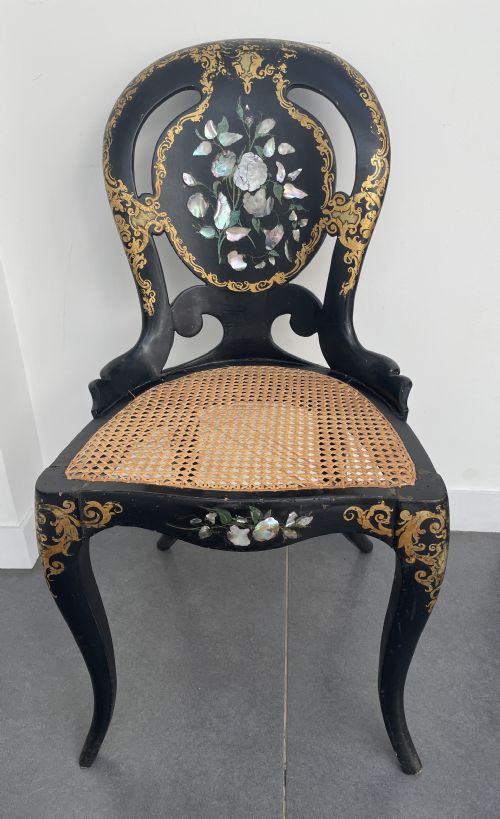
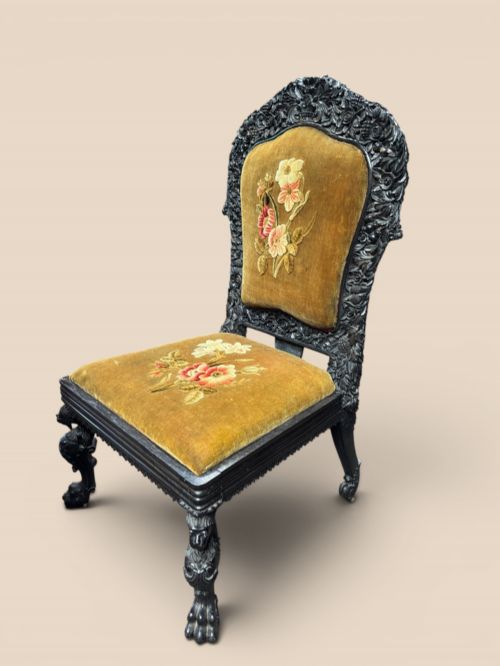
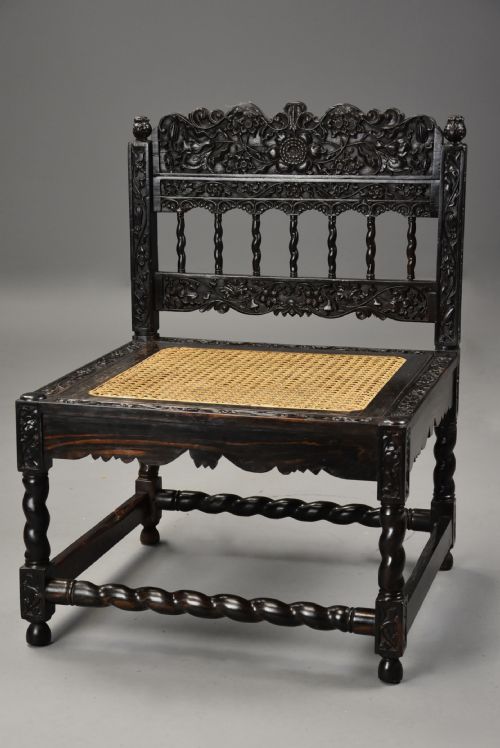
Beyond standard dining seats, the category embraces specialised seating such as low salon chairs, prayer chairs, and hall chairs. Makers employed black finishes across various woods and papier-mâché, producing both singular statement pieces and matched sets.
How they were made
Cabinetmakers and turners built these chairs using hardwoods such as beech, walnut, mahogany, and oak, applying black paint, lacquer, or ebonisation to mimic costly solid ebony. Surface ornamentation often involved hand-painting, gilt highlights, and inlaid mother of pearl or marquetry.
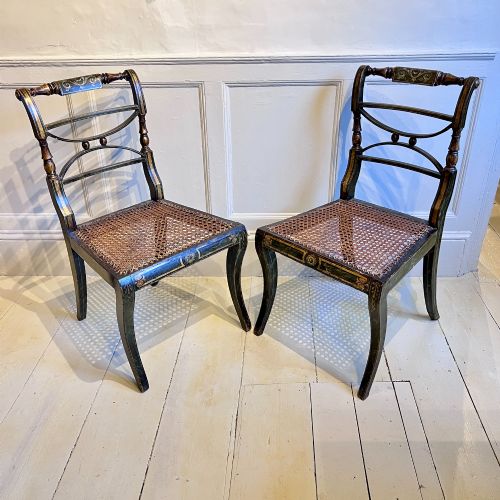
Seating portions relied on traditional artisan techniques, incorporating woven cane, rush, or tightly stretched leather, alongside upholstered pads covered in woven fabric. Carved elements, particularly on Aesthetic Movement and Anglo-Indian examples, demonstrate intricate relief work executed with specialised chisels.
Listings feature black side chairs spanning the 17th, 18th, 19th, and early 20th centuries.
What varies in quality
The distinction between ordinary and superior pieces rests upon the precision of the joinery and the integrity of the surface finish. Hand-carving depth, the crispness of gilt detailing, and the preservation of original cane or paintwork dictate the standing of an individual chair.
Sets command greater consideration when all component parts share uniform patination and structural soundness without extensive timber replacement. Finer examples maintain their original decorative schemes, whereas lesser pieces often bear later overpainting or compromised joints.
William Morris·Collier and Plucknett·Bruce J. Talbert·E W Godwin·Liberty of London·Morris and Co
The Antique Black Side Chairs Glossary
- Ebonised wood
- Timber treated with chemical stains or dark pigment to resemble genuine ebony. This technique gained immense popularity during the Victorian and Aesthetic Movement periods.
- Aesthetic Movement
- A late 19th-century design style emphasising visual beauty over narrative content. It frequently produced clean-lined ebonised furniture influenced by Japanese art.
- Trafalgar chair
- A Regency dining or side chair style featuring saber legs and a low curved back rail. They often appear with ebonised frames and cane seats.
- Chinoiserie
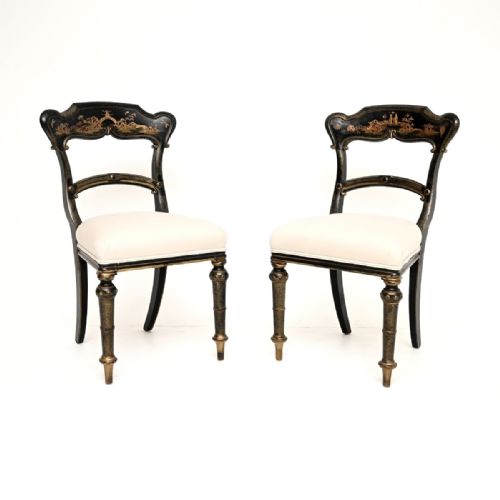
- European decorative style reflecting Chinese artistic motifs. Pieces often feature hand-painted gold designs on a black lacquered ground.
- Caning
- A method of weaving peeled rattan strips to form porous seats or backs. Original period caning adds considerable interest for collectors.
Antique Black Side Chairs: Frequently Asked Questions
How do I care for ebonised wood?
Keep these chairs away from direct sunlight and excessive heat sources to prevent the dark finish from drying out or fading. Dust them regularly with a soft, dry cloth and avoid modern aerosol polishes that leave residue.
If the surface requires cleaning, use a damp cloth followed immediately by a dry one. Wax can be applied sparingly to maintain the sheen on older painted or ebonised surfaces.
Were these chairs used for dining?
Many of these chairs served around dining tables, particularly the matched sets from the Regency and Victorian eras. Their compact proportions made them practical for formal meals.
Other variants, such as hall chairs and low salon chairs, fulfilled specific domestic roles in entryways or receiving rooms rather than daily dining use.
How do I identify an Aesthetic Movement chair?
Aesthetic Movement chairs typically feature ebonised wood frames, clean structural lines, and geometric or Japanese-inspired decorative motifs. They often incorporate gilt highlights or incised linear patterns.
Many examples from this movement reflect the design philosophies of prominent architects and makers of the late 19th century.
Is cane seating durable?
Period cane seating is remarkably resilient when treated with care, though it requires gentle use compared to solid wood or upholstered pads. Avoid kneeling on the seats or subjecting them to sharp concentrated weight.
Original cane shows subtle signs of age and tension variation, which distinguishes period examples from modern replacements.