


Regency Cane Dining Chairs
Regency cane dining chairs combine lightness of frame with resilient woven seats, offering both elegance and comfort around the table.
Regency Cane Dining Chairs
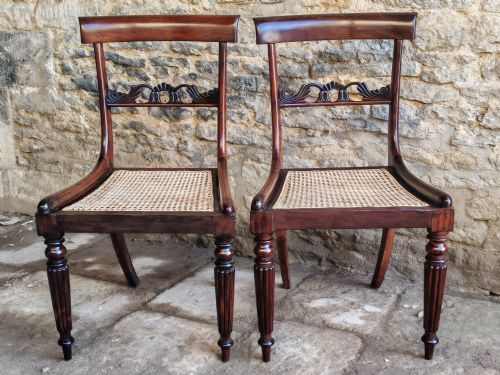
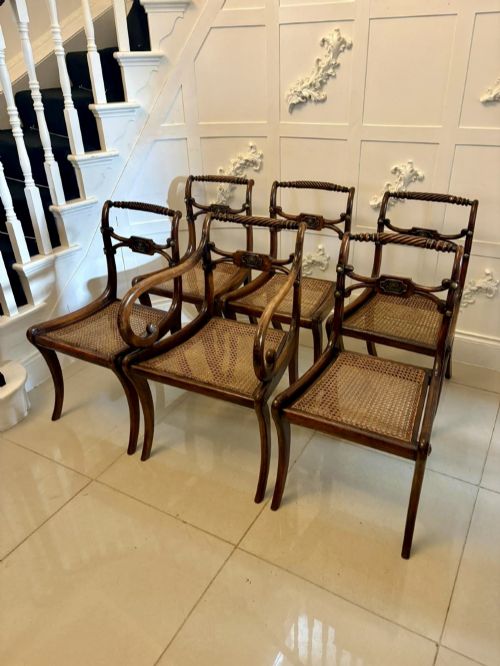
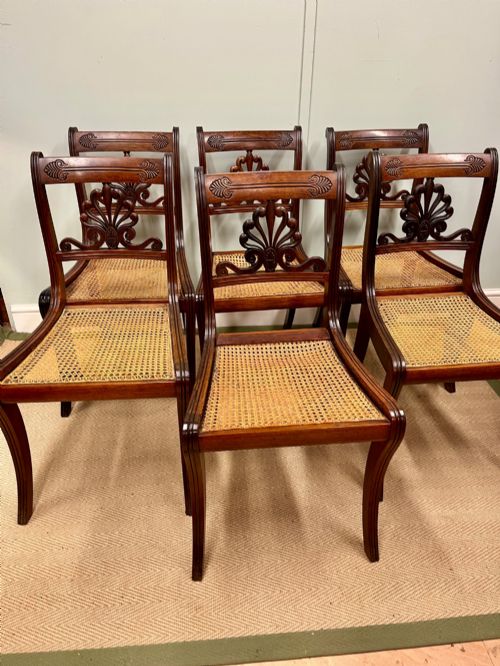
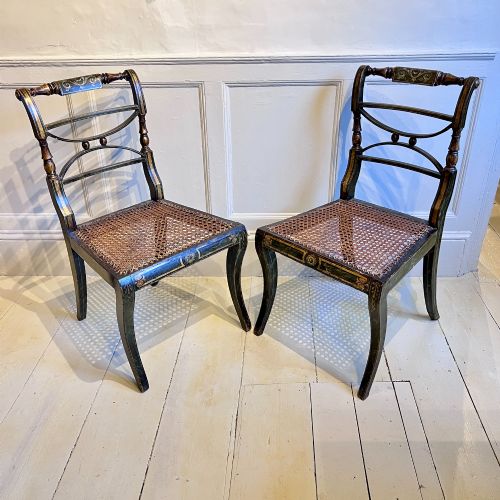
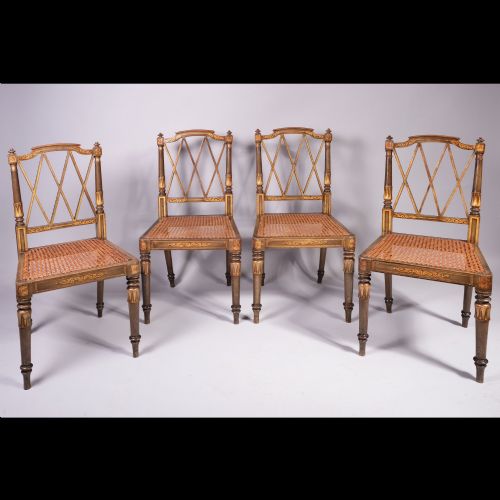
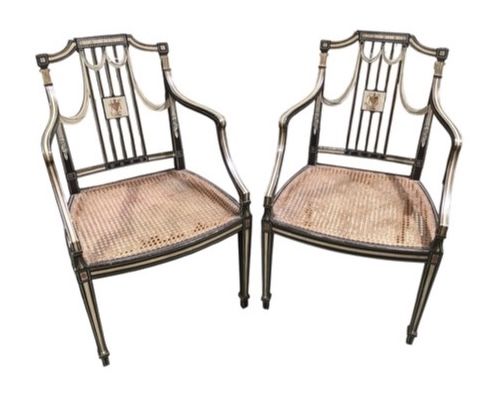
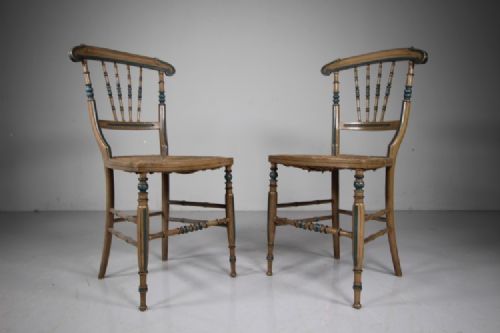
When you search for regency cane dining chairs, you encounter seating designed primarily for dining rooms, featuring open cane panels woven into the seat or back. These pieces appear as single chairs, pairs, or larger sets including side chairs and carver armchairs.
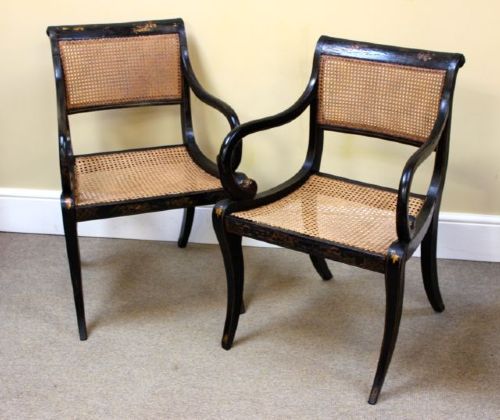
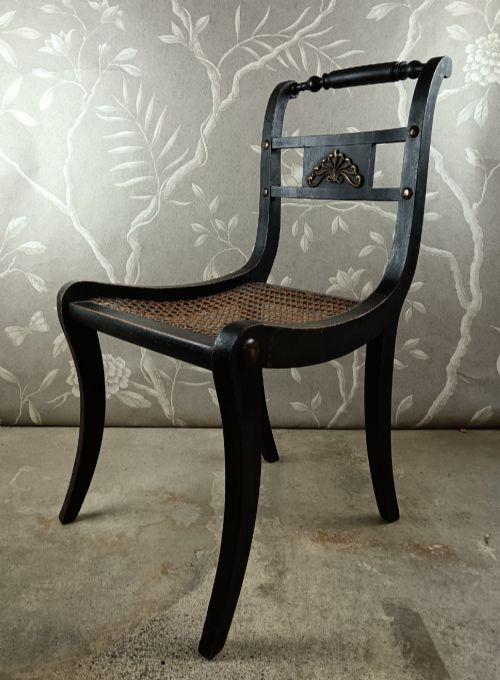
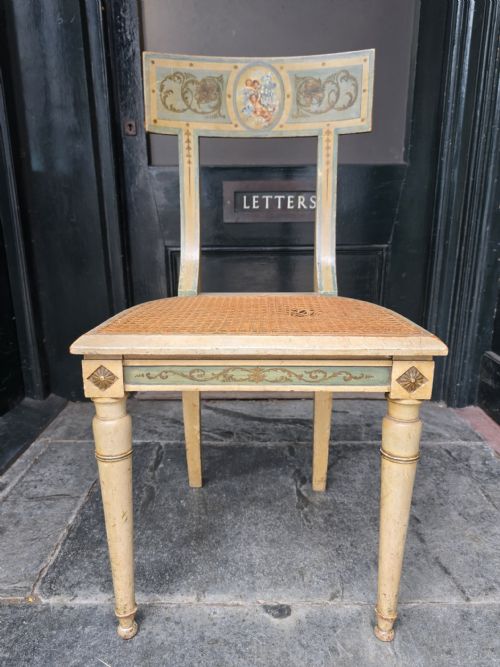
The selections span authentic period examples alongside later revivals from the nineteenth and early twentieth centuries. Forms range from mahogany and rosewood frames to painted, ebonised, and simulated rosewood finishes.
Materials and Construction
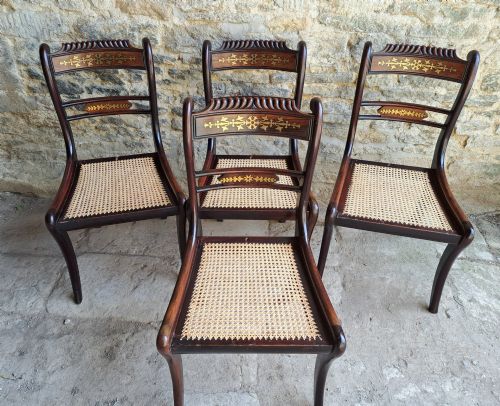
Cabinetmakers utilised dense hardwoods such as mahogany, rosewood, and ebony, alongside alternative timbers finished with paint, gilding, or simulated graining. Brass inlay often accents the woodwork on select pieces.
Cane panels are hand-woven from peeled rattan into the wooden frames of the seats, providing flexible support that accommodates body weight without rigid upholstery.
Several chairs arrive with travel-hardened provenance, having journeyed all the way from Ceylon via Anglo-Indian workshops.
Evaluating the Range
The distinction between standard examples and the finest works rests on the crispness of the carving, the precision of brass inlay, and the integration of specialised details like sabre legs or Trafalgar styling. Maker attribution, particularly to workshops such as Gillows, shifts a piece to the upper tier.
The integrity of the timber framing and the neatness of the cane work determine the overall standard, distinguishing disciplined period craft from later revival interpretations.
Gillows
The Regency Cane Dining Chairs Glossary
- Cane
- Material woven from the outer bark of rattan palms, forming a resilient mesh seat or back panel.
- Carver
- An armchair designed with elbow supports, traditionally placed at the head of a dining table.
- Sabre leg
- A curving, outward-tapering chair leg characteristic of the period, adding dynamic line and stability.
- Simulated rosewood
- Wood painted or stained to imitate the rich grain and coloration of genuine rosewood.
- Klismos
- A classical chair form featuring sweeping concave backrests and curved legs, revived during the Regency era.
Regency Cane Dining Chairs: Frequently Asked Questions
How do I care for cane seats?
Keep cane seats lightly dusted and occasionally wipe them with a damp cloth to prevent the rattan from becoming brittle.
Avoid placing these chairs in direct sunlight or beside intense heat sources, which dry out the natural fibres.
Are these chairs comfortable for long dinners?
The woven cane yields slightly under weight, offering a flexible and breathable surface that remains comfortable during extended meals.
Many period examples also accommodate loose squab cushions for added padding when desired.
How do I distinguish original period from revival pieces?
Examine the construction methods, timber patination, and wear patterns on the frame and joinery to assess age.
Twentieth-century revival pieces often display machine-woven cane and uniform finishes lacking the hand-carved nuances of eighteenth and nineteenth-century work.
Can I mix single chairs and carvers?
Pairing carver armchairs at the head and foot of a table with single side chairs along the flanks is a traditional arrangement.
Matching wood tones and leg styles maintain visual cohesion across mixed sets.