


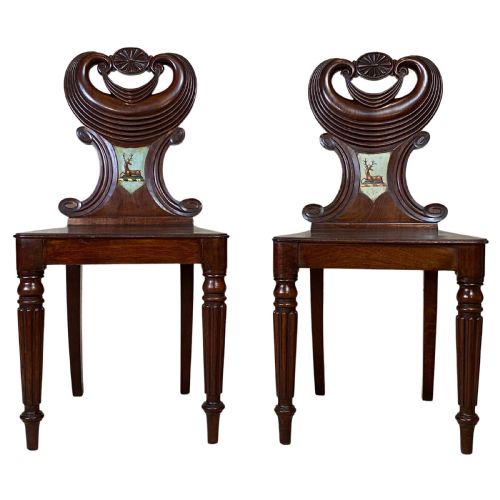


Regency Painted Side Chairs
Regency painted side chairs bring lightness and crisp linear form to a room, offering elegance that heavier timber seating misses.
Regency Painted Side Chairs
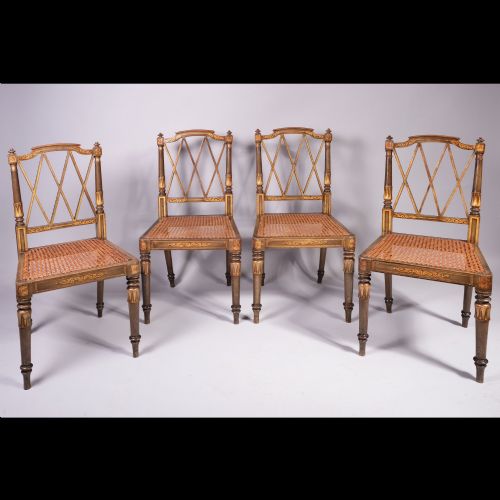
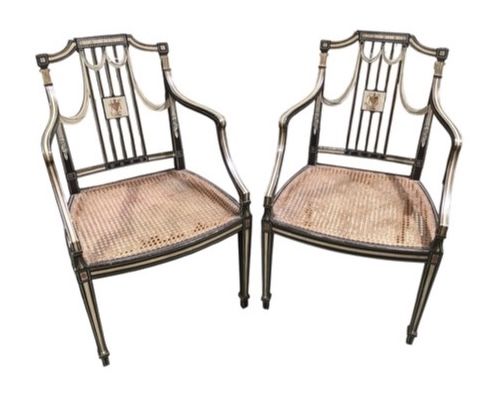
Regency painted side chairs encompass seating produced during the Regency period alongside later revivals, featuring characteristic upright backs and slender frames. You will frequently encounter pairs and sets designed for dining rooms, bedrooms, or entrance halls.
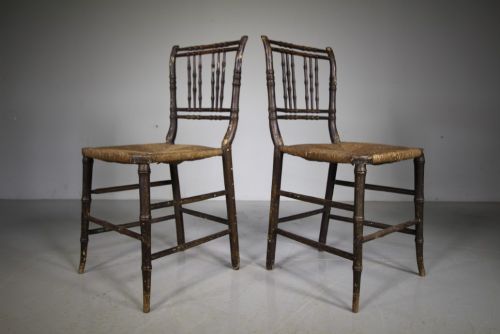
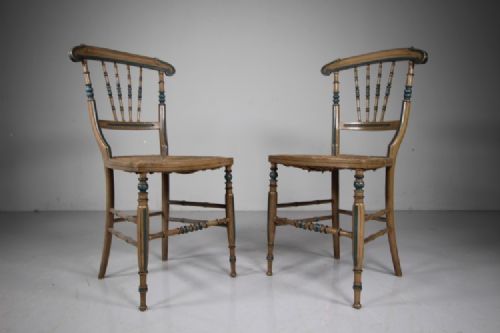
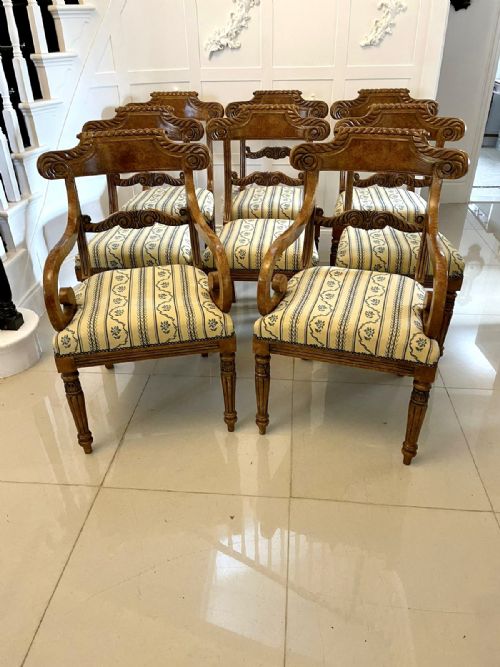
The evidence shows forms ranging from simple country house hall chairs to elaborate bamboo-turned frames and parcel-gilt dining chairs. Variations span original period examples to early twentieth-century interpretations in the Regency taste.
How they were made
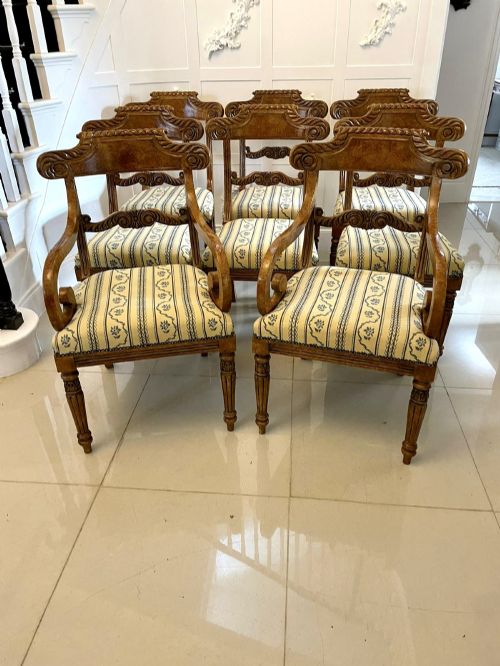
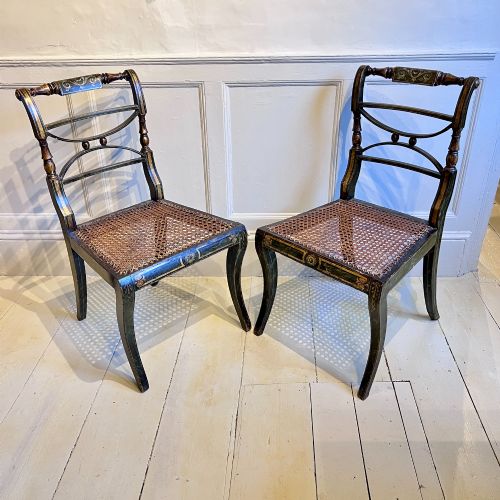
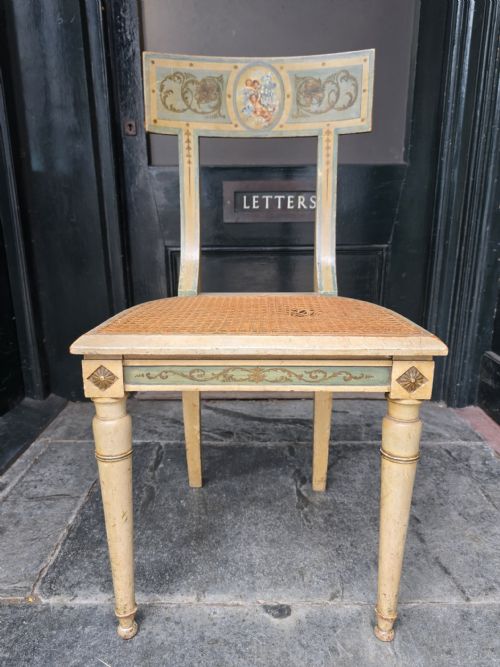
Craftsmen built these chairs from woods such as mahogany, pine, and simulated timbers like faux bird's-eye maple, often employing turned bamboo styles. Surfaces received coats of paint, sometimes accented with gold leaf or hand-painted decorative motifs.
Seating portions utilised woven cane, rush, or drop-in upholstered pads covered in fabric. Joinery techniques relied on traditional framing to support the slender members characteristic of the style.
Listings feature woods including mahogany, pine, and faux bird's-eye maple alongside painted, parcel-gilt, and cane-seated variants.
What varies in quality
Quality rests in the crispness of the turning, the precision of the hand-painted decoration, and the integrity of the underlying timber structure. Original surface finishes hold greater distinction than later repaintings.
The sophistication of the design, such as simulated bamboo details or armorial crests, separates standard regional pieces from high-workshop production.
Gillows
The Regency Painted Side Chairs Glossary
- Regency
- An English design period spanning the early nineteenth century defined by classical restraint and archaeological influence. It draws heavily on Greek, Roman, and Egyptian motifs.
- Faux bamboo
- Wood turned and painted to imitate natural bamboo stems, popular during the Regency era for light seating. Artisans achieved this effect through careful brushwork.
- Parcel gilt
- Portions of a surface highlighted with gold leaf over a painted or polished ground. This technique draws the eye to specific carved or turned details.
- Cane
- Woven split rattan utilised for light, flexible seat panels. It offers a resilient surface that complements slender chair frames.
- Hall chair
- A stiff wooden seat placed in an entrance hall, often featuring a painted or carved armorial crest. These pieces prioritised visual formality over prolonged comfort.
Regency Painted Side Chairs: Frequently Asked Questions
Are these chairs comfortable for daily dining?
Most Regency painted side chairs feature upright backs and rigid wooden or cane seats designed for formal dining rather than lounging. They suit upright posture and polite conversation.
Adding thin squab cushions can soften the seating surface without altering the visual profile of the chair around a dining table.
How do I distinguish original Regency from later revivals?
Original period chairs display timber ageing, hand-mixed paint layers, and traditional joinery methods consistent with the early nineteenth century. Wear patterns align with centuries of use.
Revival pieces from the twentieth century often utilise cleaner interior timbers and modern paint formulations beneath artificial ageing.
Where should I place hall chairs in a home?
Hall chairs work effectively against narrow walls in entranceways, landings, or bedrooms where depth is limited. Their decorative backs provide visual interest without blocking walkways.
They function well as occasional seating when pulled up to a desk or positioned in a corner.
How do I care for painted and gilt surfaces?
Dust these chairs gently with a soft, dry cloth and avoid harsh chemical cleaners that can lift fragile paint or gold leaf. Keep them away from direct sunlight and radiators.
Protect cane and rush seats from excessive moisture to prevent the natural fibres from becoming brittle.