



Charles II Style Chairs
Charles ii style chairs bring the elaborate carved woodwork and high-backed grandeur of the late seventeenth century directly into a modern interior.
Charles II Style Chairs
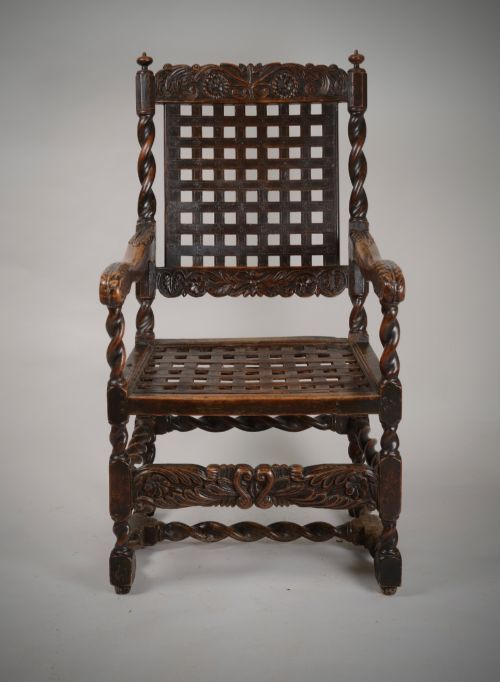
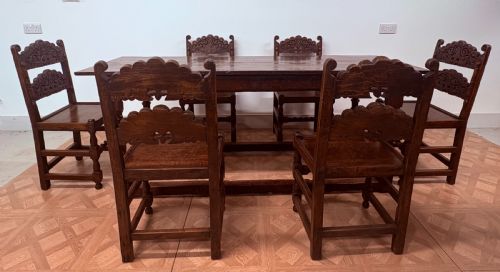
When you search for charles ii style chairs, you are looking at seating inspired by the Restoration period, spanning both seventeenth-century originals and nineteenth-century revivals. These pieces encompass armchairs, side chairs, dining sets, and settees designed with prominent upright backs and decorative timber frames.
You are most likely to meet walnut and oak examples on this page, appearing either as single statement pieces or in larger sets. The forms vary from low-backed backstools to tall armchairs and expansive dining groups, reflecting both seventeenth-century origins and later nineteenth-century interpretations.
The aesthetic bridges domestic utility and theatrical display, capturing the spirit of Carolean design through deep relief carving and tall proportions. Buyers select these chairs to anchor a room with historic presence, utilising single side chairs as accents or full dining sets for formal gatherings.
How they were made
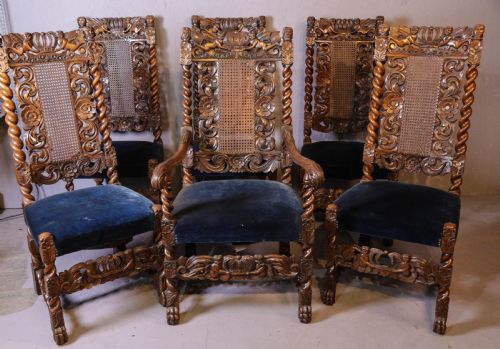
The primary structural timber is walnut or oak, shaped by hand using traditional joinery and heavily carved to create intricate surface relief. Woodcarvers worked the timber to form scrollwork, foliage, and cresting rails that define the silhouette of each seat.
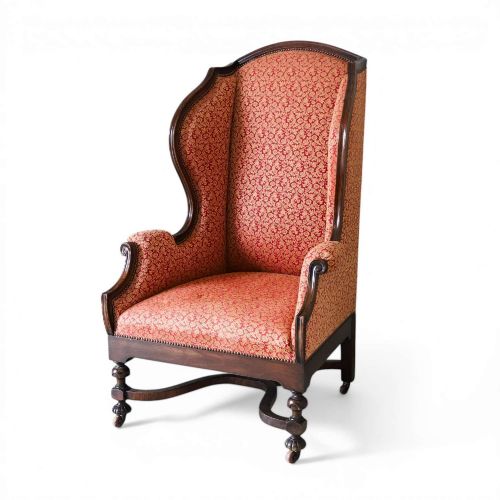
Many examples incorporate cane panels within the backrest and seat frame, woven tightly to provide both flexibility and decorative transparency. Where solid upholstery is used, materials such as velvet, damask, tapestry, fabric, and brass tacks secure the textile covering to the wooden framework.
Listings feature walnut and oak frames paired with cane, velvet, damask upholstery, fabric, brass, and tapestry across seventeenth and nineteenth-century pieces.
What varies in quality
Quality rests upon the crispness of the hand carving and the integrity of the timber frame, where depth and definition in the foliage and scrolls indicate superior craftsmanship. Finer pieces maintain balanced proportions across tall backrests and heavy legs, avoiding awkward scaling in revival copies.
The condition and tightness of original or period-appropriate cane work separate standard examples from finer specimens. Furthermore, the selection of dense, richly figured walnut or quartersawn oak elevates a piece above simpler variants built from lesser stock.
The Charles II Style Chairs Glossary
- Carolean
- Pertaining to the reign of King Charles II, denoting the ornate and exuberant style of English art and furniture between sixteen sixty and sixteen eighty-five.
- Backstool
- An early form of seating resembling a chair without arms, featuring an upright back attached to a wooden seat frame.
- Cane
- Strips of rattan woven in an open mesh pattern to form lightweight and resilient panels for chair backs and seats.
- Refectory
- A long dining table associated with communal or formal dining spaces, frequently paired with matching rows of chairs.
- Splat
- The vertical central strip of wood set within the middle of a chair back, often shaped and carved for visual emphasis.
Charles II Style Chairs: Frequently Asked Questions
Are these chairs comfortable for daily use?
These chairs were built with upright wooden backs and firm cane or upholstered seats designed for formal posture rather than lounging. Adding a tailored cushion can improve daily comfort without altering the historic silhouette.
Most buyers place them as accent seating in halls or as dining chairs for occasional use rather than heavy everyday seating.
How do I tell seventeenth-century chairs from nineteenth-century revivals?
Seventeenth-century pieces display genuine timber oxidation, hand-cut joinery marks, and wear patterns consistent with centuries of use. Nineteenth-century revivals often feature machine-assisted elements and heavier, cleaner carver work while still mimicking the original Carolean style.
Examining the underside and the peg construction helps reveal the true age of the timber frame.
Can I mix these chairs with modern dining tables?
The striking carved crests and tall backs of these chairs create a strong visual contrast against sleek, contemporary tables. Mixing periods adds depth and personality to a dining room scheme.
Ensure the seat height aligns comfortably with the underside of your table before combining styles.
How should I care for caned chair seats?
Caned panels require occasional gentle cleaning with a damp cloth and should be kept away from direct heat sources to prevent the material from drying and snapping. Avoid placing excessive localized weight on the centre of the woven panel.
Applying a light moisture treatment can help maintain the flexibility of older rattan.