




Jacobean Style Dining Chairs
Jacobean style dining chairs bring solid oak construction and high-backed presence to a room, offering both historical character and sturdy seating.
Jacobean Style Dining Chairs
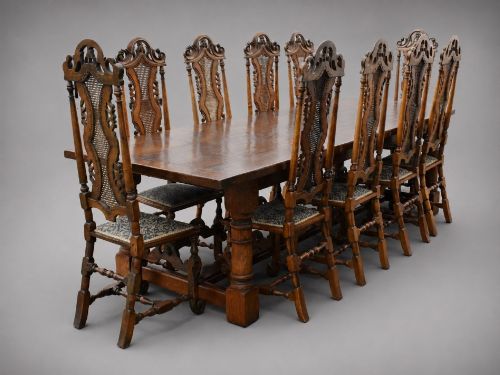
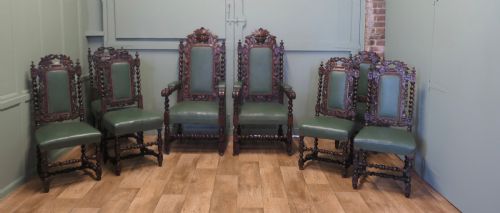
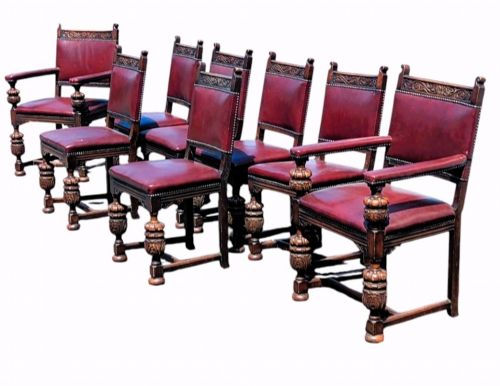
Jacobean style dining chairs draw heavily upon seventeenth-century forms, featuring upright frames and robust proportions. Buyers searching this phrase will frequently encounter twentieth-century revival sets alongside Victorian interpretations of earlier designs.
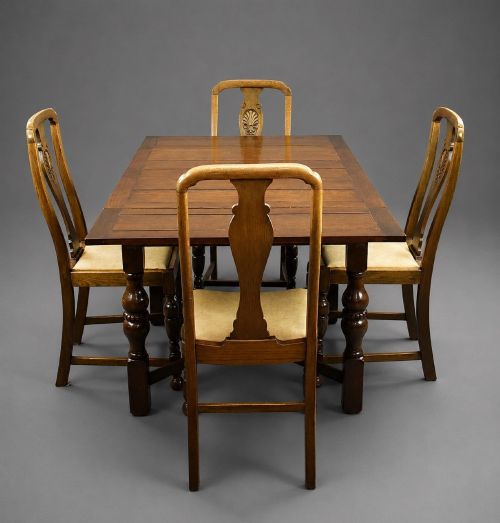
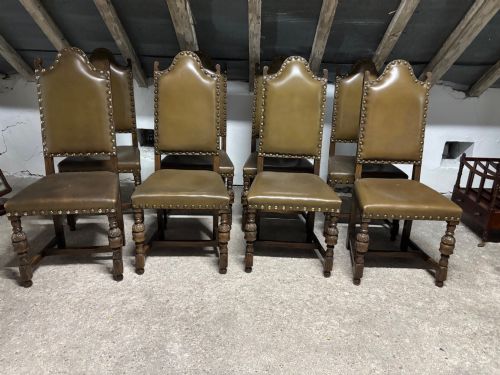
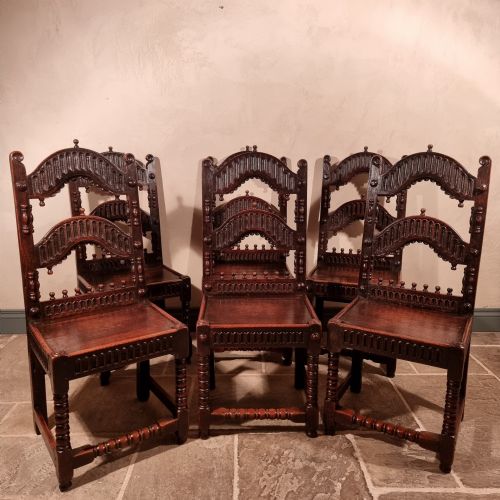
The selection ranges from single side chairs and armchairs to large matching sets intended for spacious dining tables. Variations such as Derbyshire chairs, high-back styles, and barley twist supports appear frequently across the periods represented.
Originating largely from British cabinet-making traditions, these pieces encompass authentic seventeenth-century examples as well as later reproductions. Edwardian and 1920s reinterpretations dominate the available inventory, bringing period aesthetics into domestic spaces.
How They Were Made
Oak serves as the primary timber, providing the structural strength and heavy grain characteristic of these chairs. Joinery relied on traditional methods such as mortise and tenon, often reinforced with pegged joints.
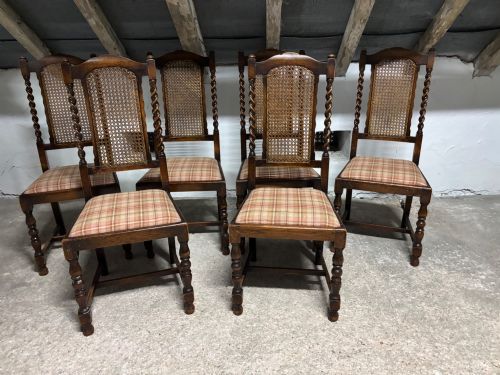
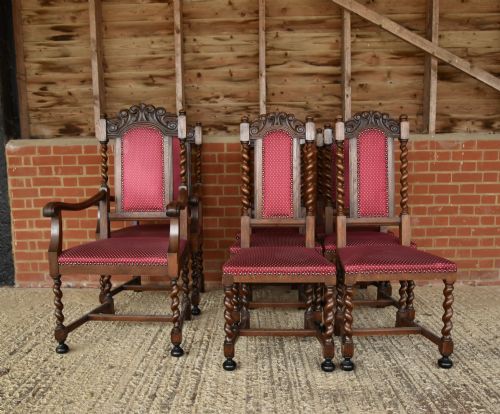
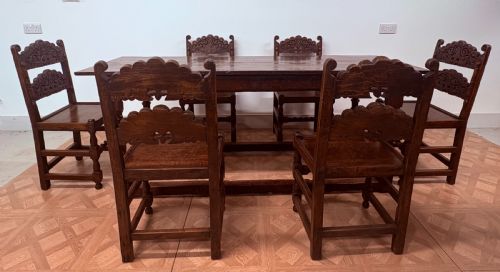
Carving provides much of the surface ornamentation, executed by hand on stiles, rails, and tall back panels. Turning techniques produced decorative components like barley twist legs and stretchers.
Seating areas incorporate materials such as cane, leather, woven rush, and various upholstery fabrics secured with brass tacks. These elements were integrated into the wooden frame to balance rigidity with comfort.
Jacobean Style Dining Chairs Retail Price Guide 2026
Typical asking prices for jacobean style dining chairs among the pieces listed under this phrase on Sellingantiques today, from the lower quarter to the upper quarter. They describe what is for sale here now, not the wider market.
Common seating inserts include cane, leather, and textured upholstery fabrics paired with barley twist or turned wooden supports.
What Varies in Quality
The depth and crispness of the hand-carving distinguish finer examples from simpler production pieces. Carving executed with sharp definition and varied relief reflects a higher standard of craftsmanship.
The integrity of the timber and the tightness of the original joints dictate structural longevity. Matched sets maintaining uniformity across all chairs command greater attention than assembled groups.
The quality of secondary materials, from durable leather hides to tightly woven cane and substantial brass hardware, elevates the overall execution of the piece.
The Jacobean Style Dining Chairs Glossary
- Barley twist
- A decorative turning style resembling a spiralling rope, commonly found on the legs and stretchers of revival chairs.
- Derbyshire chair
- A type of seventeenth-century open-back chair featuring carved horizontal rails and sturdy upright posts.
- High-back
- A tall vertical backrest designed to provide elevated support and a commanding visual presence around a dining table.
- Caning
- A woven lattice pattern made from rattan material, utilised to form flexible backrests and seat inserts.
- Backstool
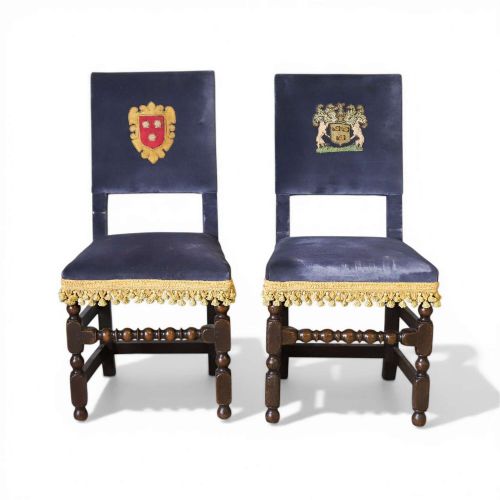
- An early form of seating resembling a chair without arms, featuring a low or medium-height back panel.
Jacobean Style Dining Chairs: Frequently Asked Questions
How do I care for oak dining chairs?
Maintain the wood by applying suitable natural waxes periodically to preserve the grain and prevent the timber from drying out.
Keep upholstered or leather sections clean using appropriate conditioning treatments suited to the specific material.
Can I mix these with modern tables?
The substantial presence of oak allows these chairs to anchor contrasting modern dining tables effectively.
Matching the wood tone or scale of the table helps integrate different periods within a single dining space.
How do I identify a revival piece?
Twentieth-century and Victorian revival pieces often display machine-assisted turning alongside hand-finished carving elements.
Examine the construction methods and timber ageing to distinguish later interpretations from seventeenth-century originals.
Are large sets difficult to find?
Extended sets of eight or ten matching chairs appear regularly, originating mostly from early twentieth-century workshops.
Assembled matches are more common than factory-original large suites from the earliest periods.