
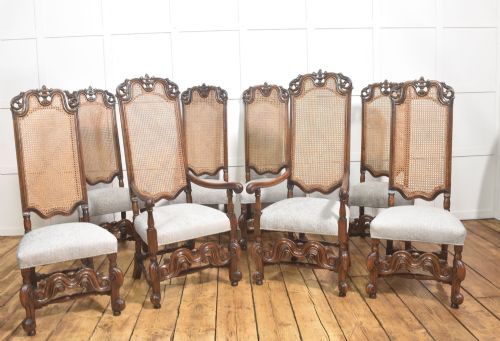
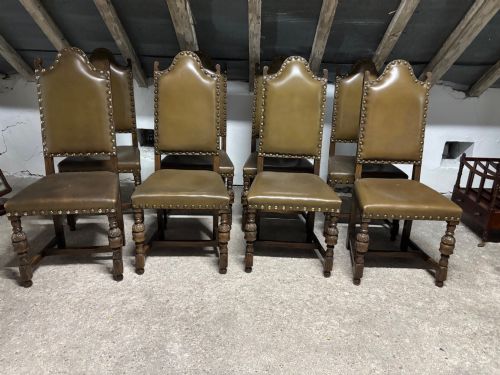


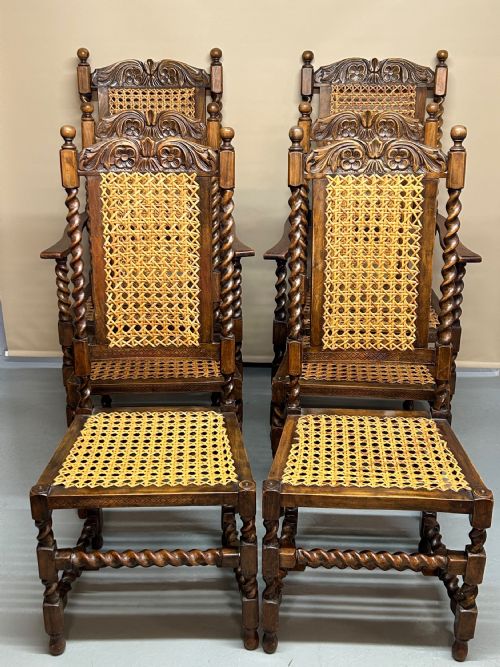


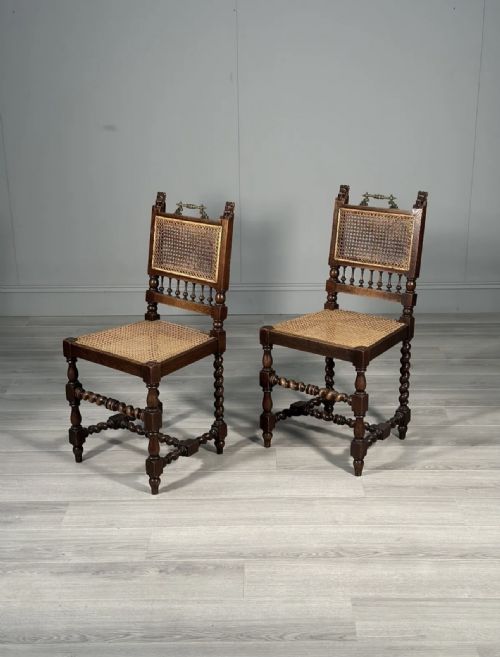


Carolean Style Side Chairs
Carolean style side chairs bring high-back drama and carved woodwork to a room, offering period presence through scrollwork and turned legs.
Carolean Style Side Chairs
When you search for carolean style side chairs, you are looking at seating inspired by the late seventeenth century, most frequently encountered in nineteenth-century revival pieces, Edwardian sets, and walnut or oak constructions. These forms often feature high backs and turned supports reminiscent of Restoration furniture.
The selection on this page spans side chairs, dining chairs, armchairs, and hall chairs. You will find pieces originating from the seventeenth century alongside nineteenth-century Victorian interpretations and early twentieth-century revivals.
How they were made
The makers of these chairs relied primarily on solid timbers such as oak, walnut, and beech, shaping the frames with detailed hand-carved ornamentation. Ebonised finishes also appear among the revival pieces.
Caning, cane panels, rattan, and bergere work form the backs and seats of many examples, while other versions incorporate brass details, velvet, leather, and traditional upholstery fabric.
Some high-back chairs were designed so elaborate periwigs would not brush against the upholstery.
What varies in quality
The depth and crispness of the wood carving dictate much of the visual distinction between examples, alongside the integrity of the original timber frame. High-back proportions and balanced scrollwork command attention.
The condition of the cane work or upholstery also influences the character of each piece, whether dealing with seventeenth-century originals or later revival iterations.
The Carolean Style Side Chairs Glossary
- Carolean
- Pertaining to the reign of King Charles II, characterised by lavish wood carving, high backs, and rich scrollwork. This aesthetic was later revived heavily during the Victorian and Edwardian eras.
- Cane
- Woven rattan or plant material used for chair backs and seats. It provides a lightweight yet resilient panel insert.
- Jacobean Revival
- A nineteenth- and twentieth-century style drawing on early seventeenth-century English furniture designs, often featuring straight lines and dark oak.
- Bergere
- An enclosed upholstered armchair with a cane or solid back and sides. It offers a distinct profile compared to open side chairs.
Carolean Style Side Chairs: Frequently Asked Questions
Are these chairs comfortable?
Many high-back chairs of this design were built more for formal appearance and status than deep lounging. The upright stance and carved wood frames encourage an erect posture.
Upholstered versions or those with cane seats offer a slightly different sit, but the primary appeal remains visual impact around a dining table or in a hallway.
How do I date a carolean style chair?
Distinguishing a seventeenth-century original from a nineteenth-century revival requires close examination of the timber grain, tool marks, and construction joints. Revivals often utilise nineteenth-century machining alongside hand-finishing.
Checking the wear patterns on the feet and structural joints helps clarify whether a piece dates to the Restoration period or a later revival movement.
Can I use them daily?
Sturdy oak and walnut frames handle normal daily use well, provided the joints remain tight and secure. Antique cane panels require a degree of care to avoid puncturing.
Placing them as occasional chairs or around a dining table works well if you inspect the structural stability beforehand.
What is the difference between side chairs and dining chairs?
Side chairs are generally built without arms, designed to be tucked against a wall or around a table. Dining chairs serve a similar function but often appear in matched sets of six or eight.
Both forms share the characteristic high back and carved framework typical of this aesthetic.