
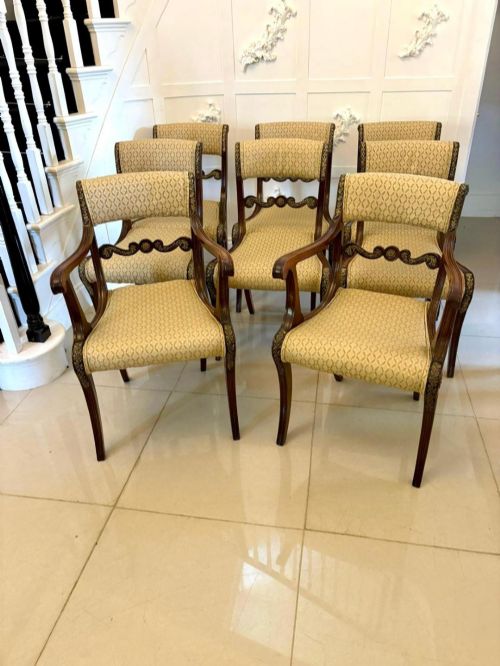
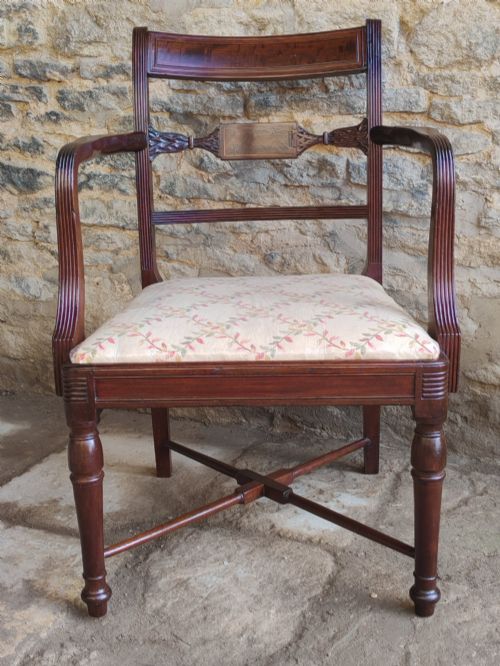


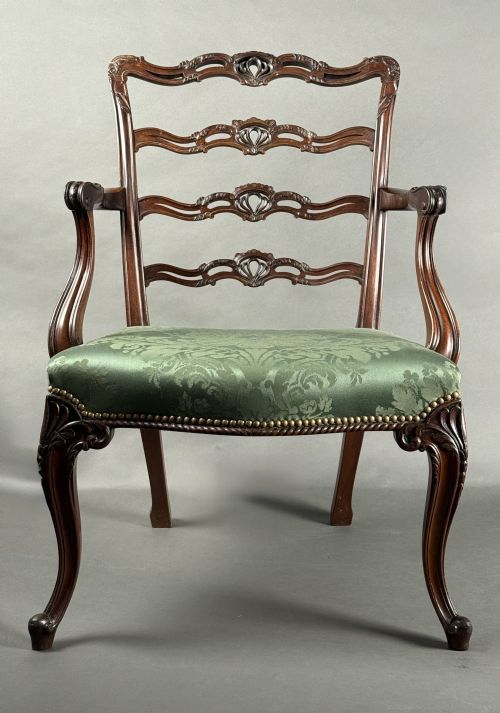
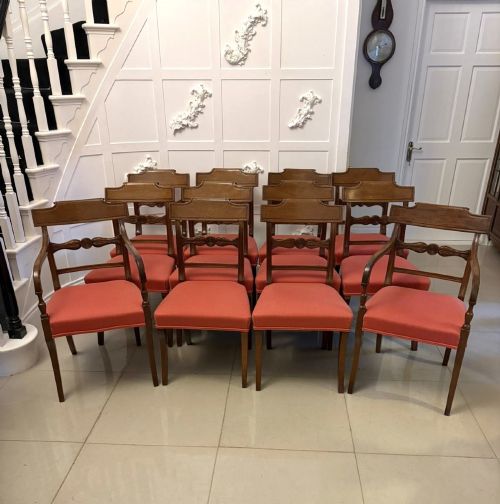
Georgian Period Dining Chairs
Georgian period dining chairs bring eighteenth and nineteenth-century craftsmanship to the table in mahogany, walnut, and elm forms.
Georgian Period Dining Chairs
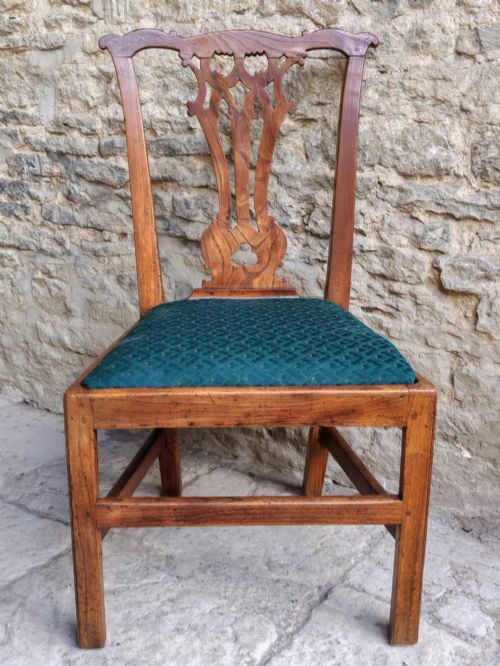
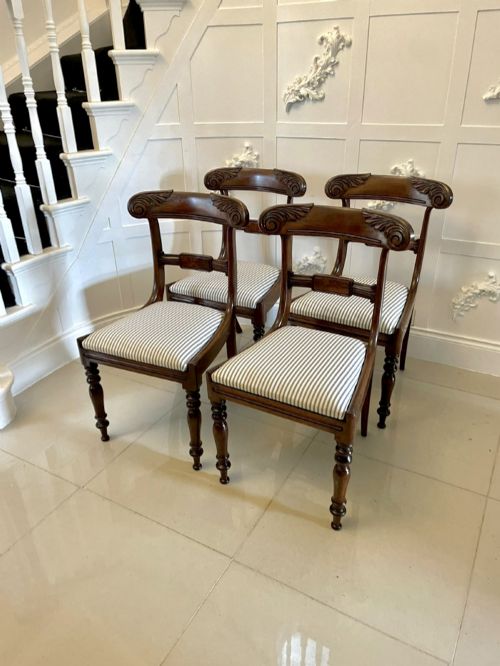
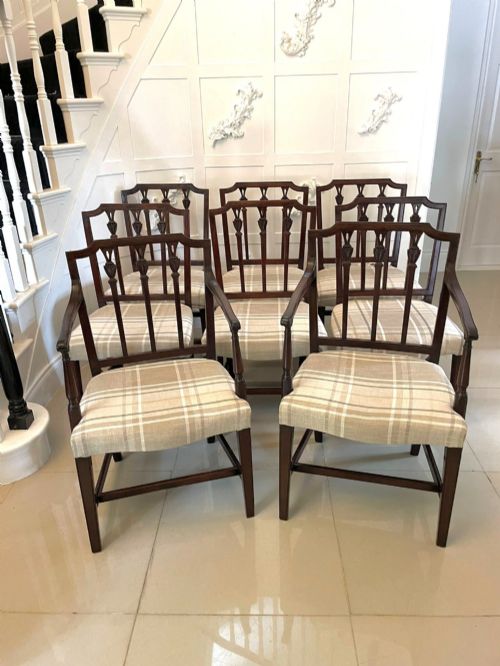
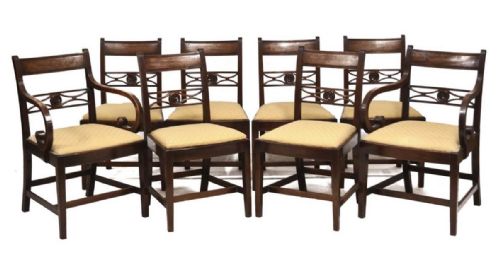
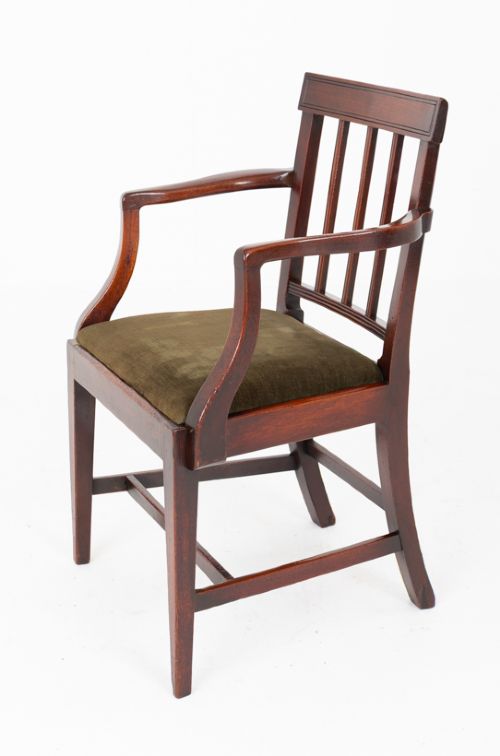
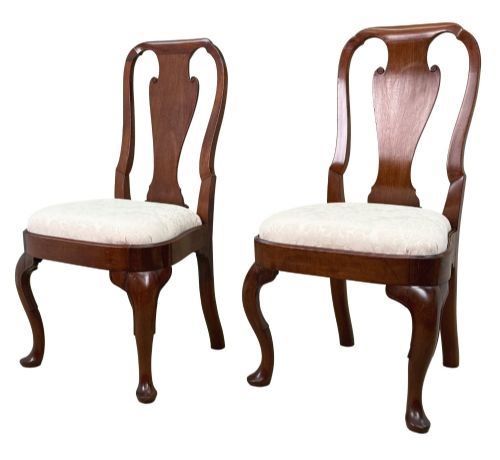
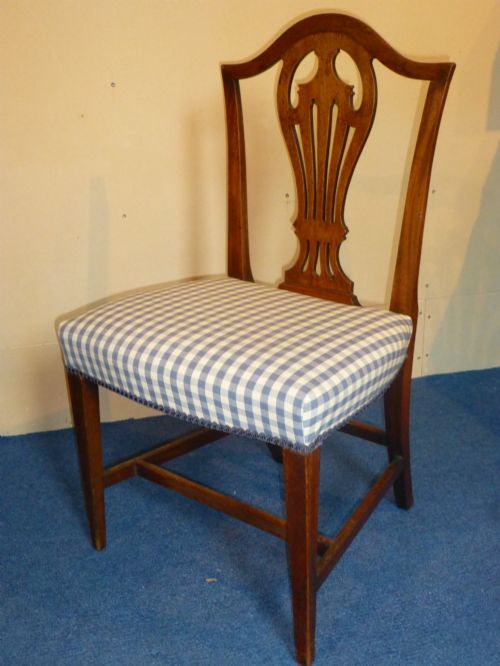
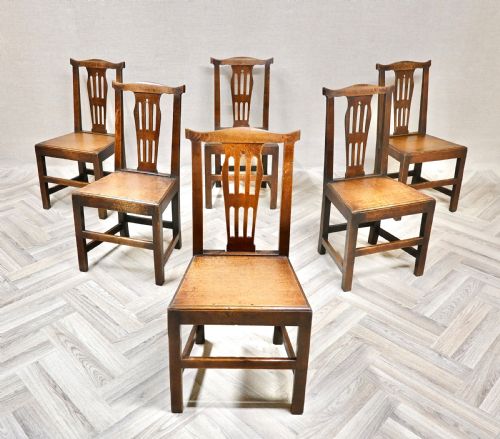
Georgian period dining chairs comprise single side chairs, armchairs, and carvers originating mainly from the eighteenth and nineteenth centuries. These seating forms span regional country styles in elm, fruitwood, and oak alongside formal mahogany and walnut dining sets.
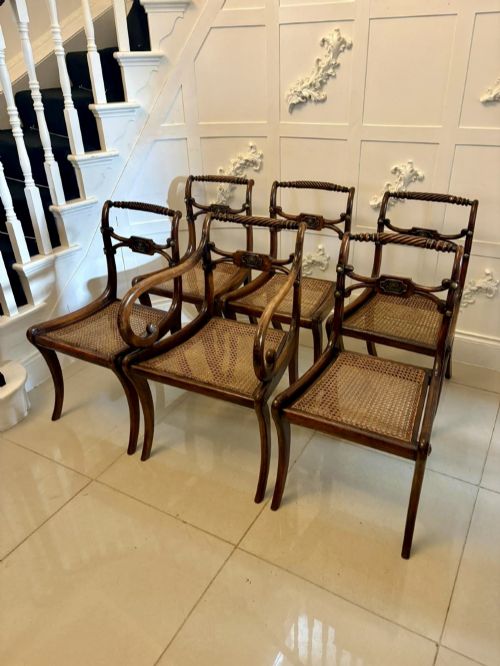
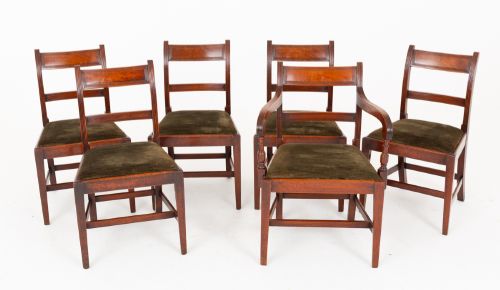
The selections most frequently met on this page are sets of six or eight mahogany dining chairs from the George III and Regency eras. Buyers encounter everything from ladder-back country chairs to sophisticated Hepplewhite and Sheraton designs.
How they were made
Cabinetmakers constructed these frames predominantly from solid mahogany, walnut, and regional timbers like elm and fruitwood. Joinery relied on traditional mortise and tenon methods to secure structural integrity across carvers and side chairs.
Seating surfaces utilised drop-in upholstery frames, fabric, velvet, textile, and woven cane inserts. Brass accents and ebonised details appeared in Regency period examples alongside simulated rosewood finishes.
Dinner guests in the eighteenth century occasionally sat on cane seats softened by velvet squab cushions.
What varies in quality
Quality rests in the crispness of carved details on splats and crest rails, distinguishing master workshops from regional vernacular production. Timber selection also dictates grade, with dense, well-figured mahogany and walnut marking the upper tier.
Matched sets command greater regard than assembled groups of similar design. Original surface patination and intact structural joinery separate superior survivals from heavily restored examples.
The Georgian Period Dining Chairs Glossary
- Carver
- An armchair designed for the head of a dining table. These pieces often matched the smaller side chairs in a set.
- Splat
- The vertical wooden slat in the middle of a chair back. Carvers and side chairs displayed pierced, ladder, or bar back variations.
- Sabre leg
- A concave sweeping leg shape popular during the Regency period. This profile tapered toward the foot for a lighter appearance.
- Drop-in seat
- A removable wooden frame padded and covered in textile or leather. It dropped into the seat rails of the chair frame.
- Caning
- Woven plant material used to form light seating panels. Regency side chairs frequently incorporated cane seats.
Georgian Period Dining Chairs: Frequently Asked Questions
How many chairs came in a typical set?
Dining sets from this era typically ranged from four to twelve chairs, often including one or two matching carvers for the ends of the table.
Larger sets of eight or ten pieces remained common for substantial dining rooms, while smaller rooms utilised pairs or sets of four.
What is the difference between a side chair and a carver?
Side chairs are narrower chairs without arms intended for the sides of a dining table. Carvers feature armrests and provided seating for the host and hostess.
Both forms shared identical back designs and leg styles when produced as part of a unified dining set.
How do I care for antique wooden dining chairs?
Keep wooden frames away from direct heat sources and dramatic humidity shifts to prevent timber splitting. Regular dusting with a soft dry cloth protects the historic polish.
Avoid chemical polishes that build up residue over centuries of surface age. Professional conservation is recommended for loose joinery.
Can I mix different styles around a dining table?
Mixing regional country chairs with formal mahogany styles creates a collected interior aesthetic. Matching sets offer uniformity, but historical dining spaces often accumulated chairs over time.
Ensure seat heights align comfortably with modern table clearances if using antique seating daily.