


Georgian Wooden Side Chairs
Georgian wooden side chairs provide sturdy elegance for dining and reception rooms, prized for their durable timber construction and enduring design.
Georgian Wooden Side Chairs
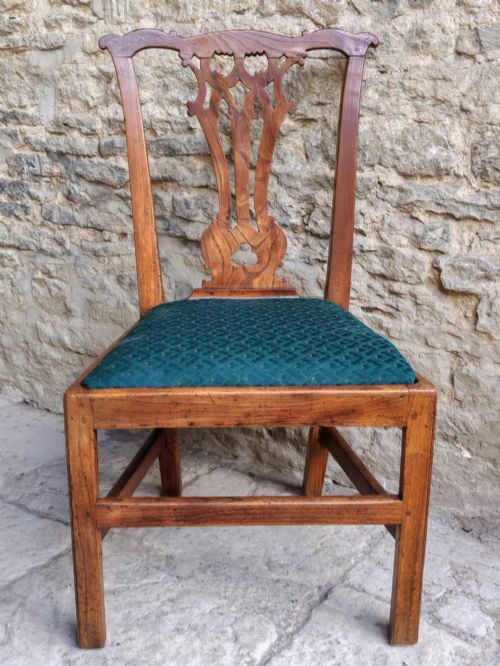
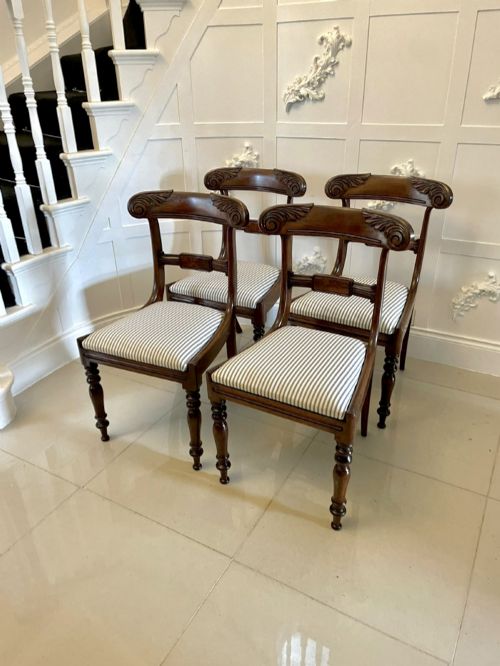
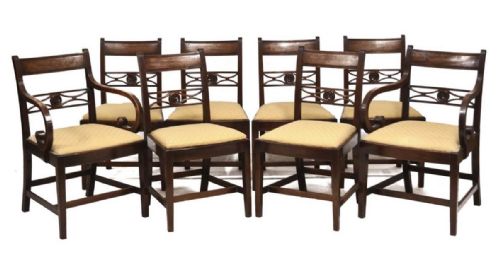
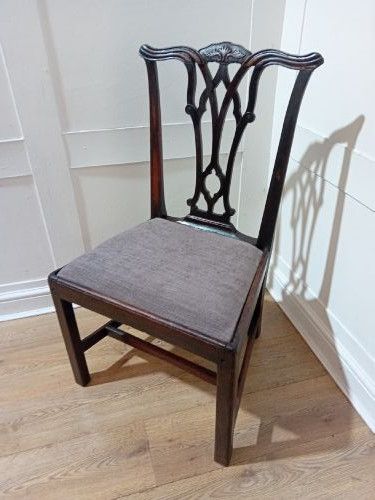
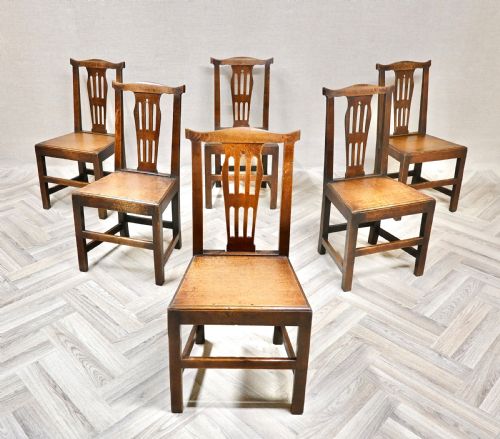
Georgian wooden side chairs encompass seating produced during the 18th and early 19th centuries, alongside later revivals, designed primarily for dining and hall use. These pieces appear frequently as sets of multiple chairs, ranging from pairs up to sets of twelve, as well as individual examples.
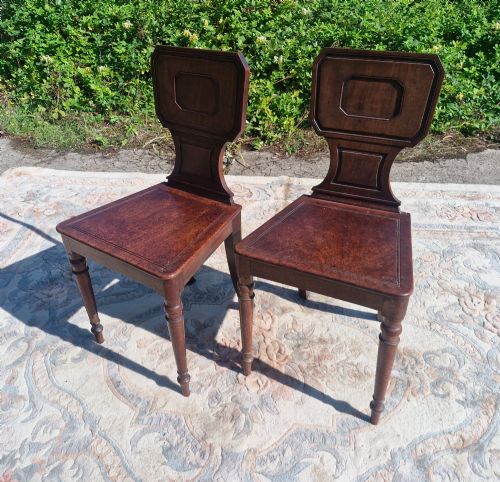
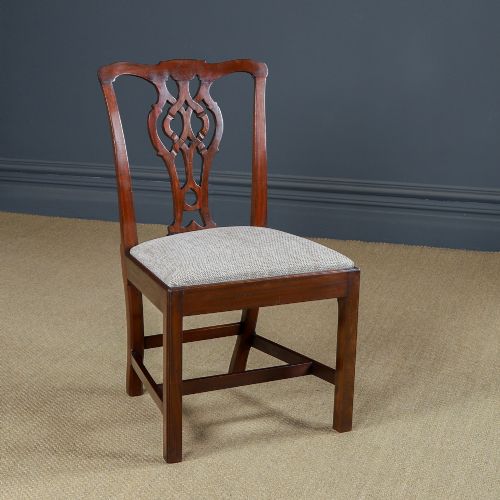
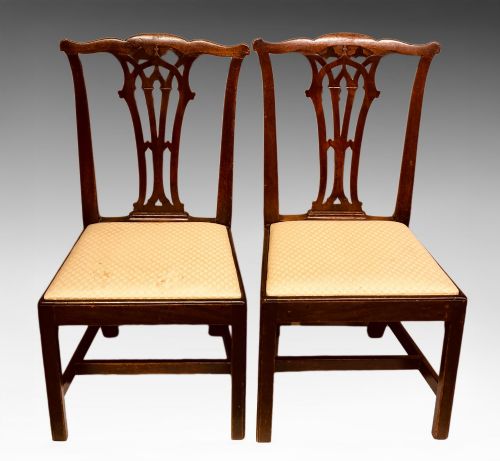
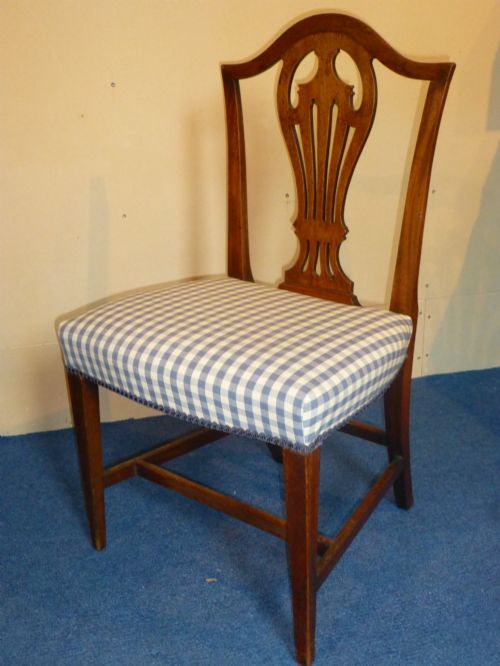
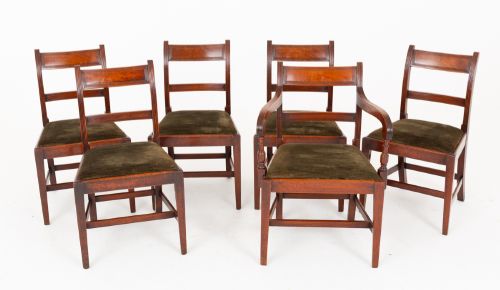
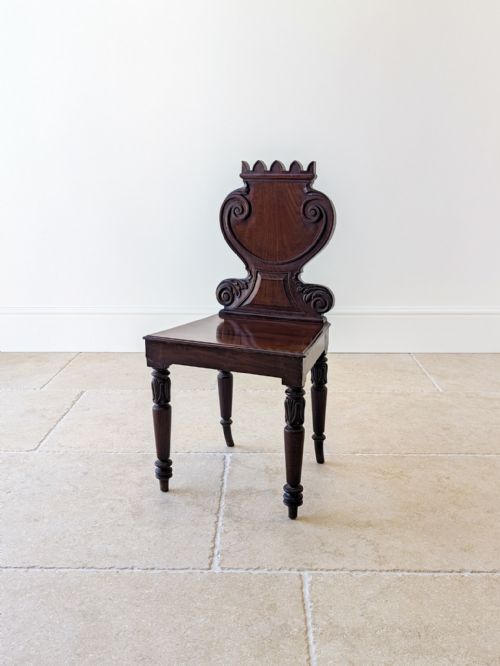
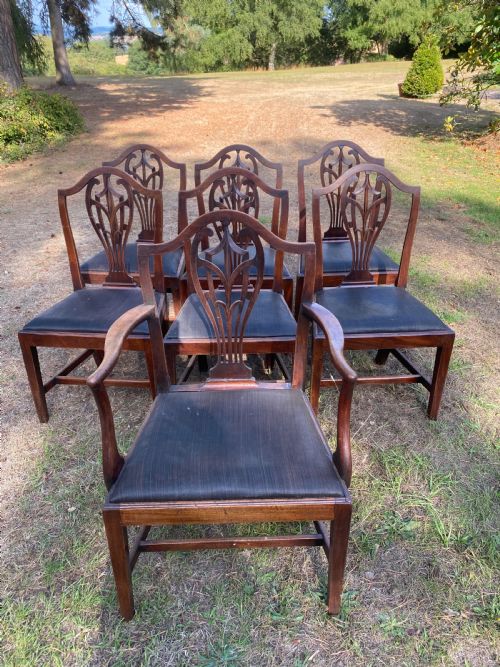
The materials and styles span straightforward oak country kitchen chairs to formal mahogany dining chairs influenced by Chippendale, Hepplewhite, and Sheraton designs. Variations include hall chairs featuring shield backs, bar back forms, and occasional elaborations like brass inlay or ebonised surfaces.
Originating predominantly from English and Scottish workshops, these chairs present distinct regional traits, such as solid birch constructions or elm frames. Buyers encounter single chairs intended for desks alongside matched sets built for large dining tables.
How they were made
Makers relied heavily on dense hardwoods, predominantly mahogany, alongside oak, elm, fruitwood, and birch, selected for structural resilience. Timber components were shaped using traditional joinery techniques, turning for bobbin-turned legs, and carved details on splats and shield backs.
Upholstery utilised traditional webbing, stuffing, and textile covers including fabric and velvet, though many examples survive as bare wood frames or fitted with cane seats. Brass details, such as inlay work or mounts, appear on select Regency pieces to accent the timber frames.
Listings feature timbers including mahogany, oak, elm, fruitwood, and birch across the Georgian, Regency, and Victorian periods.
What varies in quality
The standard of carving and timber selection dictates the distinction between standard utility seating and high-end formal dining chairs. Superior examples display crisp detail in pierced splats, well-figured mahogany grain, and robust frame construction.
Completeness within larger sets alters the standing of the pieces, particularly where matched sets of six, eight, or twelve survive intact rather than assembled later. Original surface patination and minimal structural alteration maintain the integrity of the design across the 18th and 19th-century periods.
The Georgian Wooden Side Chairs Glossary
- Side chair
- A chair without arms, traditionally used for dining or placed against a wall.
- Shield back
- A chair back shaped like a heraldic shield, popular in Hepplewhite designs.
- Bar back
- A horizontal wooden slat across the upper backrest, common in Regency dining chairs.
- Bobbin turned
- Turned woodwork resembling a string of bobbins or spools, seen on earlier 18th-century frames.
- Splats
- The vertical wooden strip down the centre of a chair back, frequently pierced or carved.
Georgian Wooden Side Chairs: Frequently Asked Questions
How do I identify a genuine Georgian chair?
Examine the timber species, construction joints, and stylistic cues such as carved splats or shield backs that align with 18th-century cabinetmaking methods.
Look for signs of age in the wood grain and hand-cut joinery rather than modern fixings.
Were these chairs used only for dining?
While many formed part of large dining sets, numerous variations served as hall chairs, desk chairs, or bedroom seating.
Hall chairs often featured solid wooden seats and painted or carved family crests for entranceway use.
Can I mix these chairs with a modern table?
Their compact proportions and classic timber finishes allow them to sit comfortably alongside contemporary or antique tables alike.
Matching heights and seat depths ensures practical daily use around modern dining spaces.
What is the difference between Georgian and Regency styles?
Georgian furniture generally spans the 18th century, favouring proportioned carved woodwork influenced by makers like Chippendale and Hepplewhite.
Regency design, emerging in the early 19th century, incorporates classical Greco-Roman motifs, sabre legs, and occasional brass inlay.