

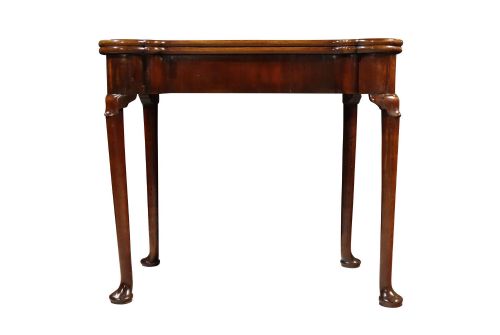
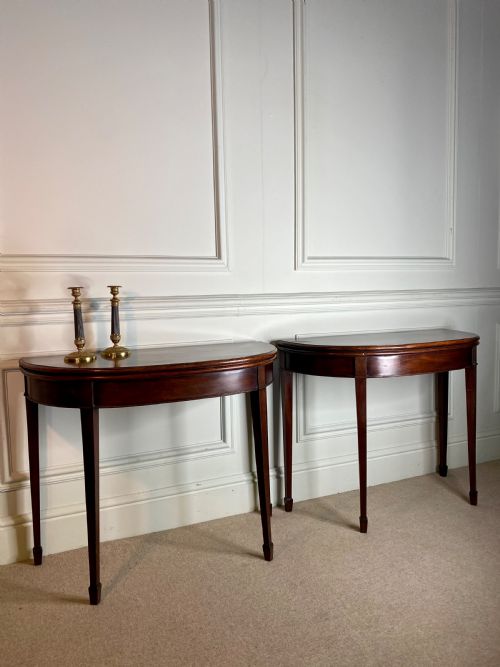

Mahogany Foldover Tea Table
These mahogany foldover tea table examples span the Georgian and Regency periods, offering clever dual-purpose surfaces for entertaining.
Mahogany Foldover Tea Table
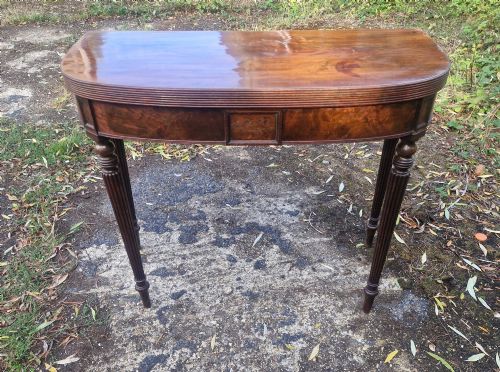
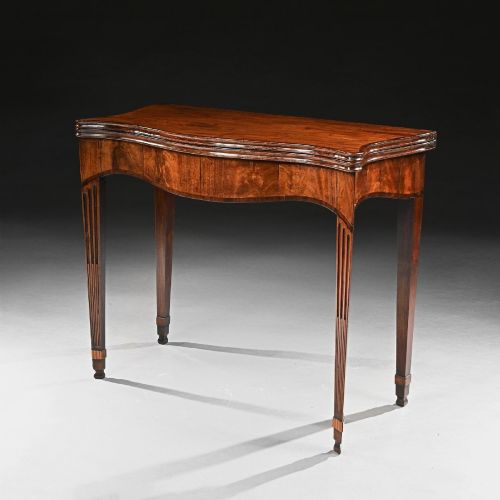
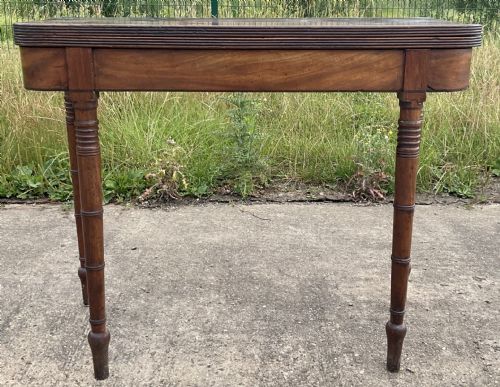
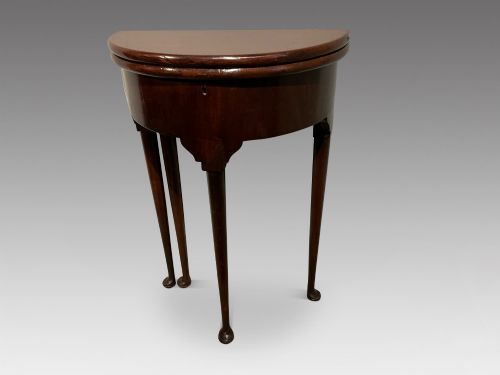
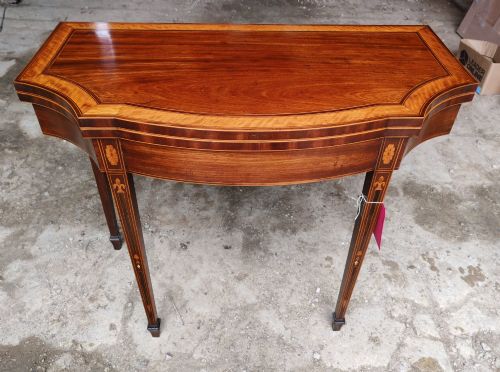
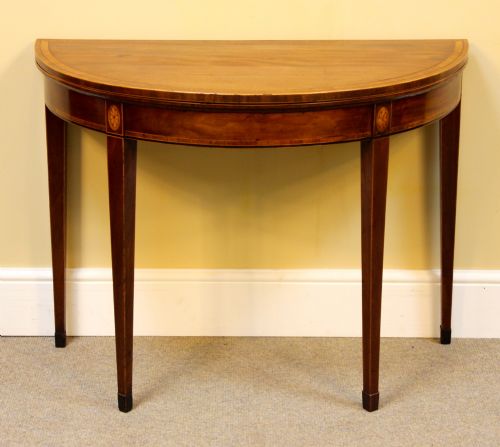
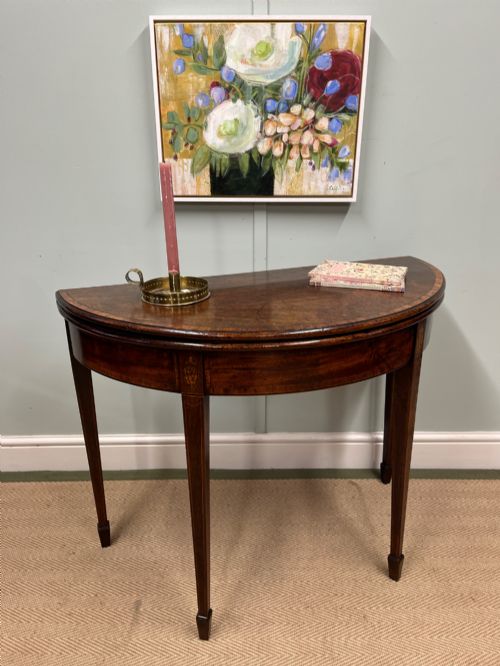
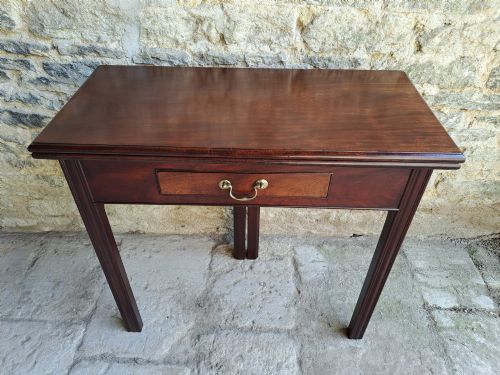
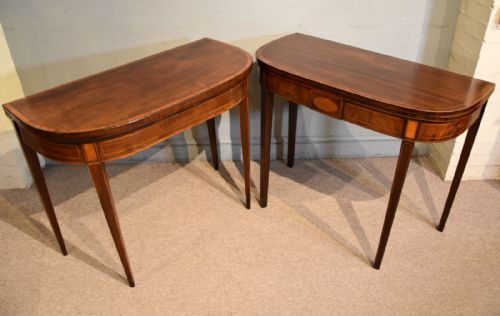
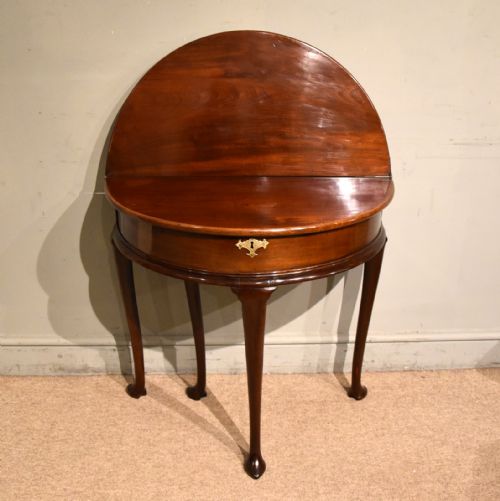
A mahogany foldover tea table bridges domestic utility and formal display by transforming from a compact side piece into a full table. The selection here leans heavily towards Georgian and Regency origins, encompassing shapes like serpentine, demilune, and 'D' formats.
Beyond basic tea service, these items frequently double as card and games surfaces, incorporating concertina actions or trifold tops. Surviving examples reflect shifts from mid-eighteenth-century proportions through to Victorian interpretations and Sheraton revivals.
Materials and Construction
Makers relied on solid timber and wood veneer, frequently utilising Cuban mahogany supported by secondary woods. Decorative detailing often incorporates contrasting elements like satinwood, boxwood, tulipwood, and ebony stringing or inlay.
Metal components also play a structural and decorative role, with brass inlay and hardware appearing across Regency and later items. Joint work ranges from concertina frames to pivoting leaves and pedestal bases.
Object forms documented here range from simple demilune side tables to complex trifold games surfaces with concealed drawers.
Evaluating the Pieces
Differentiation in these pieces rests upon the crispness of the cabinetwork and the figuring of the timber itself. Finer execution shows in the alignment of wood grain across folding leaves and the precision of inlaid borders.
The sophistication of the action mechanisms, whether concertina frames or pivoting rule joints, further distinguishes workshop output. Original surface patination and colour depth remain primary indicators of a piece's integrity.
Giles Grendey·Gillows
The Mahogany Foldover Tea Table Glossary
- Concertina action
- An expanding frame mechanism that allows a card table to open evenly on four legs rather than pivoting on a single rear leg. This engineering provides superior structural support when the top is unfolded.
- Demilune
- A half-moon shape popular for side and tea tables during the eighteenth century. These pieces sit flush against a wall before opening into a full circle.
- Cross banding
- A border technique where thin strips of veneer are laid perpendicular to the main grain of the tabletop. It creates a defined geometric frame around the central panel.
- Patination
- The natural surface sheen and depth of colour developed by wood over centuries of exposure and handling. It serves as a visual marker of age and honest care.
Mahogany Foldover Tea Table: Frequently Asked Questions
How were these tables used originally?
These pieces functioned primarily as space-saving furniture in polite drawing rooms. Folded against the wall, they held decorative objects or candles during daytime hours.
When evening arrived, the top unfolded to accommodate tea service or card games like whist. The dual nature suited smaller domestic spaces where dedicated gaming tables took up too much room.
How do I tell a card table from a tea table?
While the exterior closed forms look identical, the interior reveals the intended purpose. Card tables typically feature lined playing surfaces, sometimes with dished corner wells for counters or candlesticks.
Tea tables usually present plain polished mahogany interiors designed to withstand moisture and heavy porcelain vessels. Many surviving examples actually served both functions interchangeably depending on the household's immediate needs.
Where should I place a foldover table at home?
These items suit hallways, living rooms, and dining areas as versatile side or console units. Placed flat against a wall, they occupy minimal depth while displaying lamps or ornaments.
Opening the leaf transforms the piece into a freestanding focal point for serving drinks or staging small gatherings. Their finished backs and polished timber grain allow them to sit away from walls successfully.
How do I identify the period of a table?
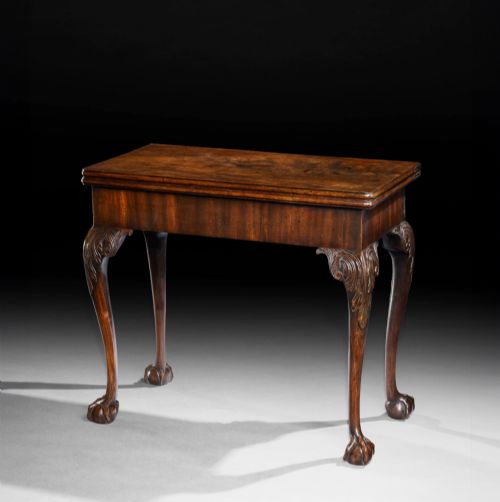
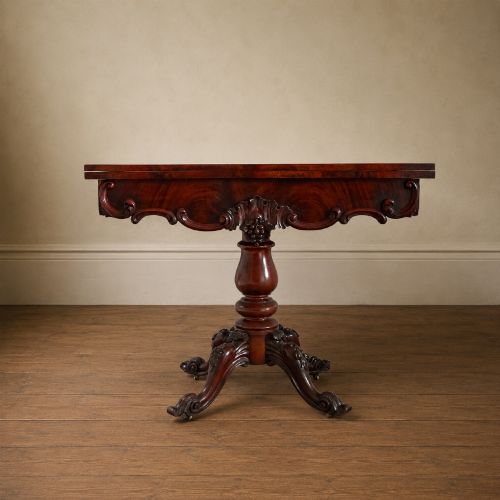
Dating relies on observing changes in leg design, timber selection, and edge profiles across different eras. Mid-eighteenth-century pieces often display heavier proportions and rich Cuban mahogany, while Regency versions introduce brass inlay and bolder pedestal bases.
Later Victorian and revival interpretations incorporate machine-sawn veneers and softer secondary woods. Examining the underside and hinge mechanisms also provides clear chronological clues.