


Antique Gaming Side Table
An antique gaming side table combines domestic versatility with functional folding design, offering dual surfaces for card play and tea.
Antique Gaming Side Table
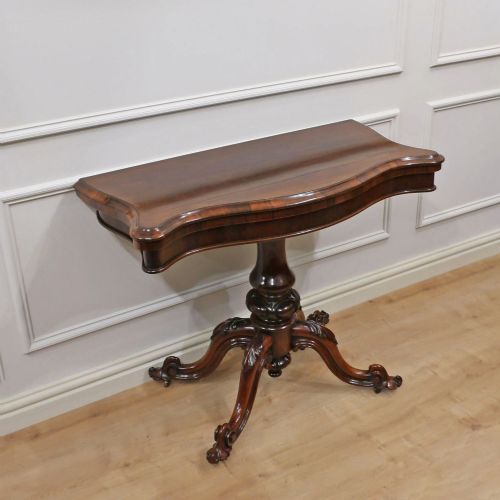
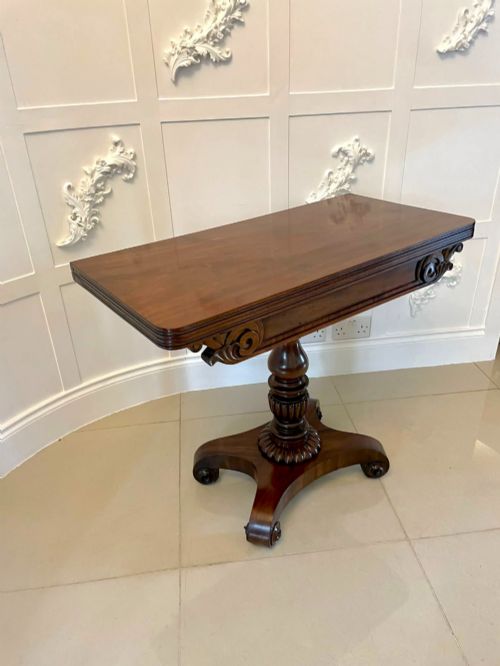
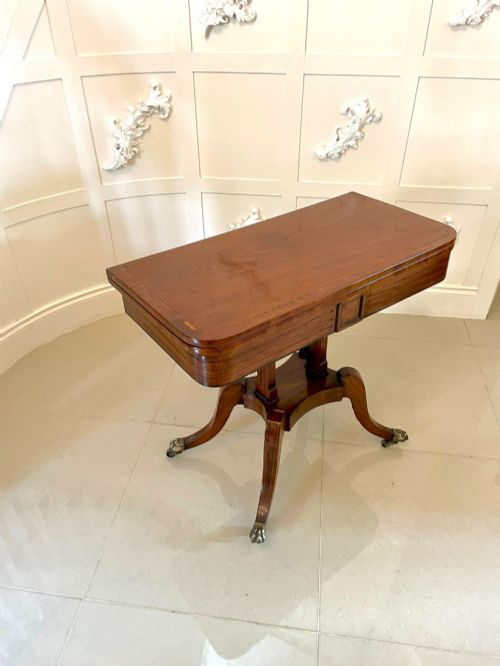
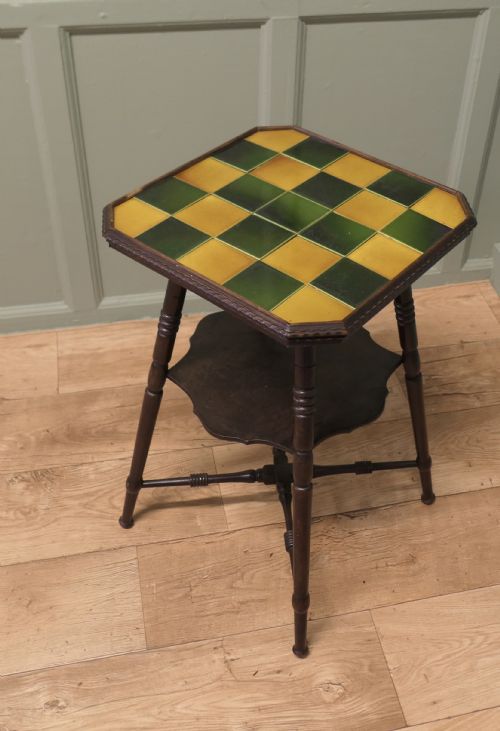
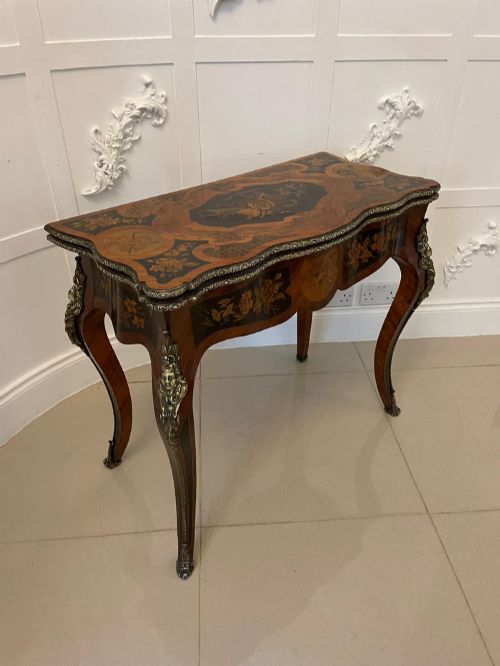
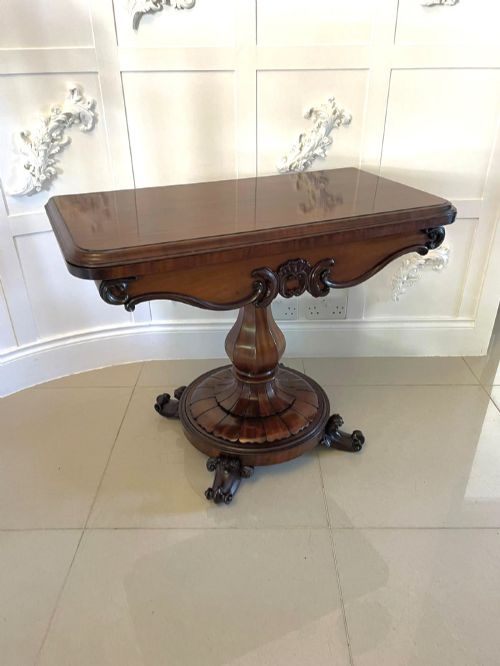
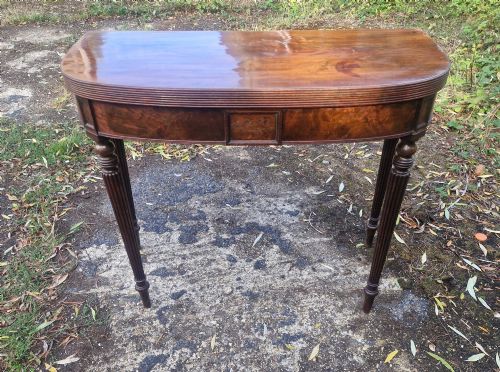
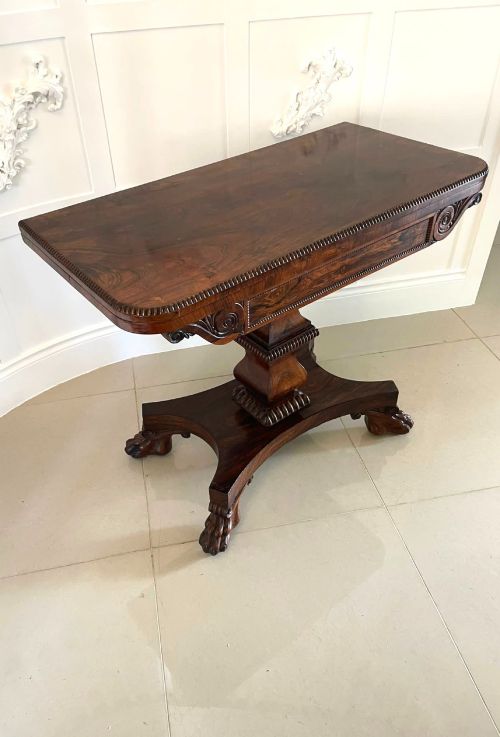
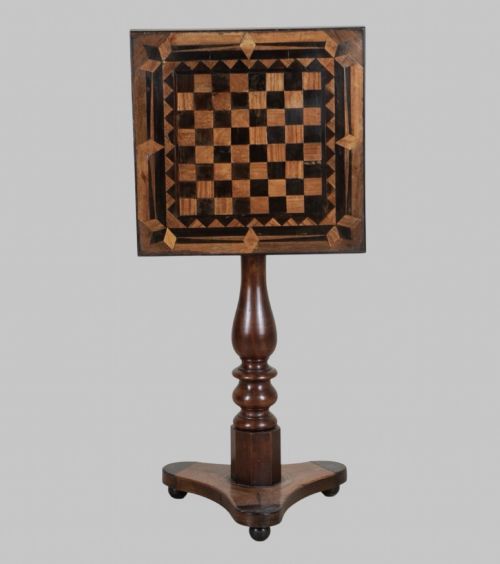
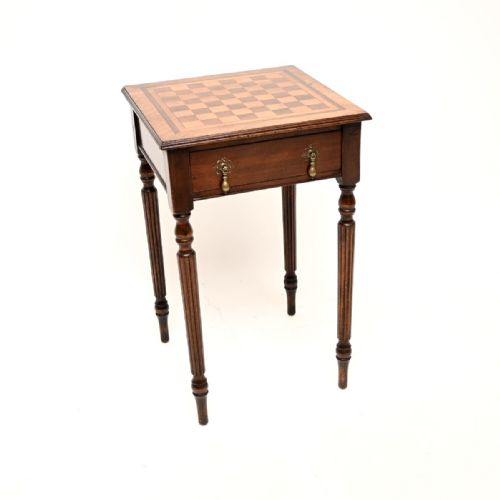
An antique gaming side table serves dual purposes as a daily surface and a specialised board game or card playing station. These pieces appear across 18th century, Regency, and Victorian periods, manifesting as fold over card tables, tea tables, and dedicated chess or envelope tables.
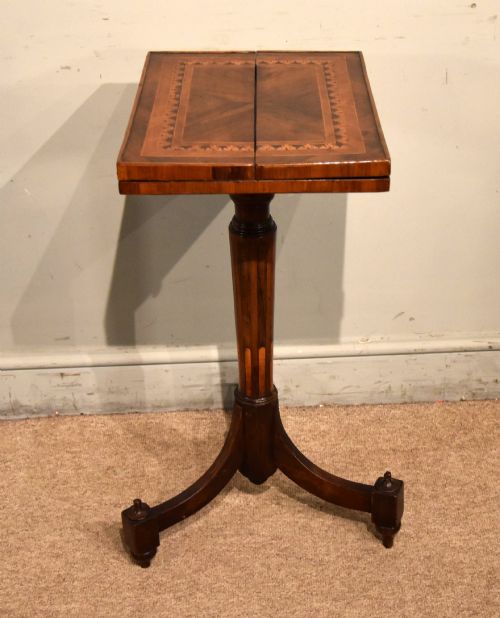
The most common formats on this page combine mahogany or rosewood construction with clever pivoting leaves or concertina actions that reveal hidden compartments and baize lined playing surfaces.
Originating from Georgian dining rooms and Victorian parlours, these tables bridge formal entertaining and practical household utility through adaptable tops and compact footprints.
Materials and construction methods
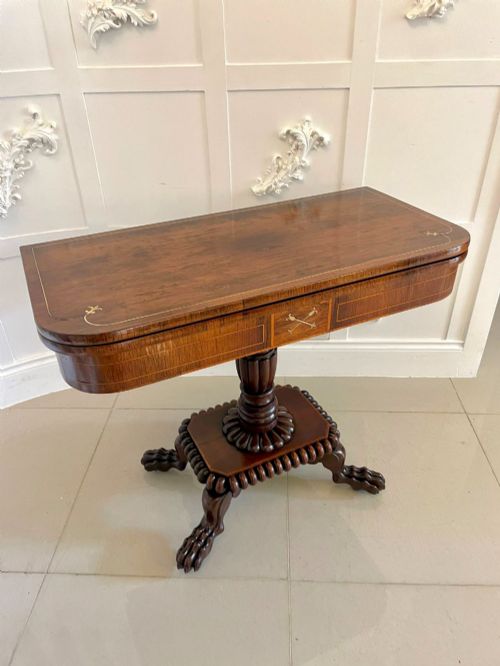
Cabinet makers relied heavily on dense timbers like mahogany, walnut, and rosewood, often applying intricate wood inlay, boxwood stringing, or satinwood veneers to create striking geometric surface patterns.
Structural ingenuity defined the genre, utilising concertina mechanisms, pivoting hinges, and folding leaves that required precise joinery to ensure stability whether closed as a side table or opened for play.
Some tables hide secret compartments once reserved for secretive wagers and hidden card hands.
Assessing craftsmanship and execution
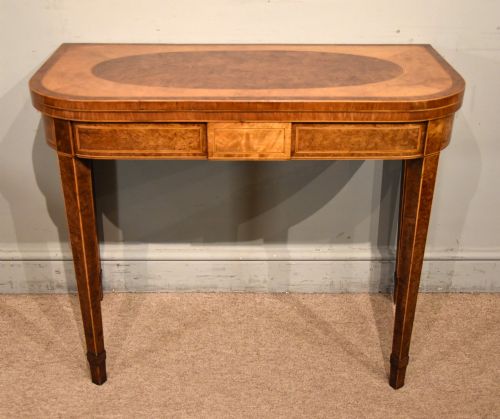
Superior examples distinguish themselves through the choice of figured timber, such as burr walnut or highly grained mahogany, matched symmetrically across the folding leaves to maintain visual continuity.
The precision of the mechanical hinges and the tightness of joints when the table stands closed separate standard utilitarian pieces from workshop productions featuring fine brass inlay, carved rosewood details, and original baize surfaces.
Shapland & Petter·Gillows
The Antique Gaming Side Table Glossary
- Concertina action
- An expanding frame mechanism that pulls outward as the table top unfolds, providing four symmetrical legs for support instead of a central pillar.
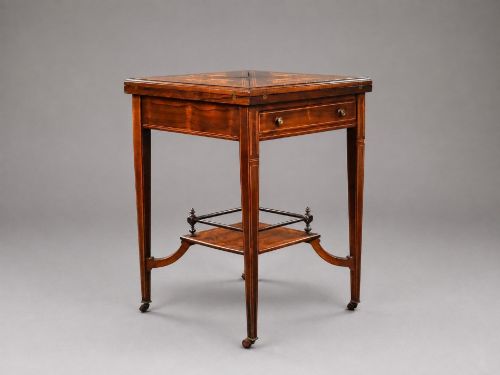
- Envelope table
- A square card table with four triangular flaps that swivel and fold open sequentially to resemble an addressed envelope.
- Demi lune
- A semicircular furniture form popular for side and console tables, designed to sit flush against a wall when closed.
- Marquetry
- Decorative veneer work forming pictorial or geometric patterns using various coloured woods, shells, or ivory.
- Patina
- The surface sheen and mellowing developed by antique wood over decades of exposure to light, handling, and polishing.
Antique Gaming Side Table: Frequently Asked Questions
How do you open an antique gaming table?
Most folding examples require lifting the pivoted top leaf and rotating it ninety degrees over the frame to rest flat upon the base.
Once turned, the hinged leaf drops securely into position, frequently activating a supporting gateleg or concertina framework underneath.
What games were these tables used for?
These versatile pieces accommodated multiple pastimes including whist, chess, backgammon, and general card games popular during the Georgian and Victorian eras.
Specialised interiors often featured lined compartments for storing counters, dice, and packs of cards directly beneath the playing surface.
How do you date an antique gaming table?
Stylistic markers such as straight tapering legs indicate late 18th century George III origins, while heavier pedestal bases point toward Regency and William IV periods.
Hardware design, timber choice, and the complexity of internal storage compartments provide further clues regarding the decade of manufacture.
Can you use them as everyday side tables?
Their primary function when closed is that of a compact side or console table placed against a hallway or drawing room wall.
They transition easily to occasional use for lamps or decorative objects while retaining their mechanical functionality for evening entertainment.