


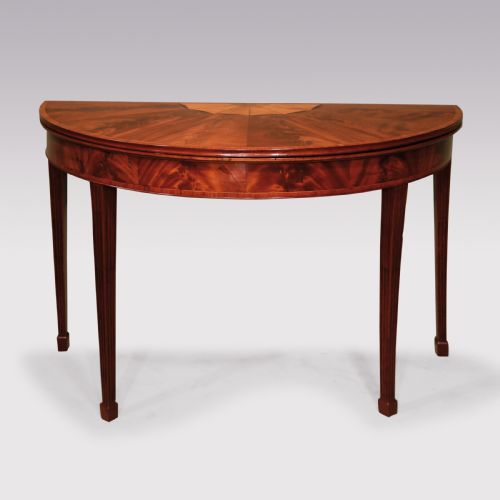
Circular Mahogany Card Table
A circular mahogany card table is a folding timber surface built for parlour games, offering rich grain and adaptable domestic form.
Circular Mahogany Card Table
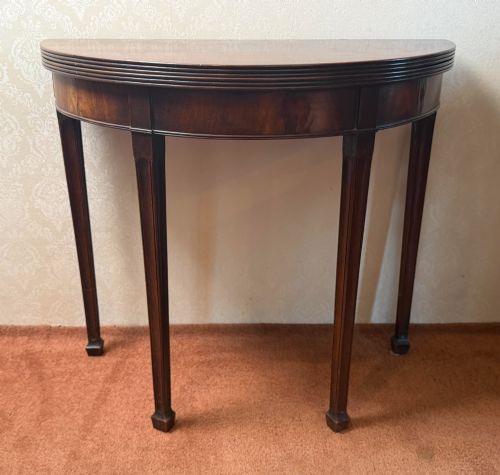
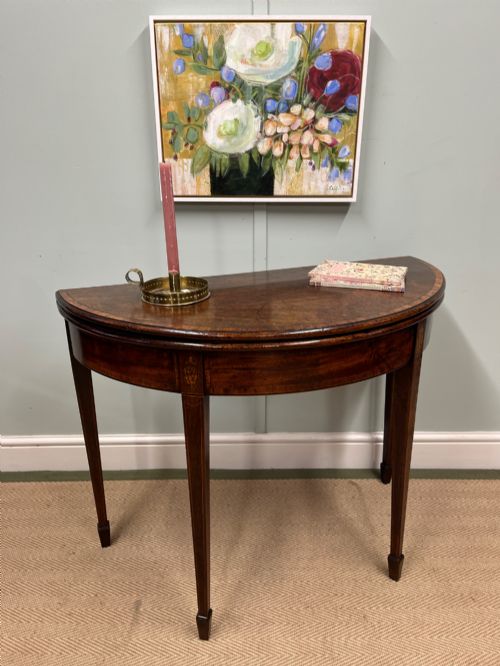
A circular mahogany card table brings a folding timber surface to the room, designed to open out for evening play and sit flat against a wall when closed. When you search for a circular mahogany card table, you meet pieces built across the Georgian, Victorian, and Edwardian periods, taking forms such as demilune, half-moon, and occasional tables.
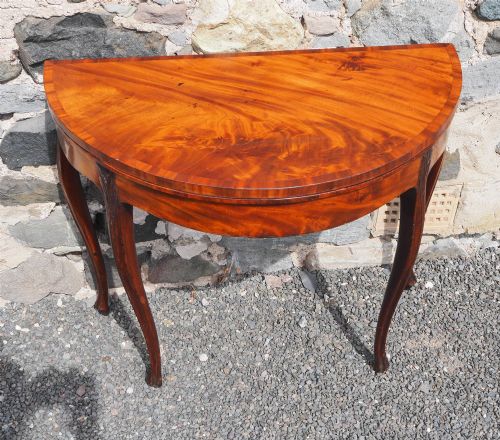
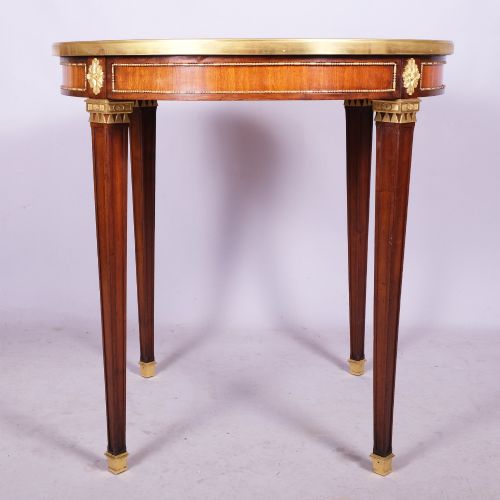
The versions most common on this page span the 18th century, George III era, and 19th century, featuring flame mahogany veneer, satinwood, and boxwood inlay. Many pieces operate as fold-over tea tables, console tables, or side tables, adopting Sheraton, Hepplewhite, and Regency styles alongside Louis XVI influences.
Makers shaped these circular mahogany card table designs to serve as tea tables and games tables alike, utilising folding tops and pivoting leaves. The surviving examples demonstrate how cabinet-makers combined folding mechanisms with curved timber skirts and tapered legs.
What varies in quality
The grade of a circular mahogany card table depends upon the selection of timber veneers and the crispness of the boxwood inlay. Finer pieces display carefully matched flame mahogany grain across the top that continues symmetrically when the leaf unfolds.
Construction methods dictate longevity, separating standard production from superior cabinet-making. A well-made circular mahogany card table relies on tight joinery, smooth-operating folding mechanisms, and substantial timber depth rather than thin surface layers.
Some card tables hide secret compartments beneath the folding top for stashing stray sixpences.
The Circular Mahogany Card Table Glossary
- Fold-over
- A table top hinged to double in surface area when opened. This mechanism allows a compact console to become a full card table.
- Marquetry
- Decorative patterns formed by fitted veneers. Craftsmen inlay different coloured woods into the primary surface to create pictures or geometric designs.
- Flame mahogany
- Timber veneer showing a distinct feather-like figure. This grain pattern results from cutting near the branch junction of the tree.
Circular Mahogany Card Table: Frequently Asked Questions
How did people use card tables?
People used card tables primarily for evening parlour games such as whist, quadrille, and chess. When closed, the tables functioned as side or console furniture against a wall.
Opening the fold-over top provided a stable playing area, while some designs incorporated interior wells for storing counters and cards.
How do I tell Georgian from Edwardian tables?
Georgian tables, particularly from the George III period, display restrained classical proportions, elegant taper legs, and understated mahogany or satinwood veneers. Construction tends to rely on solid timber framing.
Edwardian interpretations often feature heavier marquetry inlay, lighter secondary woods, and sometimes eclectic influences like Louis XVI revival styles.
Where should I place a card table?
A circular mahogany card table works well in a hallway, drawing room, or living space as a console or pier table. Placing it against a wall in its closed demilune position saves floor space.
Opening the table requires clearance around all sides, making it suitable for corners or open areas when entertaining.