
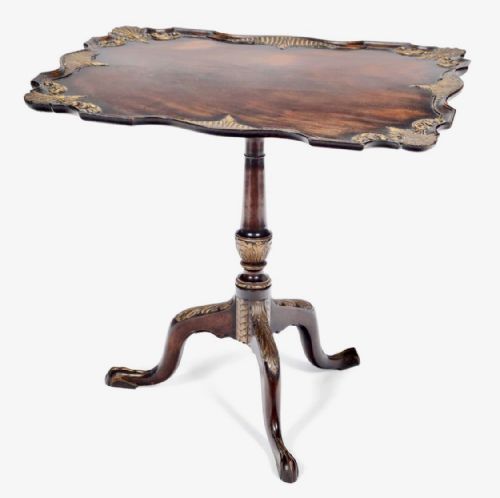
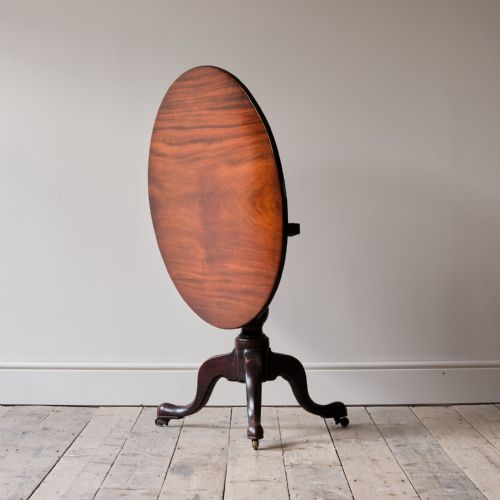
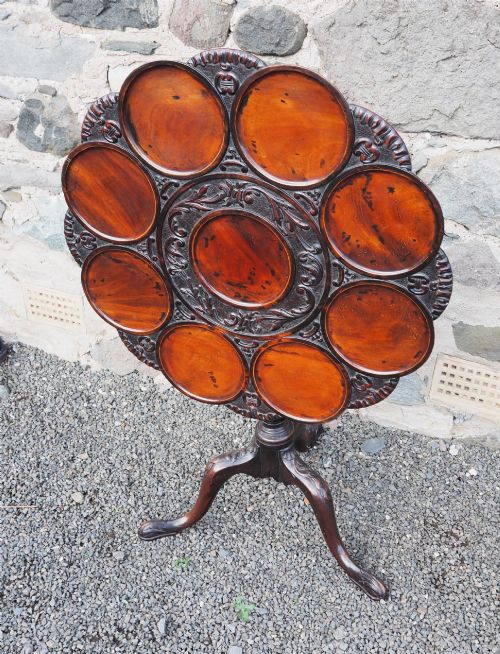

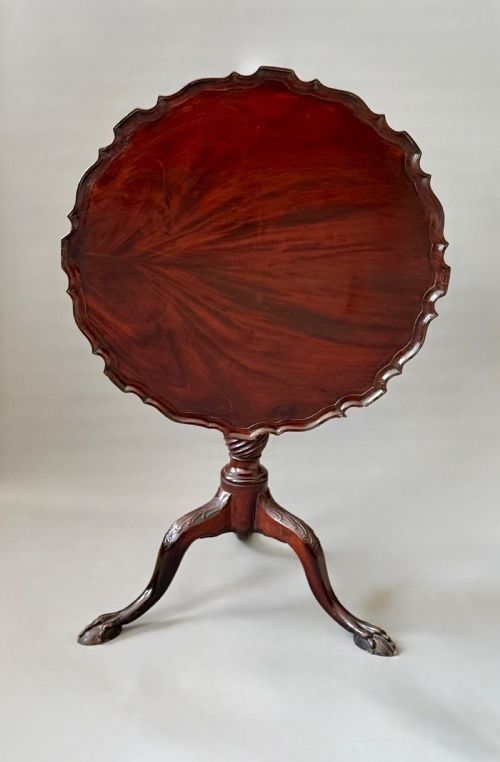
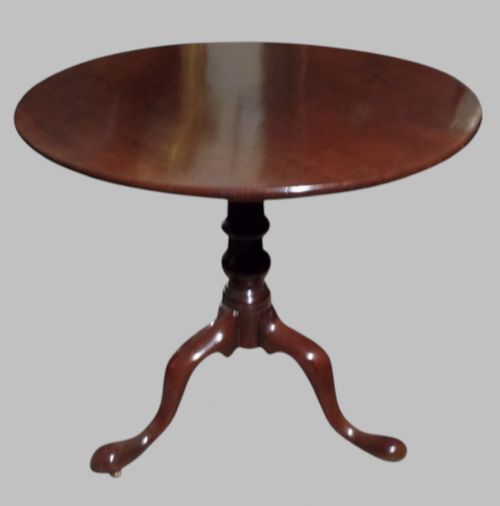
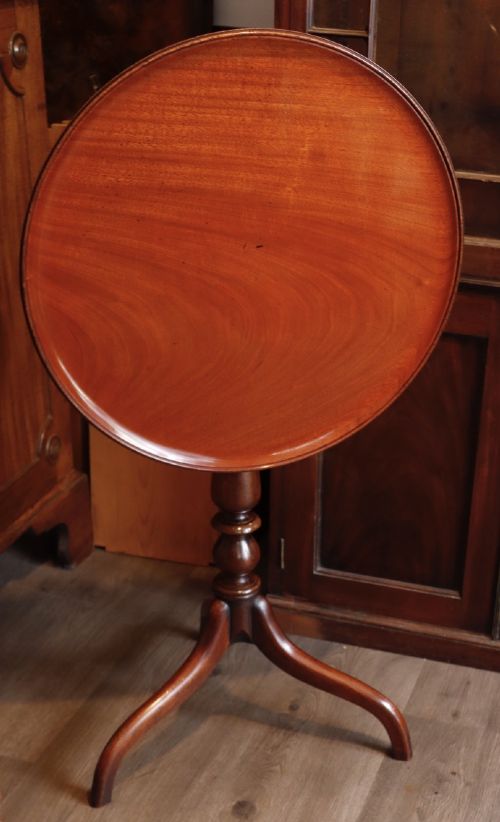
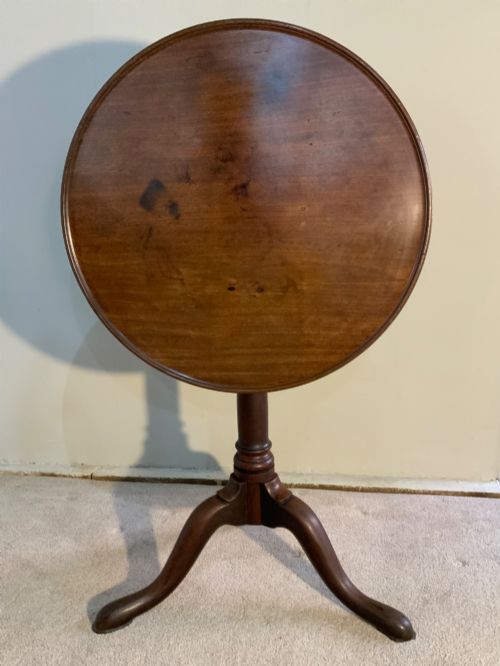
Georgian Mahogany Tilt Table
A georgian mahogany tilt table is a versatile folding piece that saves space and serves dining or display needs brilliantly.
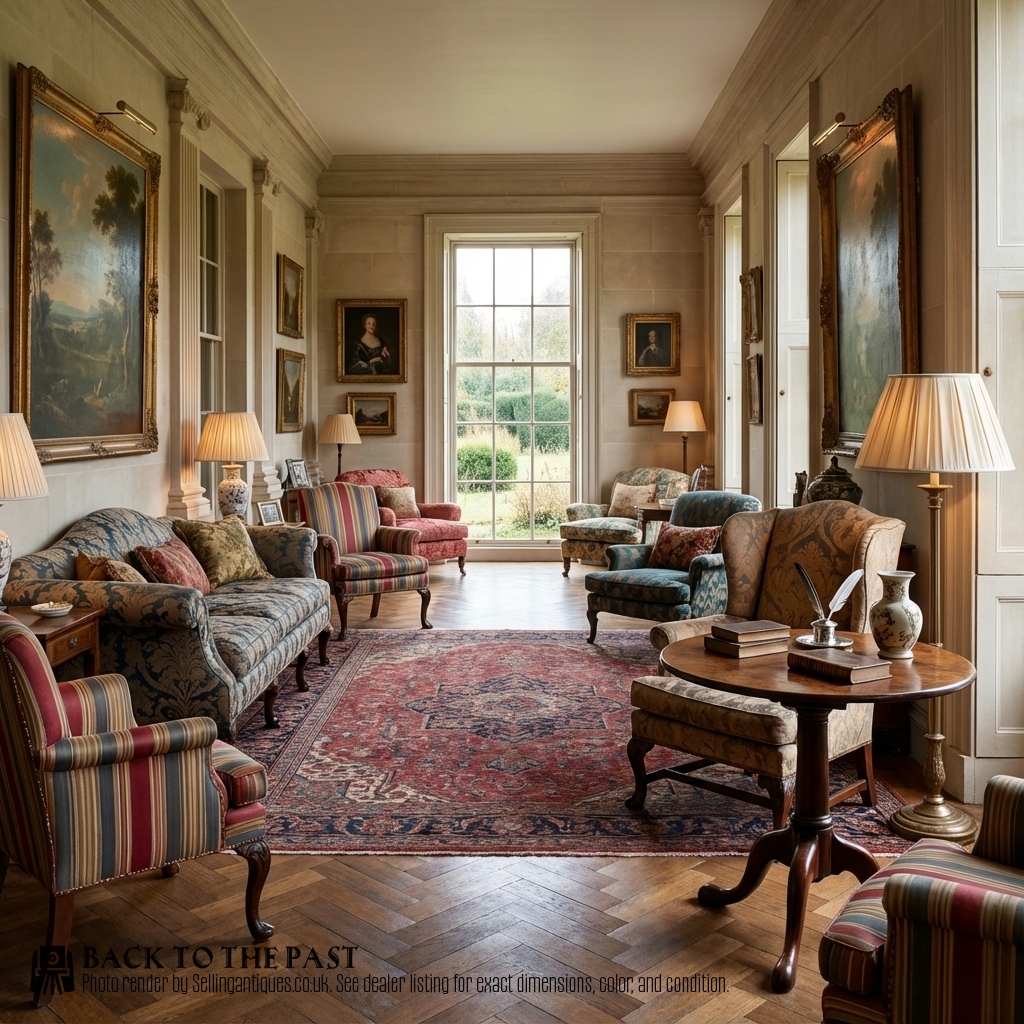
Georgian Mahogany Tilt Tables
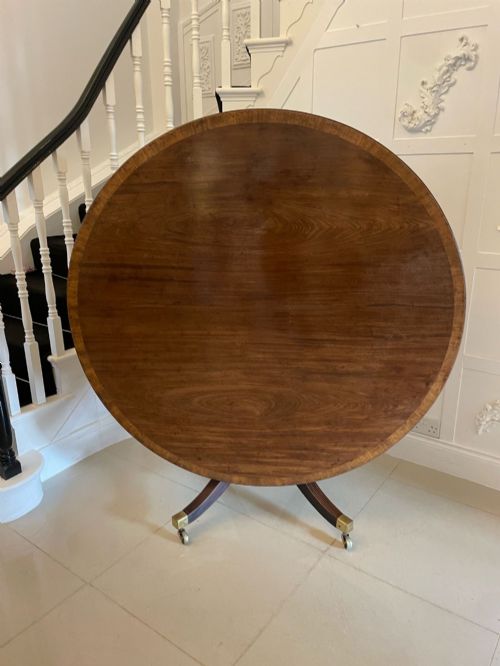
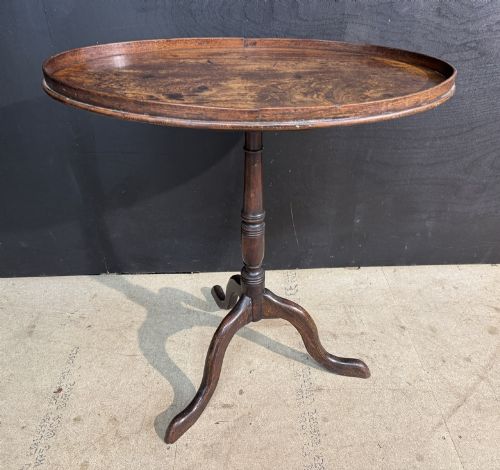
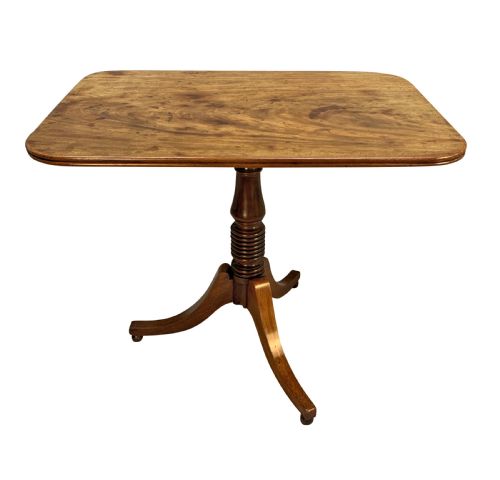
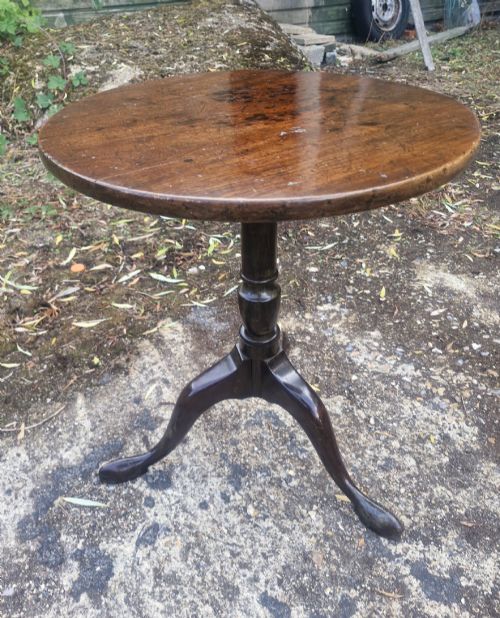
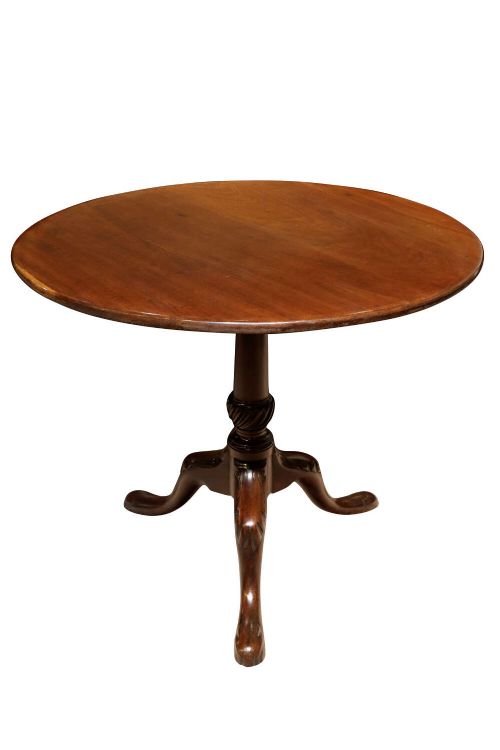
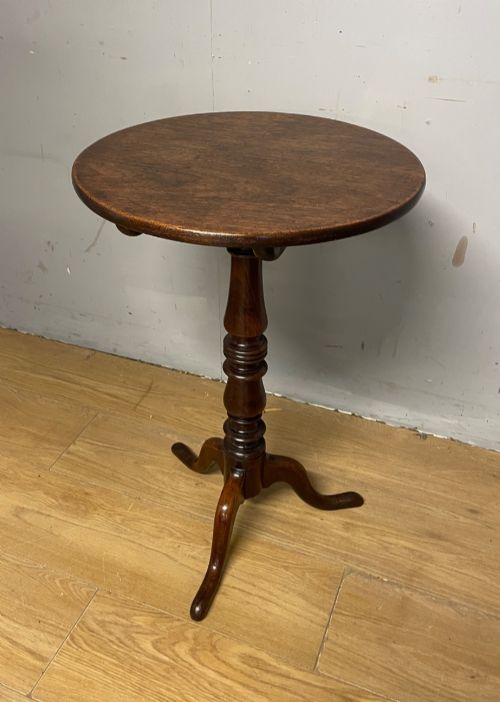
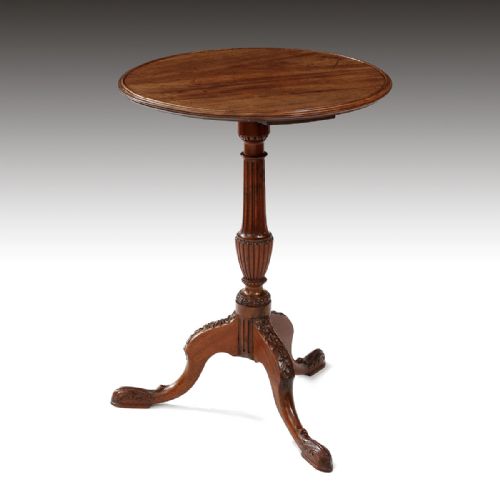
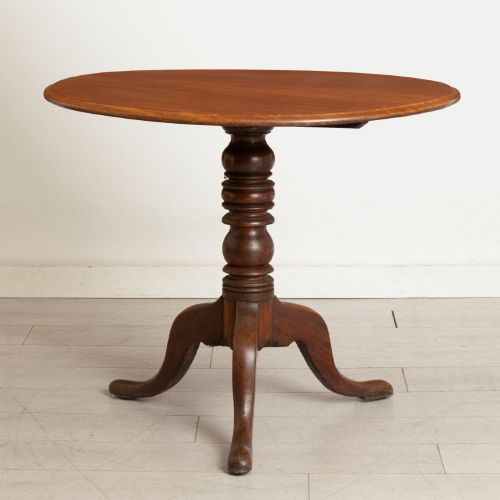
A georgian mahogany tilt table combines practical domestic utility with crisp cabinet-making from the eighteenth and early nineteenth centuries. These tables appear as compact tripod wine pieces, occasional tables, breakfast furniture, and larger dining formats.
The most common examples on this page are circular tripod tables featuring single plank tops supported by turned columns and three-legged bases. Makers produced these pieces for drawing rooms and parlours where furniture needed to move aside easily.
Forms range from small candle stands and lamp tables to substantial breakfast and supper tables with birdcage mechanisms. This allows the top to rotate independently of the pillar before folding vertically against the base.
Construction and Materials
Craftsmen built these tables using dense solid mahogany, frequently selecting single wide planks for circular table tops. Bases incorporate turned wooden columns standing on tripod legs, occasionally complemented by brass castors.
Joinery methods include birdcage mechanisms that join the top to the column via internal wooden framing and pivot pins. Tripod legs connect to the central pillar using dovetail joints secured with wooden pegs.
Retail Price Guide 2026
Typical UK retail prices for georgian mahogany tilt table, calculated from the Sellingantiques database of over a million retail prices indexed since 2003. This retail price guide relies exclusively on Sellingantiques data; no external sources or auction records are used, so the figures do not describe the wider market.
Current listings feature mahogany tripod tables, breakfast tables, and side tables spanning the Georgian and Regency periods.
Assessing Quality
Quality rests upon the selection of the timber, particularly where single plank tops display rich grain patterns and deep colour. Superior pieces feature finely carved details on the knees of tripod legs or crisp turning on the central pillar.
Construction integrity distinguishes better examples, visible in the smooth operation of the birdcage mechanism and the snug fit of the joints. Heavy, solid timber bases provide stability when the table sits flat, preventing any wobble.
The Georgian Mahogany Tilt Table Glossary
- Birdcage
- A wooden frame beneath the table top that permits both rotation and tilting. This mechanism uses parallel blocks and a central pivot to connect the top to the column.
- Tripod
- A base consisting of three legs radiating from a central pillar. This design provides steady support on uneven period floors.
- Tilt top
- A hinged table top that folds flat against the pedestal when not in use. This clever feature allowed pieces to stand against walls to save floor space.
- Supper table
- A larger circular table intended for evening meals or entertaining. These examples often feature generous diameters supported by robust pillars.
Frequently Asked Questions
Why did they make tilt top tables?
These tables folded flat so households could store them against walls when rooms needed open floor space. They offered flexible surface area for dining, reading, or serving tea without cluttering smaller parlours.
Craftsmen designed the pivoting mechanism to make this transformation quick and simple for domestic staff or residents.
What is a birdcage mechanism?
A birdcage is a small wooden framework fitted beneath the table top that allows it to spin in a full circle as well as tilt upright. This construction uses vertical spindles resembling a cage between two parallel plates.
It represents a mark of quality and complexity on tripod tables from the eighteenth century.
How do I use one today?
These pieces function wonderfully as lamp tables, bedside stands, or occasional surfaces in living areas. Their compact tripod bases fit neatly into corners while providing useful surface space.
Owners often keep the tops tilted against a wall to display the rich mahogany grain as a decorative wall panel when the surface is not in use.
How do I spot a genuine period piece?
Examine the timber grain, construction joints, and turning style to understand the age of the piece. Period examples utilise solid mahogany with hand-turned columns and traditional joinery rather than modern fixings.
The wear patterns around the pivot mechanism and underside of the top also indicate genuine age.