
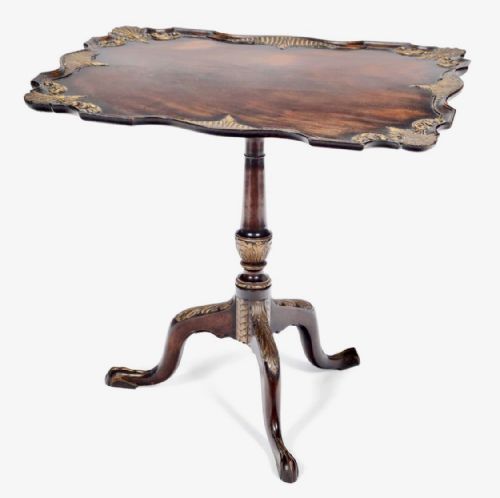
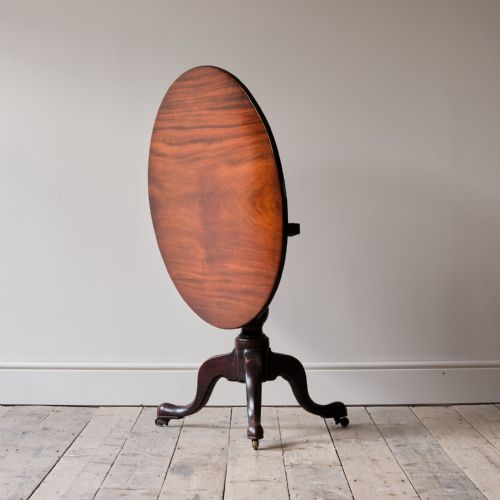
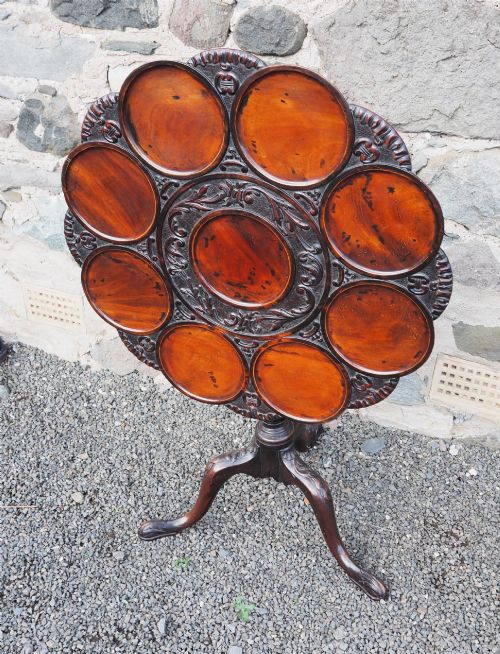

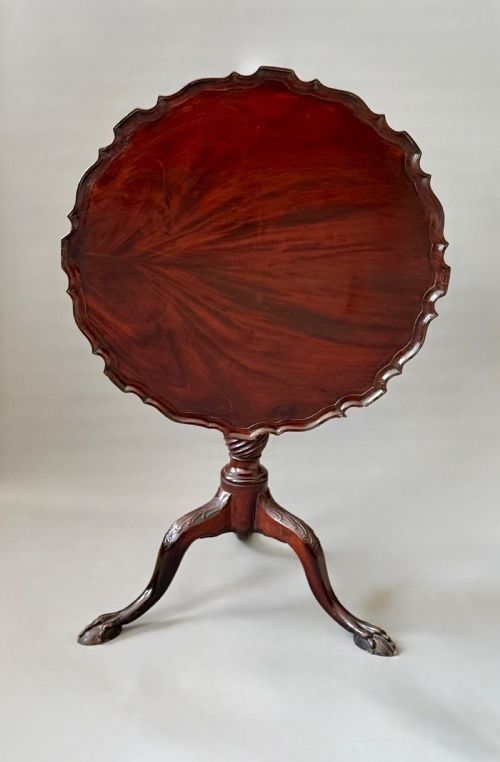
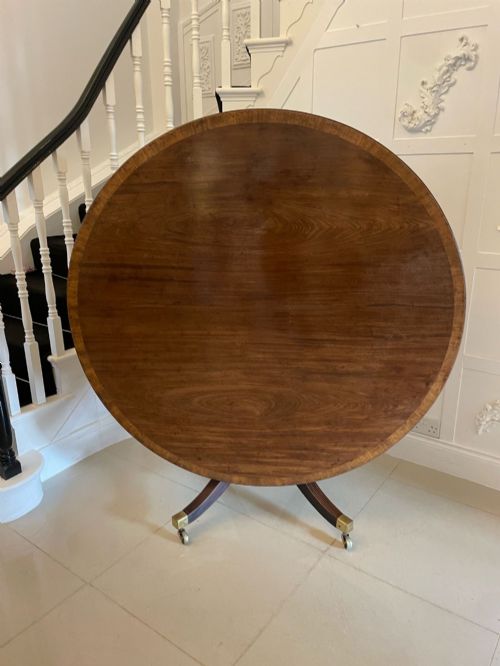
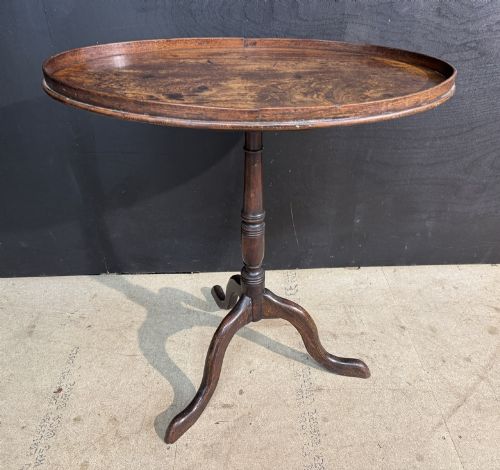
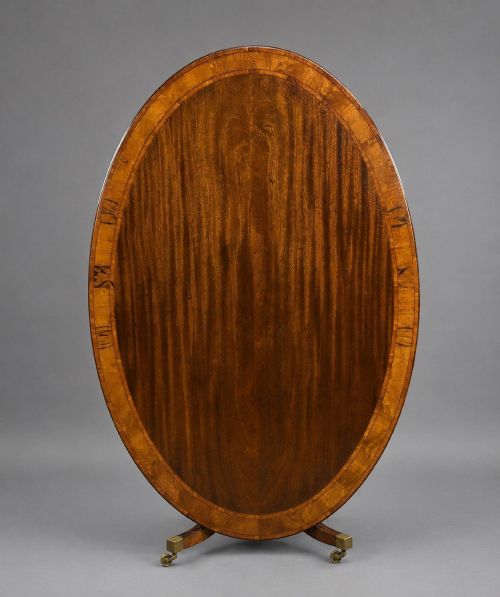
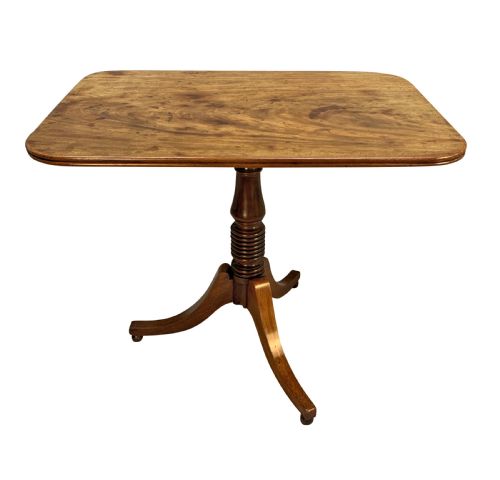
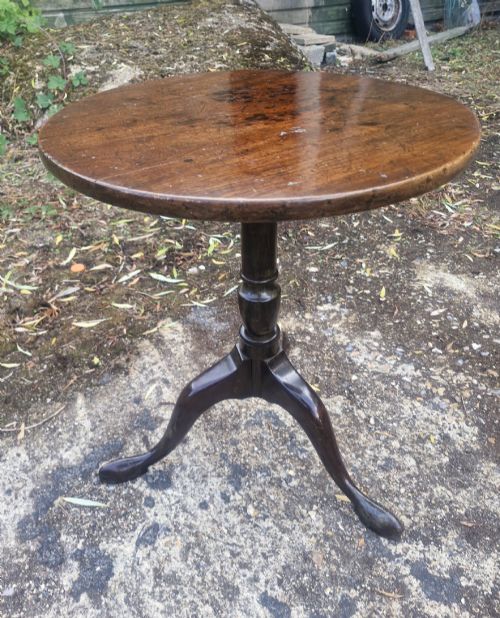
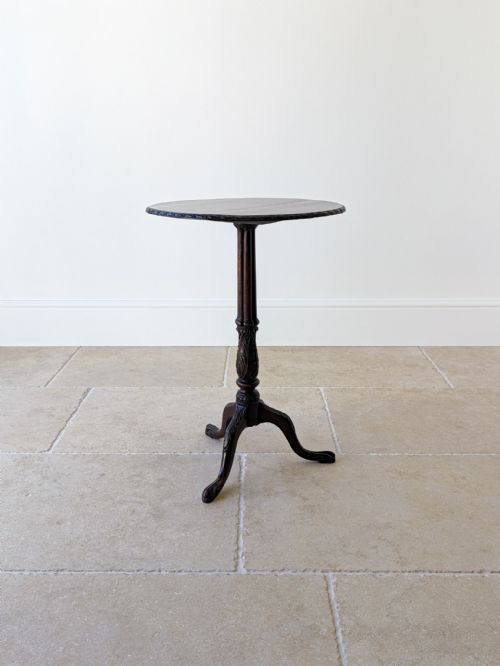
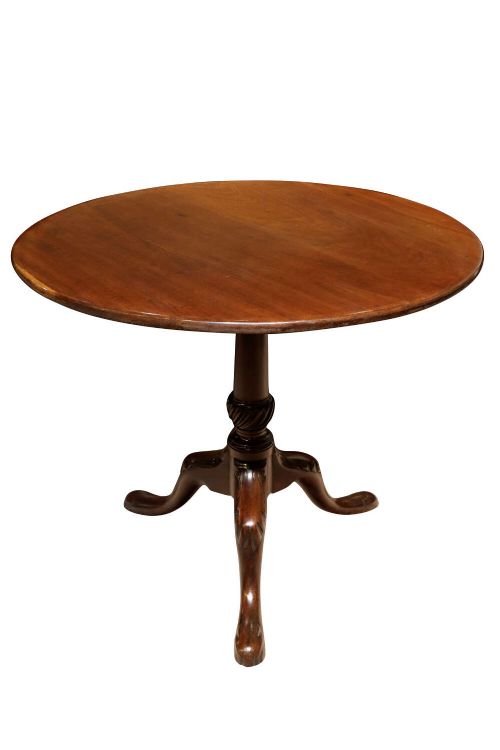
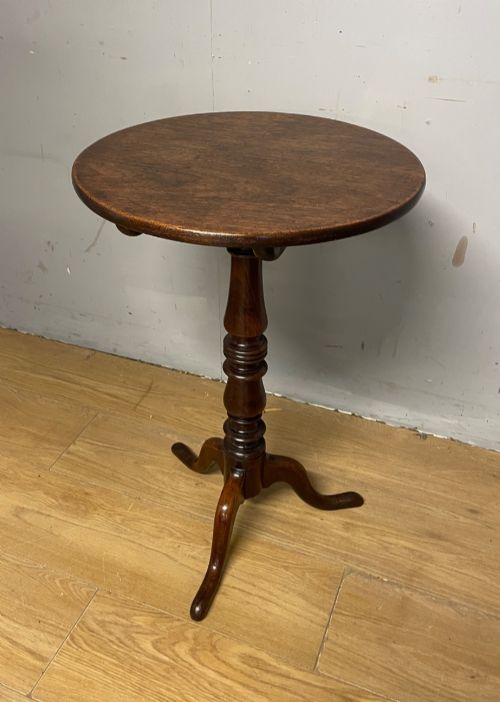
Antique Mahogany Tilt Table
An antique mahogany tilt table combines clever space-saving engineering with rich timber, offering a practical surface that folds flat when not in use.
What these tables are
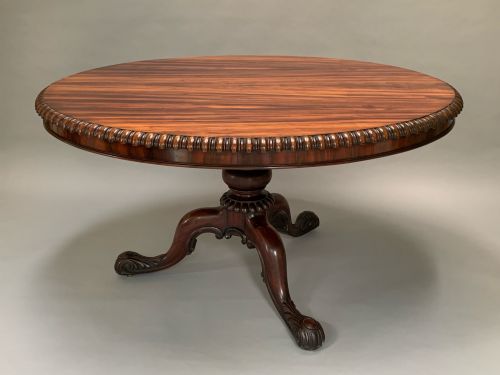
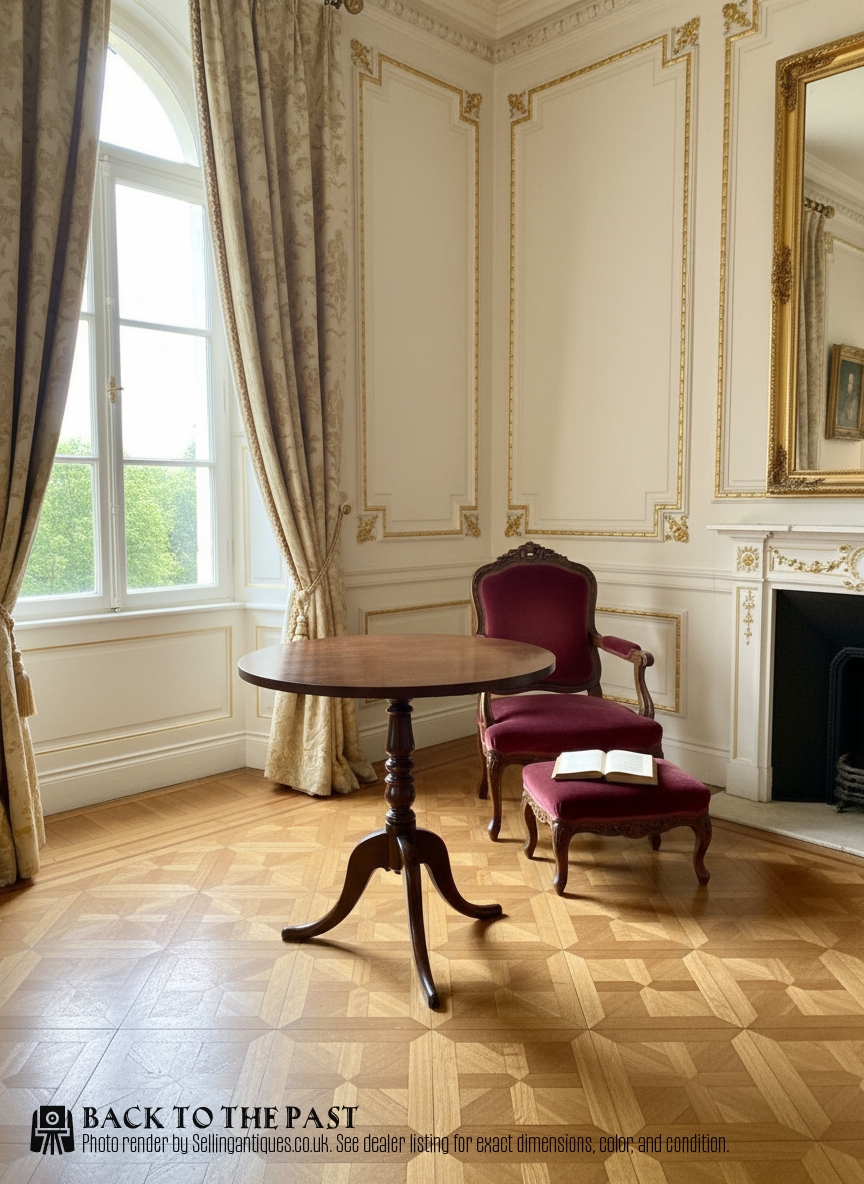
An antique mahogany tilt table is a versatile piece designed to pivot its top vertically, allowing it to stand flush against a wall when floor space is needed. These tables appear across multiple eras, spanning the 18th century, Georgian period, Regency, William IV, and Victorian epochs.
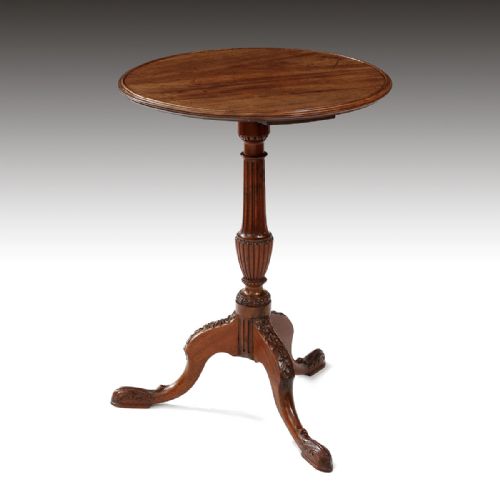
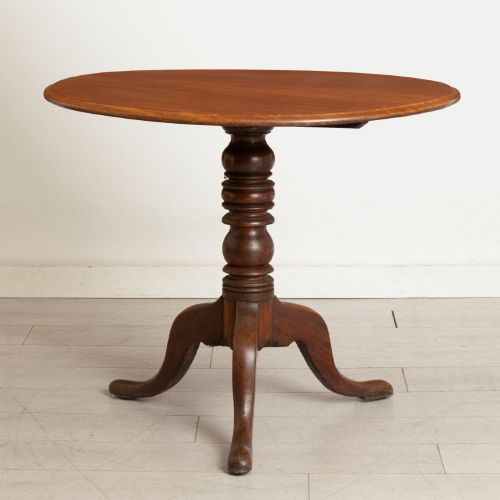
The format ranges from small tripod wine tables and occasional lamp tables up to larger circular and oval dining or breakfast tables. Most examples rely on a central pillar supported by three feet, though pedestal formats also occur.
Materials and construction
Makers utilised solid mahogany and highly figured veneers, occasionally incorporating decorative variations such as plum pudding mahogany or contrasting brass inlay. Timber was selected for deep grain patterns and rich natural colour.
The pivoting mechanism requires precise carpentry, joining the table top to a tilting block and catch mechanism mounted upon a sturdy turned column and tripod base.
Retail Price Guide 2026
Typical UK retail prices for mahogany tilt table, calculated from the Sellingantiques database of over a million retail prices indexed since 2003. This retail price guide relies exclusively on Sellingantiques data; no external sources or auction records are used, so the figures do not describe the wider market.
A tilting top meant dining tables could vanish against the parlour wall when the meal ended, doubling as impromptu room dividers.
Distinctions in quality
Quality rests upon the choice of timber and the complexity of the grain, with highly figured veneers and plum pudding mahogany sitting at the upper end of desirability. Finely turned pedestals and crisp carving on the tripod legs elevate an example above plain utility pieces.
Engineering precision dictates longevity; a well-fitted tilt mechanism operates smoothly without excessive play in the pivot block, ensuring the top locks securely both horizontally and vertically.
Gillows
The Antique Mahogany Tilt Table Glossary
- Tilt top
- A table top hinged to pivot from horizontal to vertical. This allows the piece to be stored compactly against a wall.
- Tripod base
- A support structure featuring three legs radiating from a central column. It ensures stability on uneven floors.
- Pedestal
- A central vertical support column holding the table top. It often terminates in carved or splayed legs.
- Occasional table
- A small, movable table intended for specific, intermittent use such as holding a lamp or wine.
Frequently Asked Questions
How do you tilt the table top?
Most antique tilt tables operate via a wooden catch or a brass release mechanism fitted beneath the top. Lifting or sliding this catch disengages the lock, allowing the surface to pivot safely.
Once upright, the mechanism drops back into place to hold the top securely against the central column for storage.
Were these tables used for dining?
Larger examples, particularly those from the Georgian and Victorian periods, served as breakfast or dining tables. Their folding design made them convenient for clearing rooms quickly.
Smaller tripod versions functioned as wine tables or occasional surfaces placed beside seating areas.
How do I identify a Georgian tilt table?
Georgian examples often feature understated tripod bases with pad feet or simpler cabriole legs, constructed from dense, dark mahogany. The joinery beneath the top typically relies on traditional hand-cut joints.
Later Victorian versions frequently display heavier carved decoration, robust pedestal bases, and highly polished figured mahogany veneers.
Can I use a tilt table every day?
These tables are robust enough for daily use as lamp, wine, or occasional surfaces. The timber benefits from regular dusting and occasional polishing to maintain the finish.
Care should be taken with the pivot mechanism, avoiding sudden strains when locking or releasing the top.