



19th Century Sorrento Table
A 19th century sorrento table brings intricate Italian marquetry and warm olive wood into a room, offering both decorative charm and everyday utility.
19th Century Sorrento Table
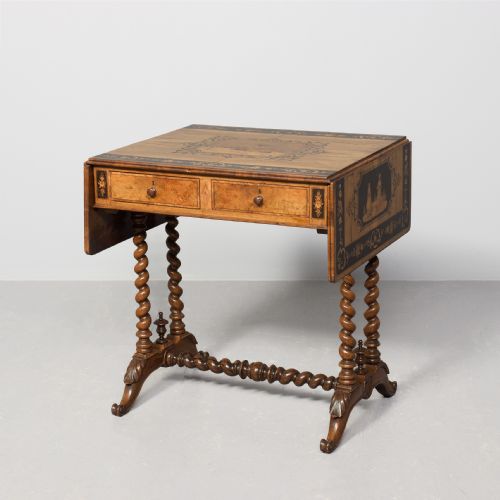
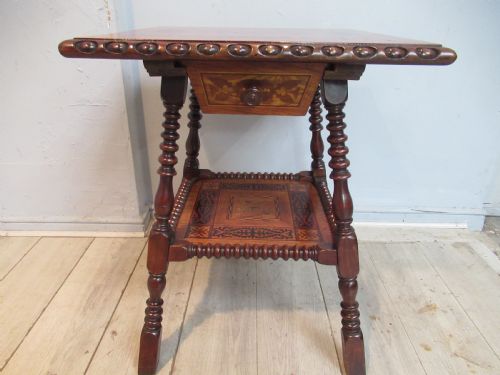
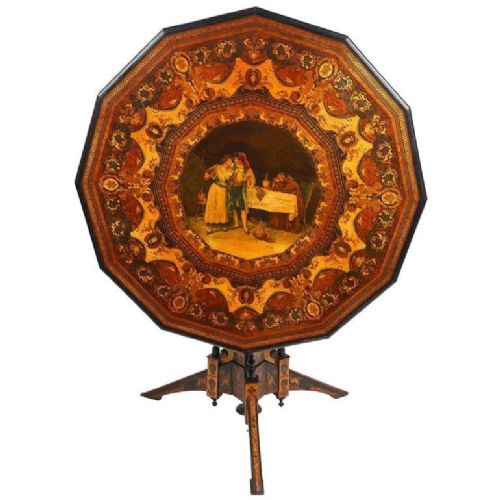
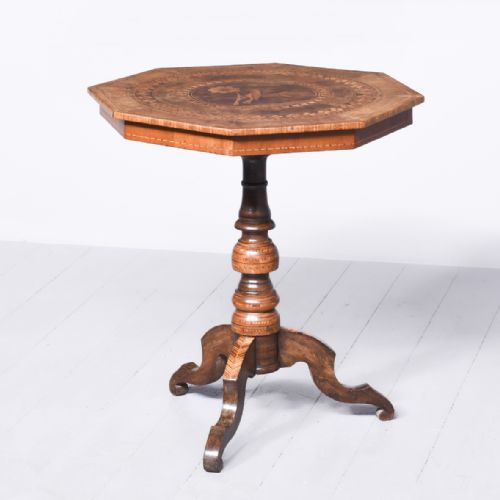
A 19th century sorrento table is an Italian table typically characterised by detailed marquetry and parquetry inlay work. These pieces originate from the town of Sorrento, where specialised woodworking traditions flourished during the nineteenth century.
Buyers browsing this selection will most frequently encounter occasional tables, side tables, and centre tables dating from the 1870s and 1880s. These forms range from low tables and sofa tables to tilt top designs.
The style often reflects the Grand Tour aesthetic popular among Victorian travellers in Italy. Walnut, olive wood, and various fruitwoods form the primary structures and decorative surfaces.
How they were made
Craftsmen built these tables using a base of walnut or mixed wood veneers, applying intricate fruitwood and olive wood inlay onto the surface. Marquetry inlay techniques allowed artisans to create complex geometric patterns and pictorial scenes.
Specialised workshops employed meticulous slicing and fitting of veneers to achieve the characteristic parquetry and marquetry effects seen across the top and borders.
19th Century Sorrento Table Retail Price Guide 2026
Typical asking prices for 19th century sorrento table among the pieces listed under this phrase on Sellingantiques today, from the lower quarter to the upper quarter. They describe what is for sale here now, not the wider market.
Travellers returning from Italy often packed these intricate wooden tables alongside their luggage to brighten gloomy Victorian parlours.
What varies in quality
The distinction between standard examples and finer pieces lies in the complexity and precision of the marquetry inlay. Tables featuring detailed pictorial designs or named workshops demonstrate higher levels of artisan skill.
Material selection also defines the tier of the piece, with choice olive wood veneers and varied fruitwood combinations yielding richer colour and stronger visual depth than simpler mixed wood versions.
Almerico Gargiulo
The 19th Century Sorrento Table Glossary
- Marquetry
- Decorative veneer work arranged in pictorial or floral patterns. Craftsmen cut thin pieces of wood and fitted them together to create elaborate tabletops.
- Parquetry
- Geometric wood inlay forming regular patterns like checkerboards or cubes. This technique provides the decorative borders and panels on many tables.
- Sorrento Ware
- Nineteenth-century woodwork originating from Sorrento in Italy. It is defined by intricate marquetry and local timber usage.
- Veneer
- A thin layer of superior wood applied to a secondary wood base. This method allowed makers to display expensive timbers on table surfaces.
- Gueridon
- A small French-influenced round table supported by a central pillar or tripod base. These forms often appear in nineteenth-century Italian variants.
19th Century Sorrento Table: Frequently Asked Questions
How do I date a sorrento table?
Dating relies on stylistic markers, construction methods, and recorded workshop periods, most commonly placing these tables in the 1870s or 1880s.
Evidence shows pieces from this era frequently utilise specific wood veneers and tripod or centre table formats characteristic of the Victorian period.
Where were sorrento tables made?
These tables originated in Sorrento, a coastal town in southern Italy renowned for its specialised marquetry workshops and timber crafts.
Local artisans utilised indigenous woods like olive wood and fruitwoods to supply both local buyers and international visitors.
How do I care for olive wood?
Olive wood surfaces benefit from being kept away from direct sunlight and extreme temperature fluctuations to prevent timber movement.
Regular gentle dusting and occasional appropriate wax application help maintain the natural lustre of the veneer and inlay work.
Are all sorrento tables round?
While round centre tables and tilt top designs are common, the selection also includes rectangular sofa tables, low tables, and occasional side tables.
Different formats served various functions in nineteenth-century interiors, from tea placement to displaying decorative objects.