
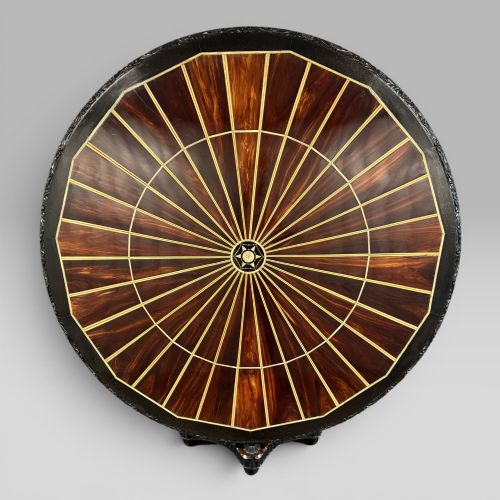
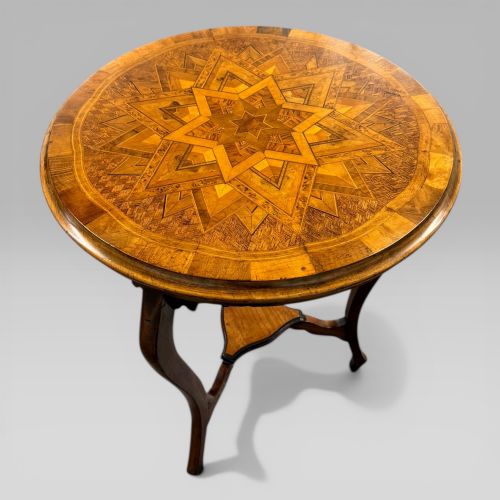
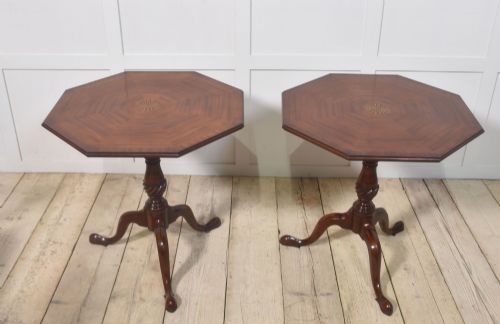
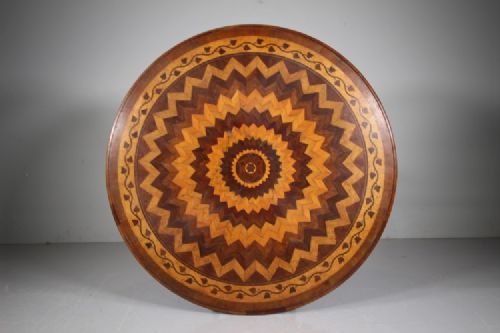


Starburst Inlaid Table
A starburst inlaid table catches the eye through geometry, bringing together contrasting timbers in radiating patterns that turn a simple surface into a centrepiece.
Starburst Inlaid Table
When you search for a starburst inlaid table, you encounter diverse forms ranging from compact wine tables and tripod bases to substantial centre and occasional tables. The nineteenth century yields many of these pieces, alongside eighteenth-century examples and twentieth-century items, reflecting enduring popularity across several eras.
Geographical origins span widely in the record, encompassing Italian Sorrento wares, Irish Killarney pieces, Ceylonese ebony and calamander work, and New Zealand specimen wood creations. Forms vary from circular pedestal tops and rectangular dining surfaces to shield-shaped occasional coffee tables and tilt-top designs.
Mahogany, walnut, and oak frequently form the primary structures, while specimen woods and veneers provide the contrasting tones necessary for the geometric radiating designs. Buyers most often meet nineteenth-century Victorian interpretations, whether domestic productions or colonial pieces shaped by British influence.
Materials and construction
Cabinetmakers utilised rich cabinet timbers such as mahogany, walnut, oak, and ebony for the main frames and pedestal bases of these tables. Calamander, satinwood, and various exotic specimen woods provided the lighter and darker contrasts required for intricate marquetry.
The characteristic radiating starburst pattern relied on precise veneering techniques, where thin slices of diverse timbers were cut and fitted together meticulously. Craftsmen then applied these decorative veneers to solid wood foundations, securing them with traditional animal glues before finishing the surface.
The listings span the eighteenth, nineteenth, and early twentieth centuries, recording materials from common oak and mahogany to exotic calamander and diverse specimen wood veneers.
Assessing quality and execution
The distinction between ordinary and exceptional examples rests upon the precision of the geometric inlay and the selection of timber. Finer pieces display seamless joints within the starburst motif, utilising highly figured specimen woods with striking natural grain contrasts.
Structural integrity and the harmony between the decorative top and the supporting base further define the hierarchy of quality. Tables that combine robust craftsmanship in the tripod or pedestal with immaculate surface marquetry represent the upper tier of the maker's art.
Anton Seuffert·William Norrie
The Starburst Inlaid Table Glossary
- Marquetry
- The art of creating decorative patterns on wooden furniture by applying small pieces of veneer. This technique allows for complex pictorial or geometric designs.
- Specimen wood
- Timber chosen specifically for its distinct colour, grain, or rarity rather than its structural utility. Makers combined multiple varieties to achieve visual contrast in tabletops.
- Tripod table
- A small freestanding table supported by a pillar above three legs. This form gained favour in the eighteenth century for flexibility and ease of movement.
- Tilt top
- A tabletop hinged to its pedestal so it can pivot vertically when not in use. This mechanism saved space in smaller rooms during earlier centuries.
- Pedestal table
- A table supported by a single central column rising from a base. They often feature circular or multi-sided tops suited to display inlay.
Starburst Inlaid Table: Frequently Asked Questions
What periods do these tables come from?
The available selection primarily spans the nineteenth century, drawing heavily from Victorian production, alongside notable examples from the eighteenth century.
Craftsmen across different decades utilised similar geometric veneering traditions, meaning you find both Georgian proportions and later Victorian interpretations represented.
How were starburst patterns constructed?
Artisans cut thin wedges of contrasting timbers, such as ebony, calamander, and lighter specimen woods, then fitted them together around a central point.
This mosaic of wood was glued onto a solid timber substrate, usually mahogany or walnut, creating a stable yet highly decorative surface.
Where were these tables made?
Geographical origins vary widely, including workshops in Italy for Sorrento ware, Ireland for Killarney work, and colonial centres in Ceylon and New Zealand.
British cabinetmakers also produced domestic interpretations using native timbers alongside imported exotic woods.
How do I care for an inlaid surface?
Maintain these tables by keeping them away from direct sunlight and fluctuating heat sources, which can cause delicate veneers to dry and lift.
Apply a traditional beeswax polish sparingly to nourish the timber and protect the historical finish without sealing the wood.