
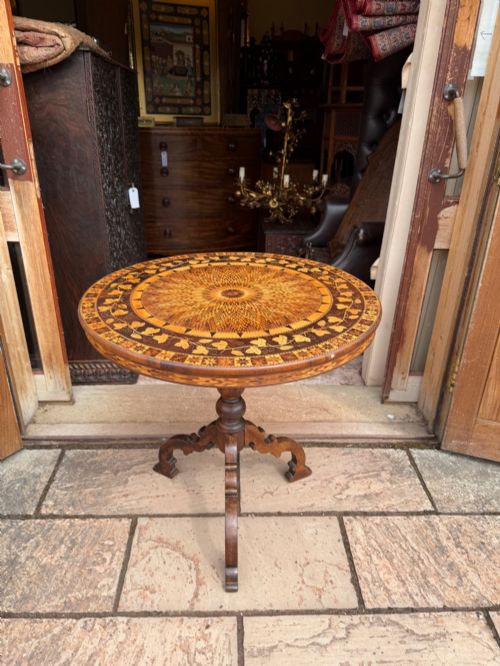
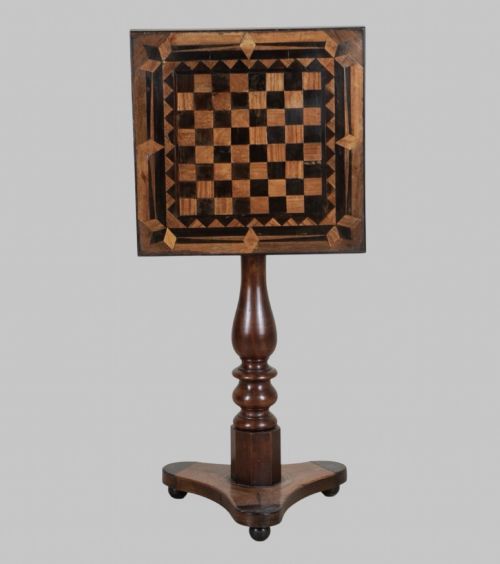
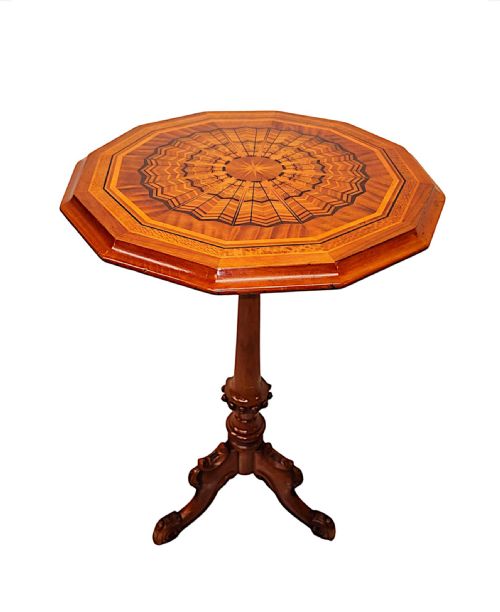
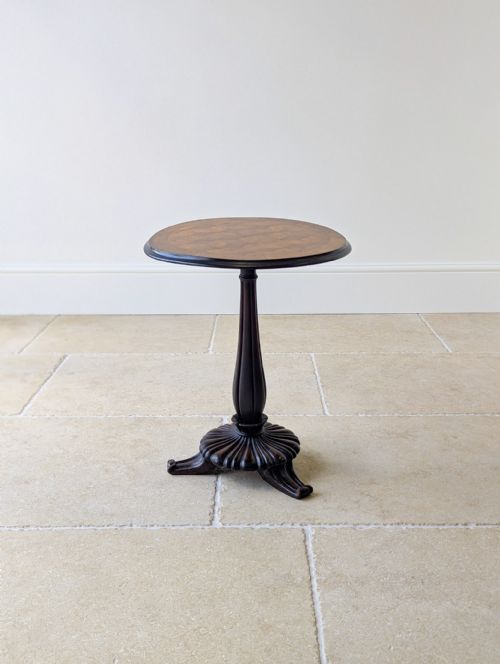
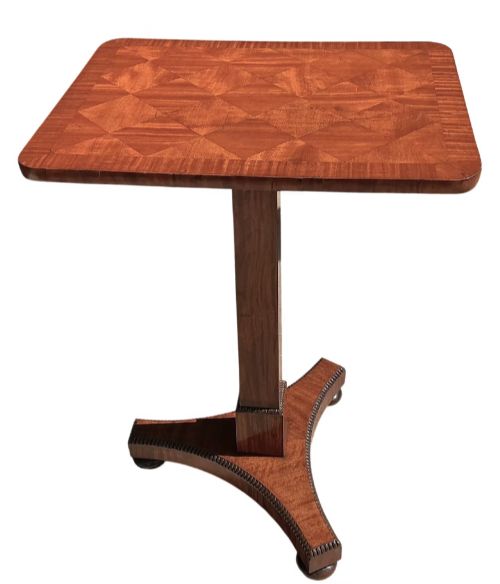
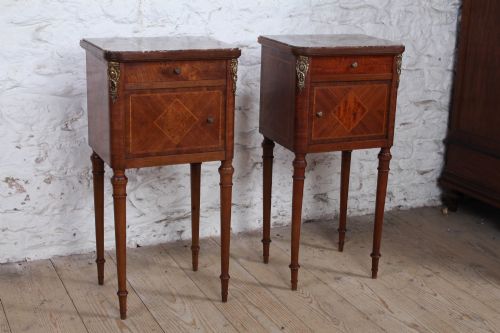


Parquetry Pedestal Table
A parquetry pedestal table brings together geometric woodwork and a single central support, offering a compact surface suited to any room.
Parquetry Pedestal Table
A parquetry pedestal table combines a geometric wood-inlaid top with a single central column and base. When you search for a parquetry pedestal table, you encounter pieces designed for versatile placement as occasional, wine, and lamp tables.
The selection ranges from Georgian and Regency examples through Victorian iterations to early twentieth-century designs. Occasional and wine tables dominate the forms, frequently featuring circular or octagonal tops supported by timber pillars.
Origin points vary across English workshops and continental makers, particularly from France and Italy. Walnut, mahogany, and rosewood serve as common primary timbers, carrying intricate geometric veneer patterns across the surfaces.
Materials and construction methods
Cabinetmakers constructed these tables using a carcase or solid timber base combined with finely sliced veneers. Woods like satinwood, kingwood, walnut, and rosewood were cut into precise geometric shapes to form the parquetry patterns on the top.
The central pillars were turned on lathes from dense hardwoods such as mahogany or rosewood to support the weight above. Brass mounts, marble inserts, and ormolu details occasionally supplemented the woodwork, depending on the stylistic influence of the period.
Parquetry Pedestal Table Retail Price Guide 2026
Typical asking prices for parquetry pedestal table among the pieces listed under this phrase on Sellingantiques today, from the lower quarter to the upper quarter. They describe what is for sale here now, not the wider market.
Listings feature 19th-century pieces predominantly, alongside examples from the Regency, Victorian, and Edwardian eras using walnut, mahogany, and marble.
Distinctions in craftsmanship and materials
Quality rests in the precision of the geometric wood matching and the stability of the central pedestal. Superior examples display tightly fitted veneer sections that remain flush across the surface without lifting or excessive shrinkage.
The choice of timbers also dictates the standing of a piece, with rarer specimen woods and intricate multi-timber parquetry indicating higher workshop skill. Furthermore, the solidity of the pillar joint determines how firmly the top rests upon its base.
Gillows·A Hugnet Paris·François Linke
The Parquetry Pedestal Table Glossary
- Parquetry
- A geometric mosaic of wood veneer arranged in patterns such as cubes, triangles, or squares. It creates a decorative surface across the top of the table.
- Pedestal
- A single central column or support resting on feet, holding up the tabletop. It replaces the traditional four legs.
- Specimen wood
- Timber collected from various native and exotic trees, utilised to show contrasting natural colours and grain patterns in inlay work.
- Gueridon
- A small French occasional table supported by a single pillar or legs, popular from the seventeenth century onwards.
- Ormolu
- Gilded bronze mounts applied to furniture for decoration. It provides metallic contrast against dark timbers and parquetry tops.
Parquetry Pedestal Table: Frequently Asked Questions
What is a parquetry pedestal table used for?
These tables served historically as small surface areas for holding lamps, wine glasses, or books in reception rooms. Their compact footprint allowed them to sit beside seating or in corners without obstructing movement.
Today, owners utilise them in similar ways as bedside surfaces, lamp tables, or decorative accents in hallways and living spaces where space is limited.
How do I identify the period of the table?
Dating relies on observing the timber choices, turning styles on the pedestal, and the overall proportions of the piece. Georgian and Regency examples often feature simpler mahogany or rosewood pillars, while Victorian and later pieces introduce diverse specimen woods and heavier carving.
Construction methods underneath the top also provide clues, such as the type of screws, fixings, and secondary timbers used in the framing.
How should I care for a parquetry top?
Protect the geometric veneer surface by keeping the timber away from direct heat sources and strong sunlight, which can dry out the old adhesives beneath. Use coasters and avoid placing liquids directly on the polish.
Apply a traditional beeswax polish occasionally to nourish the wood and maintain the natural lustre of the various timber species used in the pattern.
Are these tables stable on carpets?
The stability depends on the weight and spread of the base beneath the central pillar. Tables with tripod or quadripartite feet distribute weight effectively, though deep-pile carpets can still cause slight wobbling.
Placing the piece on a firm floor or utilising small support discs under the feet ensures the table remains balanced during daily use.