


Victorian Specimen Wood Table
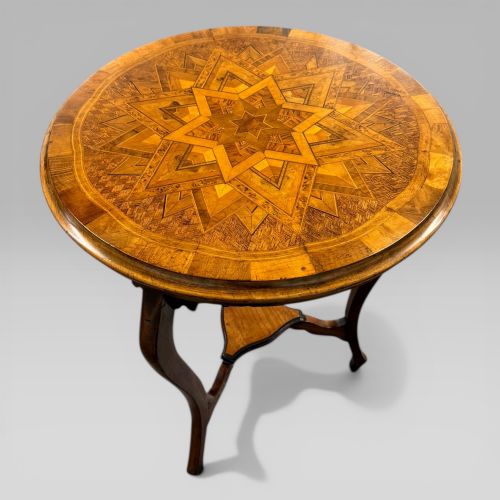
A victorian specimen wood table brings together diverse timbers in intricate geometric or pictorial patterns, offering a fascinating study in nineteenth-century craftsmanship.
Victorian Specimen Wood Table
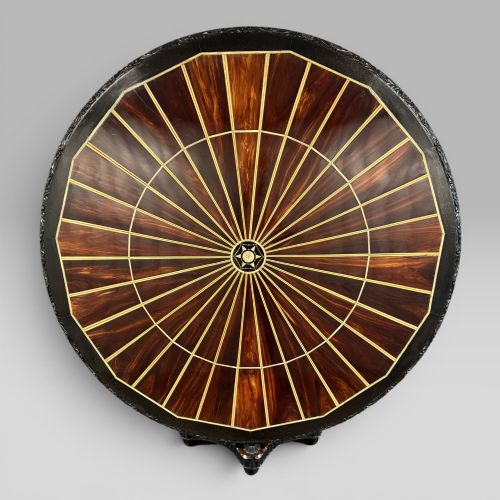
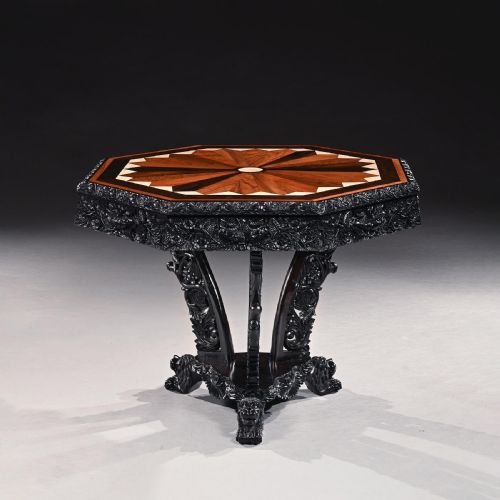
A victorian specimen wood table typically appears in forms such as occasional tables, side tables, and centre tables designed to showcase multifaceted timber surfaces. You are most likely to encounter circular, hexagonal, or octagonal occasional tables featuring inlaid tops created from a multitude of distinct regional or exotic timbers. These pieces date predominantly from the nineteenth century, spanning periods from William IV through the high Victorian era.
The construction of these pieces often incorporates domestic carcases in mahogany, walnut, or rosewood, upon which complex veneered table-tops are applied. Regional variations include Anglo-Indian and Ceylonese productions utilising ebony and calamander, alongside colonial New Zealand works displaying native timbers. Architectural influences also emerge occasionally through Gothic revival styles or pedestal supports.
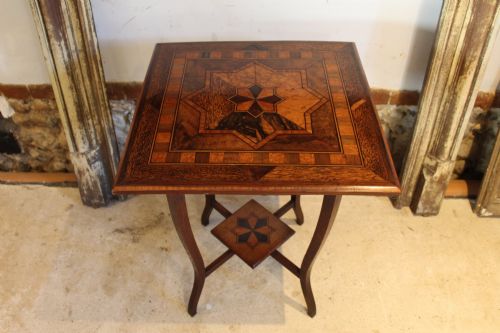
Beyond standard occasional forms, the category extends to specialised pieces such as tilt-top lamp tables and chess tables integrated with marble or pietra dura panels. The core identifier remains the decorative mosaic of wood types assembled to form sunbursts, geometric tiles, or pictorial marquetry landscapes.
Materials and construction
The making of these tables relies on the precise cutting and fitting of varied specimen wood veneers onto stable secondary timbers like oak or mahogany. Craftsmen utilised timbers such as burr-elm, ebony, calamander, and diverse exotic woods to build up contrasting colour palettes and grain directions across the table surface.
Marquetry and parquetry techniques govern the execution of the tops, requiring meticulous hand-sawing and gluing of individual wooden elements to form cohesive geometric or pictorial designs. Structural bases frequently employ turned pedestals, tripod legs, or carved swan supports joined by traditional cabinet-making methods to sustain the weight of the dense timber tops.
Victorian Specimen Wood Table Retail Price Guide 2026
Typical asking prices for victorian specimen wood table among the pieces listed under this phrase on Sellingantiques today, from the lower quarter to the upper quarter. They describe what is for sale here now, not the wider market.
Some colonial tables incorporate native New Zealand timbers, turning a simple tea break into a botanical expedition.
Evaluating quality and execution
Quality in these pieces rests primarily on the ambition and precision of the timber mosaic, distinguishing standard production from masterwork execution. The variety and rarity of the specimen woods utilised, combined with the complexity of the geometric layout or pictorial marquetry, set the finest examples apart.
Structural integrity and the selection of the primary carcase timber also dictate the standing of a piece. Finer examples balance intricate top veneers with substantial, well-proportioned bases in rosewood, walnut, or carved ebony, maintaining stability without warping or veneer lifting.
Anton Seuffert·William Norrie
The Victorian Specimen Wood Table Glossary
- Specimen wood
- Timber collected from many different species, often chosen for contrasting colours and grain patterns, used together in decorative inlay.
- Marquetry
- The art of creating decorative patterns or pictures by applying small pieces of veneer to a structural surface.
- Parquetry
- A geometric mosaic of wood pieces used for decorative floors and table tops.
- Pietra dura
- An inlay technique using cut and fitted polished coloured stones to create decorative designs.
- Tilt-top
- A table mechanism allowing the surface to pivot to a vertical position when not in use.
Victorian Specimen Wood Table: Frequently Asked Questions
What is a victorian specimen wood table?
A victorian specimen wood table is a nineteenth-century furniture piece featuring an inlaid top composed of many different timber varieties, arranged in geometric or pictorial patterns.
These tables were produced in various forms, including occasional, side, and centre tables, often utilising domestic carcases overlaid with exotic and native woods.
How were these tables used originally?
These tables served primarily as occasional, lamp, or display pieces in nineteenth-century drawing rooms and parlours, providing a decorative surface for lighting or ornaments.
Certain variations included tilt-top mechanisms for convenient storage or integrated chess boards for parlour games.
How do I care for a wood table top?
Protect the intricate veneer surface by avoiding direct sunlight, excessive heat, and moisture, which can cause timber to warp or veneers to lift.
Maintain the finish by occasionally applying appropriate furniture wax and dusting gently with a soft, dry cloth.
How can I tell the period?
Dating relies on observing structural characteristics, base styles, and the specific mix of timbers associated with periods from William IV through the later nineteenth century.
Cabinet-making techniques, such as the use of mahogany or oak carcases alongside specific regional styles like Anglo-Indian ebony work, help narrow down the decade.