

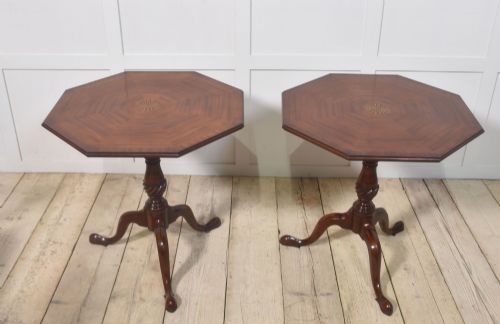


Octagonal Marquetry Table
An octagonal marquetry table brings geometric form and intricate wood inlay together, serving as a striking centrepiece or corner accent.
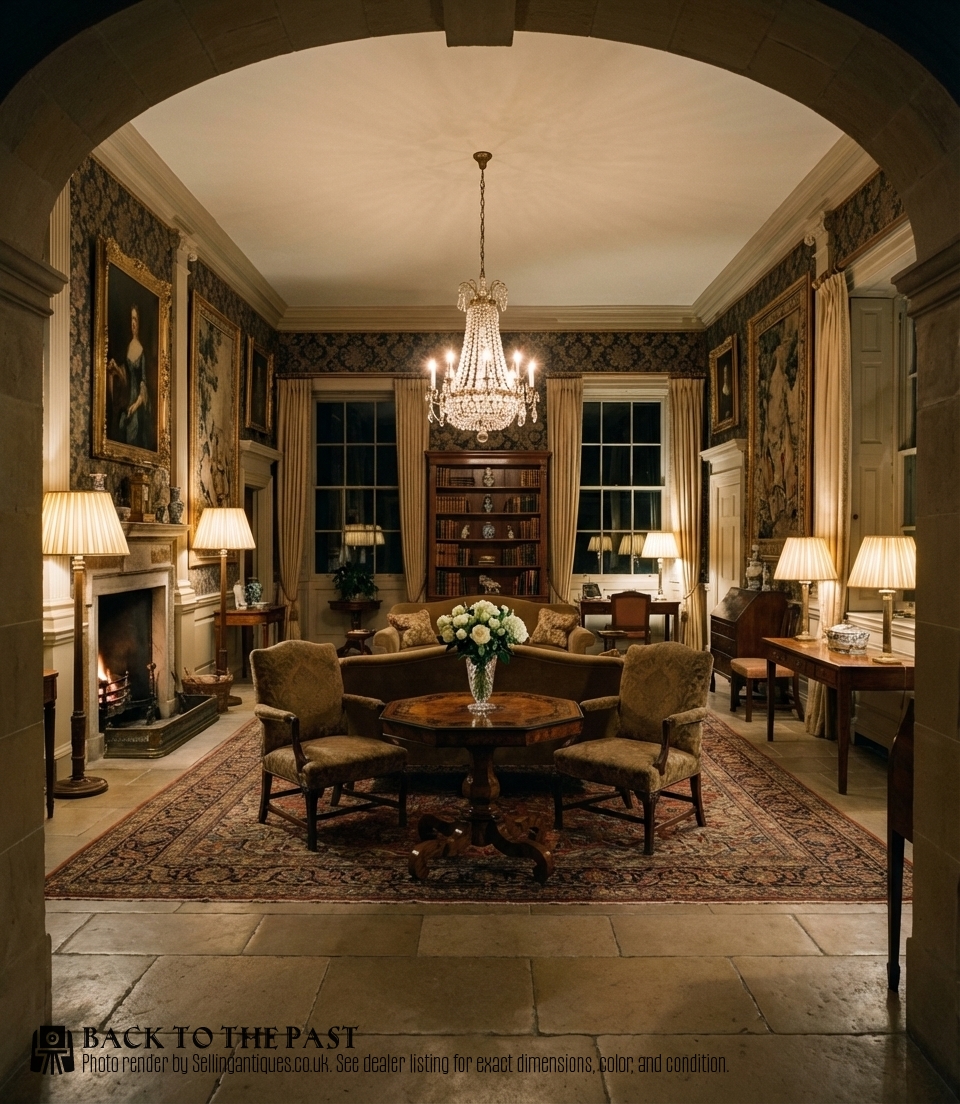
Octagonal Marquetry Table
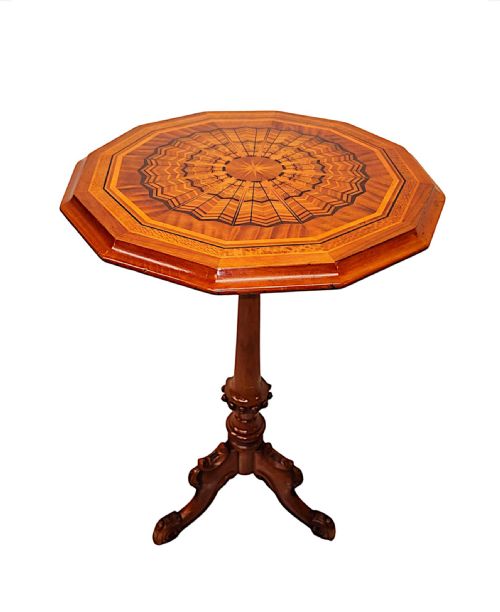
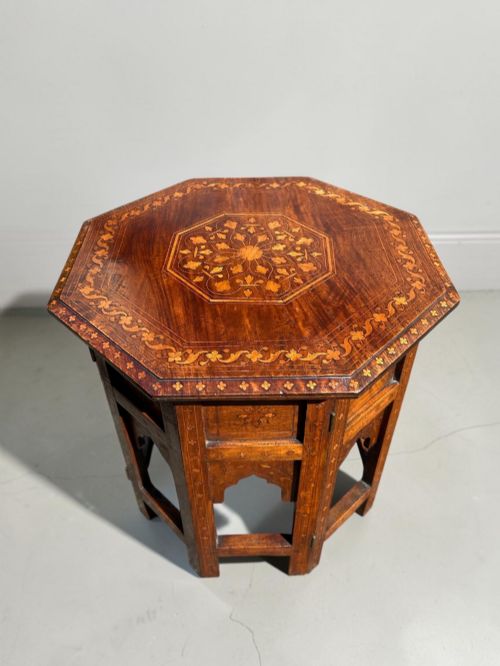
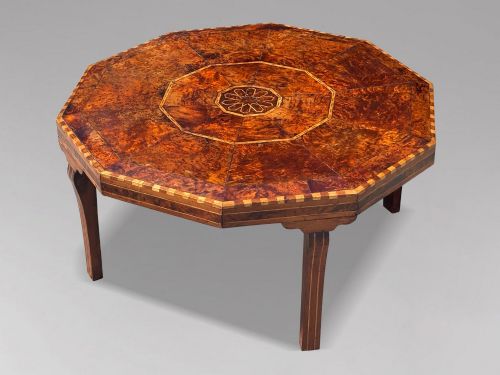
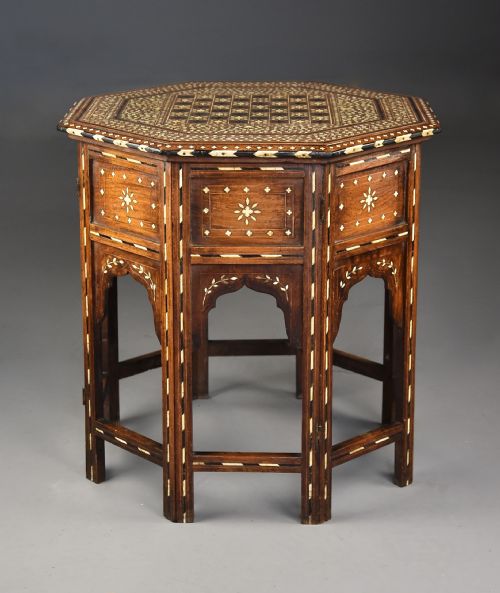
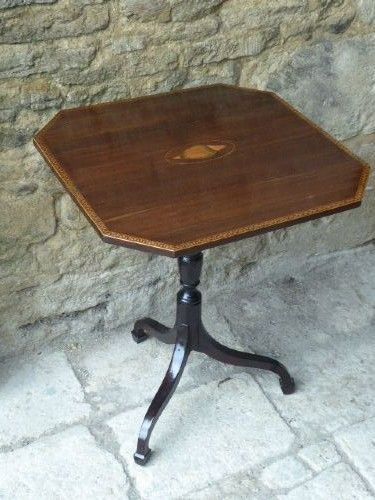
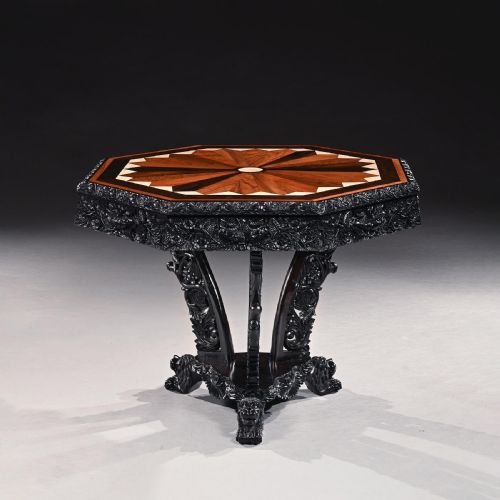
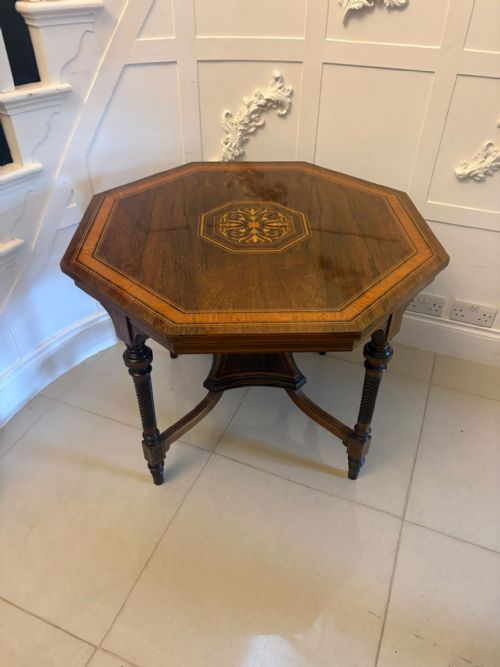
When searching for an octagonal marquetry table, collectors encounter pieces shaped with eight distinct sides, decorated using precise wood-inlay techniques. These items primarily function as occasional tables, side tables, and centre tables originating from the nineteenth and early twentieth centuries.
The selection ranges from Victorian burr walnut examples featuring elaborate floral patterns to Anglo-Indian Hoshiarpur pieces and Italian Sorrento ware. Buyers frequently meet compact occasional designs as well as larger centre tables suited for prominent display in a room.
How they were made
Craftsmen built these tables using solid foundational timbers such as mahogany, walnut, rosewood, and ebonised wood, applying contrasting veneers across the eight-sided top. Woods like satinwood, boxwood, and fruitwood provided the pale tones necessary for detailed pictorial and geometric marquetry panels.
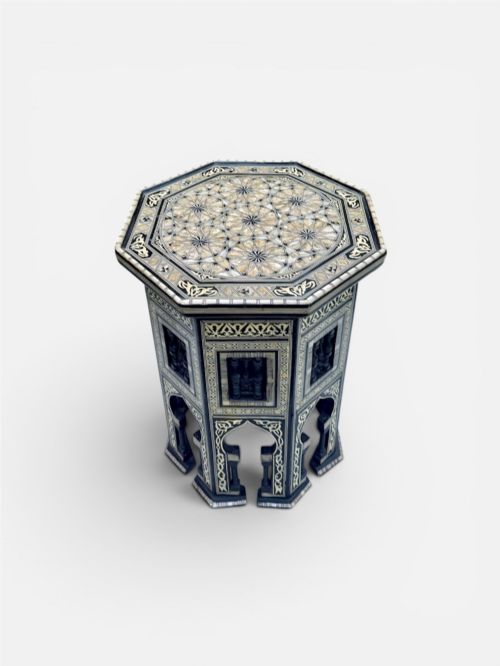
Surface ornamentation often incorporated specialised elements including mother-of-pearl inlay, brass wire, and specimen wood mosaics arranged in intricate patterns. Joinery relied on stable framing techniques to support the multi-sided top without warping the delicate veneer work.
Regional variations span from British and Italian workshops to Anglo-Indian production centres utilising mother-of-pearl.
What varies in quality
The standard of an octagonal marquetry table depends heavily on the precision of the inlay work and the choice of base timbers. Superior examples display tight, seamless joints within the geometric patterns and employ richly figured veneers like burr walnut or satinwood.
Depth of design and the integration of supplementary materials, such as finely carved mother-of-pearl or delicate brass stringing, distinguish finer studio productions from standard commercial pieces. The structural integrity of the eight-sided top and the crispness of the carving further separate exceptional items from ordinary ones.
Gillows·Liberty and Co·Edwards and Roberts
The Octagonal Marquetry Table Glossary
- Marquetry
- The art of forming decorative patterns by fitting together veneers of different coloured woods, ivory, or shell onto a structural surface.
- Occasional table
- A small, movable table designed for light, specific uses around a room rather than permanent placement.
- Centre table
- A freestanding piece designed to be viewed from all sides, traditionally placed in the middle of a room.
- Sorrento ware
- Woodwork decorated with intricate micro-mosaic marquetry, produced primarily in the Italian coastal town of Sorrento during the nineteenth century.
- Specimen wood
- Furniture constructed using a diverse variety of native and exotic timbers to showcase different natural colours and grain patterns.
Octagonal Marquetry Table: Frequently Asked Questions
Where do octagonal marquetry tables fit best?
These tables work effectively as freestanding centrepieces in a hallway or as occasional accent tables beside seating. Their eight-sided shape allows them to bridge corners and open spaces more fluidly than square or rectangular alternatives.
Placing them away from direct heat sources helps preserve the stability of the multi-wood veneers. Using coasters protects the polished marquetry surface from moisture rings during daily use.
How are Victorian and Edwardian examples distinguished?
Victorian models frequently utilise darker foundational timbers like rosewood and burr walnut paired with dense, elaborate floral or geometric marquetry. Edwardian interpretations tend to incorporate lighter satinwood or birch with more restrained decorative borders.
Construction details also offer clues, as later nineteenth-century pieces often employ machinery-assisted veneer slicing alongside hand-cut detailing. Comparing the primary wood choice with the style of the inlay helps confirm the general era of production.
How should an inlaid table be maintained?
Regular dusting with a soft, dry cloth prevents particulate buildup within the microscopic crevices of the veneer work. Applying a suitable furniture wax occasionally maintains the moisture balance of the timber without building up heavy residues.
Avoiding prolonged exposure to direct sunlight prevents the coloured wood veneers from fading or bleaching over time. Gentle handling ensures that delicate mother-of-pearl or boxwood stringing remains secure within the surrounding timber.